By: News Desk 92Pavilion | Updated: August 17, 2026
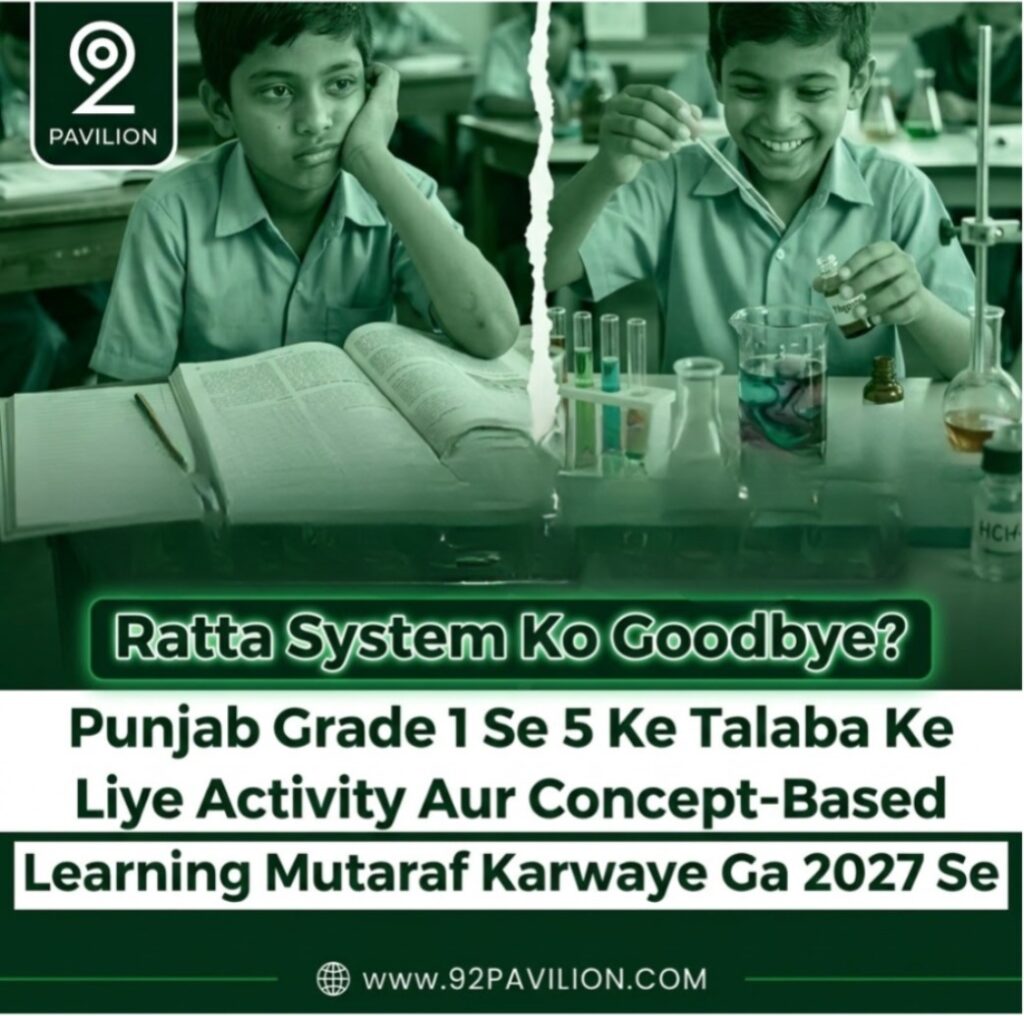
Quick Answer: Punjab is preparing a major overhaul of primary education, replacing rote memorisation with activity-based and concept-based learning for students in Grades 1 to 5. The Punjab Education Curriculum, Training and Assessment Authority (PECTAA) has begun developing new textbooks and a redesigned curriculum, with formal rollout planned for the 2027 academic session. The reform aims to build critical thinking and practical skills from an early age.
A Major Shift Away From Rote Learning
For years, Punjab’s primary school curriculum has faced criticism for being overloaded with content and heavily dependent on memorisation. Now, PECTAA is working to change that. The authority has begun developing activity-based textbooks for students up to Grade 5, marking the first time Punjab has designed a dedicated activity-based learning system specifically for this age group.
How the Reform Process Started
PECTAA convened the first meeting of its Curriculum Advisory Committee in Lahore, chaired by Parliamentary Secretary for School Education Nausheen Adnan and PECTAA Vice Chairperson Musa Ali Bukhari. During the session, Dr Zubda Ziaur Rehman delivered a keynote presentation outlining the current curriculum landscape and the proposed reform framework, setting the foundation for the committee’s work.
The meeting brought together a wide range of educationists and policymakers, including representatives from the University of Education Lahore, Lahore University of Management Sciences, Beaconhouse School System, and the Pakistan Institute of Education. International experts also joined virtually, including participants from the Aga Khan University Institute for Educational Development, the World Bank, the Japan International Cooperation Agency, and The Citizens Foundation.
What the New Curriculum Will Look Like
According to PECTAA, the reform initiative will initially focus on Grades 1 to 5, since these represent the foundational years of learning. The committee has been tasked with conducting a comprehensive review of existing student learning outcomes, reducing their volume, eliminating redundancies, and reframing them around core conceptual competencies.
In practical terms, this means moving away from a content-heavy approach and toward a curriculum that promotes critical thinking, understanding, and adaptability among students. Educational concepts will be taught through hands-on activities, making lessons more engaging and directly involving students in the learning process.
Why Officials Say the Change Is Needed
District Education Officer Dr Hajra Shaheen, speaking about the broader reform, said the new curriculum aims to move students away from rote learning and toward observation, questioning, analysis, and problem-solving. She added that the curriculum would also aim to reduce unnecessary academic pressure by making learning material simpler and more age-appropriate.
Teacher training will form an important part of the rollout as well. Educators will receive training in modern teaching techniques, along with a deeper understanding of activity- and concept-based instruction, to help them deliver the redesigned lessons effectively.
When the New System Takes Effect
According to PECTA officials, work on the new textbooks is already underway in line with the revised curriculum. Formal teaching through the new activity-based books will begin across Punjab from the 2027 academic session. Officials say the goal is to complete the redesign process well ahead of that rollout date, giving schools and teachers time to prepare.
What This Means for Students and Parents
For families across Punjab, the shift represents a significant change in how young children will learn. Instead of memorising facts for exams, students will engage directly with concepts through structured activities. Officials say this approach is designed to build stronger educational foundations, since learning habits developed in early grades tend to shape academic performance for years to come.
Frequently Asked Questions
When will Punjab’s new curriculum start?
The activity-based curriculum and new textbooks will be formally introduced from the 2027 academic session.
Which grades does the reform cover?
The initial phase covers Grades 1 to 5, the foundational years of primary education.
Who is leading the curriculum reform?
The Punjab Education Curriculum, Training and Assessment Authority (PECTAA) is leading the process, with input from local and international education experts.
Will teachers receive training for the new system?
Yes. Teacher training is a key component, focused on modern techniques and activity- and concept-based learning methods.
This report is based on reporting from Dawn, Pakistan Observer, Dunya News, and TechJuice.
92Pavilion brings you Pakistan’s education news as it happens. Stay with us for updates on this developing story.