By: News Desk 92Pavilion | Updated: August 11, 2026
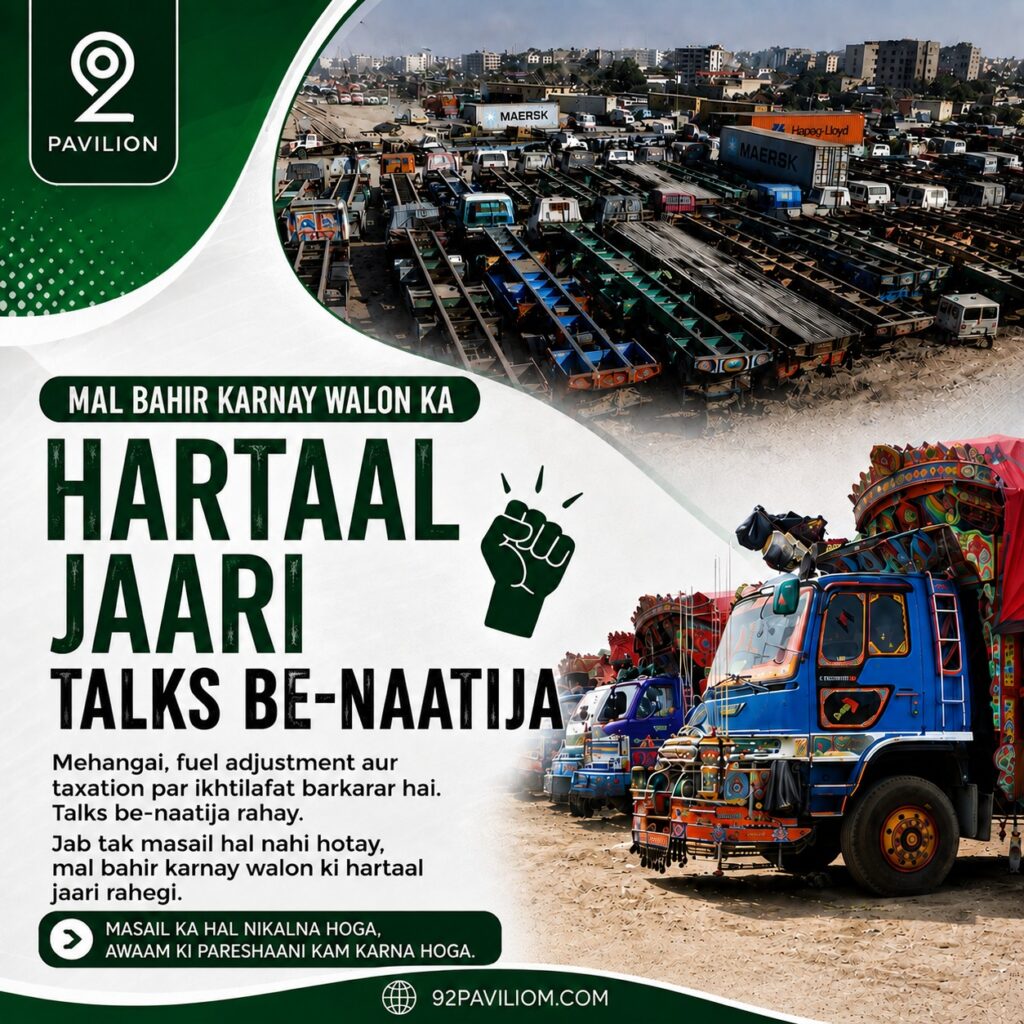
Quick Answer: Pakistan’s nationwide goods transporters’ strike is continuing after another round of talks with the government ended without a breakthrough. The All Pakistan Goods Transport Alliance says the wheel-jam strike, now in its fourth day, will keep going until the government reduces diesel taxes, rolls back toll tax hikes, and stops the daily fuel price adjustment. The government says it has agreed not to raise toll tax for a year and is reviewing weigh-station complaints, but transporters say that isn’t enough.
Why Transporters Went on Strike
The All Pakistan Goods Transport Alliance launched an indefinite, nationwide wheel-jam strike on August 8 after negotiations with the federal and Sindh governments collapsed. Alliance leaders, including president Malik Shehzad Awan, said the transport sector was facing an unprecedented financial squeeze because of repeated diesel price hikes, rising taxes, and a growing list of regulatory demands.
Their charter of demands includes a cut in taxes on diesel, restoring fuel prices to July 2024 levels, and reducing the withholding tax on cargo transporters from 7 percent to 2 percent, in line with what oil tanker operators already pay. The alliance also wants the government to withdraw a Finance Act 2026 clause that allows an entire vehicle to be confiscated if undeclared goods are found on board.
Announcing the strike at a press conference at the Karachi Press Club, Awan said transporters would keep their vehicles off the roads until their demands were accepted through formal notifications. He added that the protest would remain peaceful, with vehicles parked rather than highways blocked.
Talks With the Government Break Down
Federal Minister for Communications Abdul Aleem Khan invited transport alliance representatives for talks on August 10 in an effort to end the standoff. According to alliance spokesperson Advocate Owais Chaudhry, the minister assured transporters that their problems would be resolved, but the negotiations still failed to produce a firm agreement.
Chaudhry said the alliance would not back down from its demands under any circumstances, even as talks continue. Separately, a senior government official said the daily fuel price adjustment reflects volatility in international oil markets rather than a domestic policy choice, though the government is reportedly considering lowering toll tax on heavy vehicles and revisiting axle-load rules.
What the Government Has Offered So Far
Sources close to the negotiations say the government has agreed not to increase toll taxes for one year and that Aleem Khan has assured transporters of an early resolution to their weigh-station complaints. However, alliance leaders say these steps fall short of their core demand: a rollback of diesel taxes and the daily price adjustment mechanism itself.
The Sindh government also held a separate round of talks with the All Pakistan Goods Transport Ittehad before the strike began, but that dialogue also ended without an agreement, prompting the transporters to proceed with their protest as planned.
Impact on Supply Chains
With cargo trucks, containers, and oil tankers off the roads in large numbers, the extended shutdown has raised concerns about disruptions to the movement of essential goods, including food supplies. Transport leaders have warned that a prolonged strike could put further pressure on prices at a time when the sector is already struggling with financing costs on trucks bought on instalment plans.
The All Pakistan Petrol Pumps Owners Association has also separately asked the petroleum ministry to review the daily fuel pricing mechanism, citing concerns over how price decisions are implemented.
What Happens Next
Alliance leaders say the door for further talks remains open, but they are demanding visible, concrete progress before calling off the strike. For now, the wheel-jam protest continues to affect road freight across the country, with both sides describing the standoff as unresolved.
Frequently Asked Questions
Why are goods transporters on strike in Pakistan?
They are protesting rising diesel prices, the daily fuel price adjustment mechanism, higher withholding and toll taxes, and a Finance Act 2026 clause allowing vehicle confiscation over undeclared cargo.
When did the strike start?
The indefinite nationwide strike began on August 8, 2026, after talks with the federal and Sindh governments failed to reach an agreement.
Has the government offered any concessions?
Sources say the government has agreed not to raise toll tax for one year and is reviewing weigh-station complaints, but transporters say their main demands remain unmet.
Is the strike affecting supply chains?
Yes. With trucks, containers, and oil tankers off the roads, there are concerns about disruptions to the movement of essential goods and possible upward pressure on prices.
This report is based on reporting from Geo News, The Express Tribune, Dawn, and ProPakistani.
92Pavilion brings you Pakistan’s business and economic news as it happens. Stay with us for updates on this developing story.