By: News Desk 92Pavilion | Updated: August 5, 2026
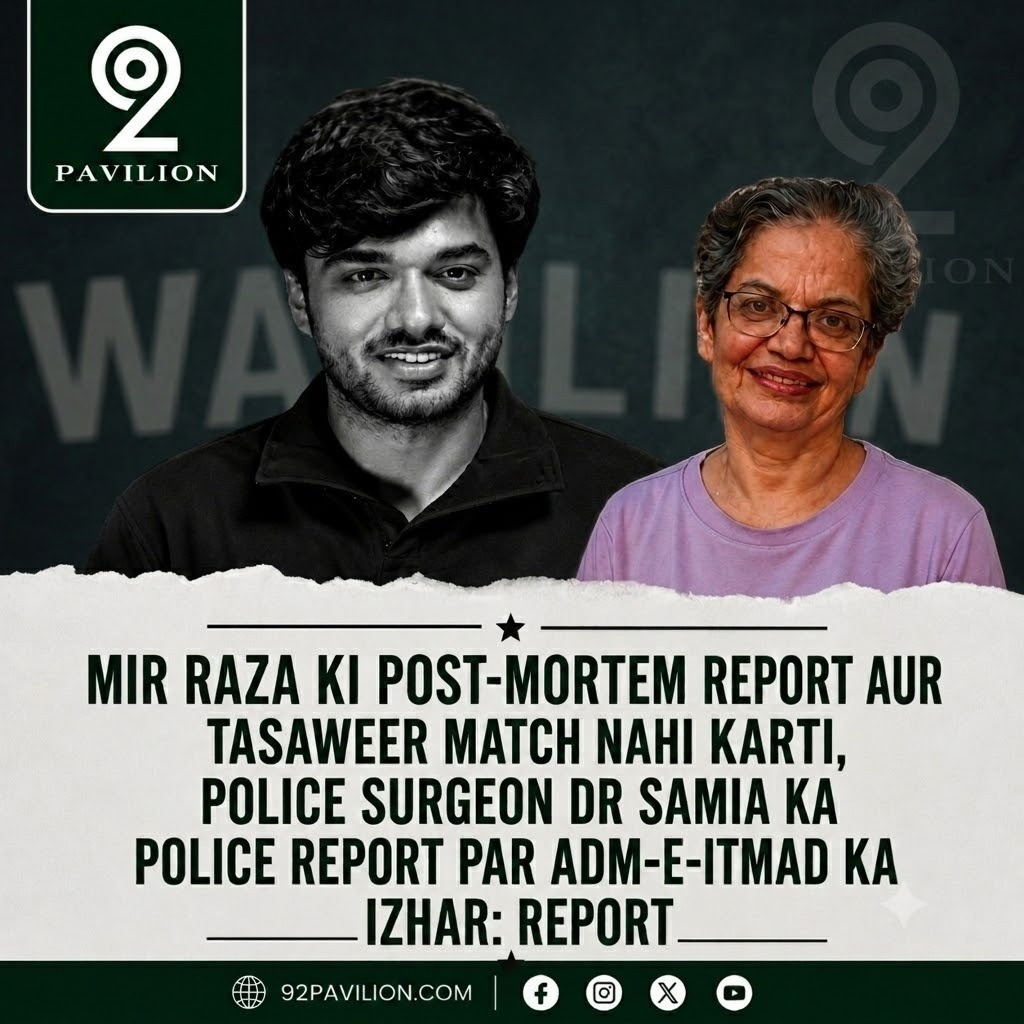
Quick Answer: The Mir Raza post-mortem report has come under serious scrutiny. Karachi Police Surgeon Dr Samia Syed says the medical findings don’t match photographs of his body. She identified 14 specific flaws in the examination. She has also formally recommended exhuming the body for a fresh autopsy.
A Doctor Raises the Alarm
Speaking to ARY News, Dr Samia didn’t mince words about what she’d found. “The photographs tell one story, while the post-mortem report says something else,” she said. According to her, several parts of Mir Raza’s body appeared swollen and discoloured in the photographs. These details, she said, needed closer examination to check for additional injuries.
She also raised concerns about the bullet’s reported direction. The entry wound, trajectory, and exit wound didn’t line up consistently with one another, she said. Entry wounds are typically smaller than exit wounds in firearm cases, she noted. This didn’t match what the report described.
Fourteen Flaws, Laid Out in Writing
Dr Samia’s concerns went well beyond a single media interview. She sent a formal letter to the Senior Superintendent of Police East. In it, she detailed 14 specific shortcomings in how doctors carried out the post-mortem on July 29.
Her findings raise real questions. Doctors never X-rayed the body, she wrote. They took no hand swabs to test for gunshot residue. They ran no chemical analysis on the blackening around the entry wound, a step that helps determine firing distance. She also noted that examiners never removed the scalp, never opened the skull for internal inspection, and never examined the neck internally, despite these being standard steps in firearm-related deaths.
Police Push Back
Not everyone agrees with her assessment. Additional Inspector General of Police Karachi, Azad Khan, challenged Dr Samia’s observations directly. He noted that the Medico-Legal Officer, not the police surgeon’s office, prepared the actual post-mortem report.
Khan pointed out that Dr Samia had formed her opinion from photographs alone. She hadn’t personally examined Mir Raza’s body, he said. In his view, she should have submitted her concerns through proper legal channels rather than sharing them with the media first.
A Possible Path Forward: The Medical Board
As the dispute grew more public, Sindh’s Inspector General of Police, Javed Alam Odho, proposed forming a medical board to settle the disagreement. Speaking at the Karachi Bar Association, he acknowledged some confusion surrounded the case. A medical board, he said, could bring clarity if concerns persisted.
Odho pointed to a deeper problem too: an unrelated medico-legal officer had commented on the case while official documents said something different. Medical experts, he added, should now determine the facts.
A Family Pushing for Answers
Mir Raza’s family has consistently rejected the possibility that he died by suicide. His father says the body was handed over to the family within just an hour of the post-mortem. He believes this quick turnaround may have compromised the investigation.
The family maintains Mir Raza was the victim of a violent crime, not a self-inflicted death. They have continued pushing for a more thorough review of the evidence.
What Investigators Are Weighing
Police say they’ve uncovered evidence about Mir Raza’s state of mind in the lead-up to his death. This evidence, they believe, supports the suicide theory. Meanwhile, investigators continue reviewing CCTV footage, mobile phone data, and forensic evidence as the case develops.
Still, key questions remain unresolved. The missing weapon and the absence of gunshot residue testing mean investigators haven’t ruled out other possibilities either.
Frequently Asked Questions
What did the police surgeon say about the Mir Raza post-mortem report?
Dr Samia Syed said the findings didn’t match photographs of the body. She identified 14 specific flaws in how doctors conducted the autopsy.
Did the police surgeon personally examine the body?
No. Her assessment relied on photographs and the written report, not a physical examination.
What has the family said about the case?
Mir Raza’s family rejects the suicide theory. They believe he was the victim of a violent crime.
What happens next in the investigation?
Sindh’s police chief has proposed forming a medical board to resolve the dispute over the post-mortem findings.
This report is based on reporting from ARY News, Dawn, and Times of Karachi.
92Pavilion continues to follow this case closely. Stay with us as the investigation develops.