By: News Desk 92Pavilion | Updated: July 28, 2026
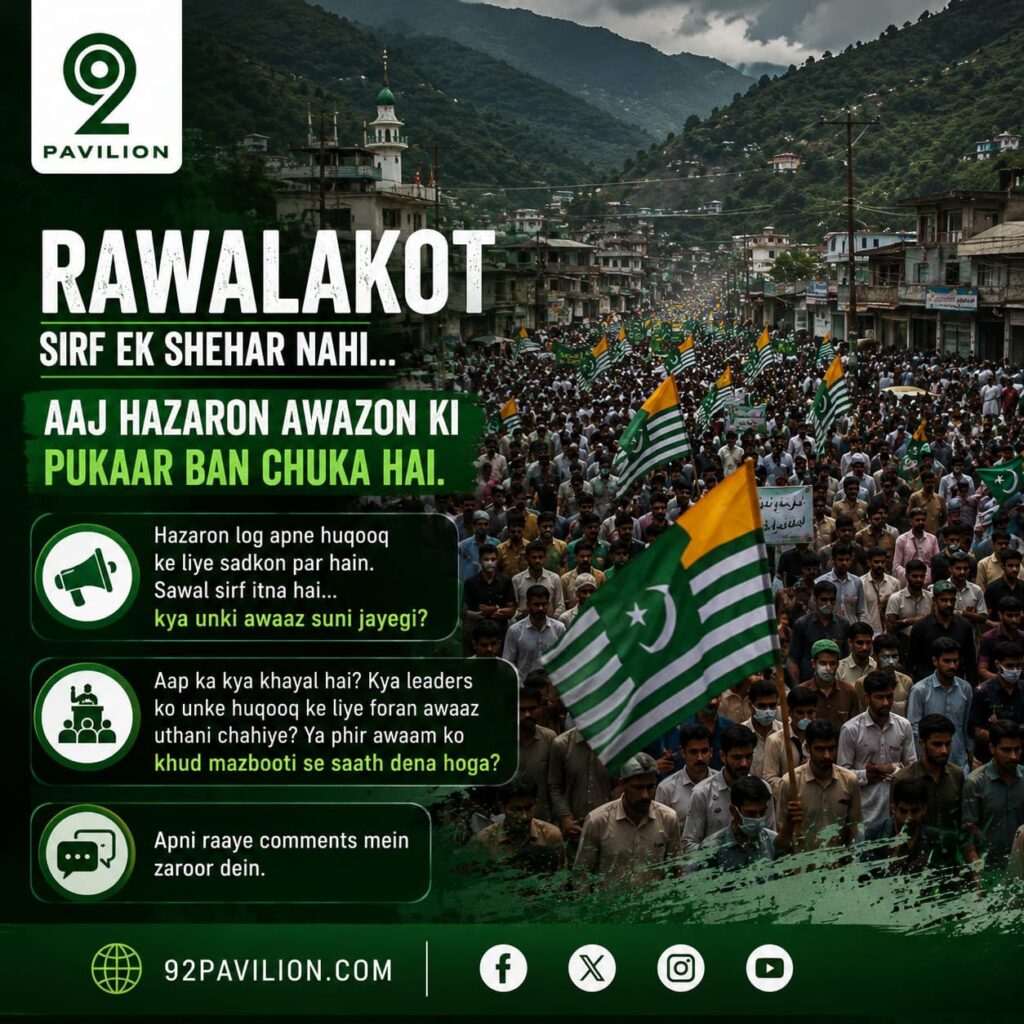
Quick Answer: The Rawalakot protests have grown into one of the largest civil movements in Azad Jammu and Kashmir’s history. Thousands of demonstrators, organized by the Jammu Kashmir Joint Awami Action Committee (JAAC), have been camped outside Rawalakot for weeks, demanding governance reforms. Clashes with security forces have left dozens dead since June, with the latest violence reported on July 27 and 28, coinciding with regional elections.
How the Protests Started
The roots of this movement go back further than most people realize. What began in 2023 as small sit-ins by traders protesting rising wheat flour and electricity prices in Rawalakot gradually grew into a much broader civil rights campaign across Azad Jammu and Kashmir.
Over time, the Joint Awami Action Committee, known as JAAC, became the movement’s central organizing body. Its demands expanded well beyond subsidies, eventually focusing on structural reforms, reduced privileges for the region’s political elite, and greater local political representation.
What Sparked the Latest Escalation
The most recent wave of unrest intensified after Pakistan’s Supreme Court upheld the constitutional status of twelve legislative seats in the AJK assembly reserved for Kashmiri refugees living in Pakistan. JAAC strongly opposes these seats, arguing they let mainstream Pakistani political parties influence government formation in Azad Kashmir without deep local roots.
Following the court’s decision, JAAC announced a “long march” from Rawalakot toward Muzaffarabad, the regional capital, warning of new demands if the government didn’t respond. Protests spread quickly across the region, accompanied by strikes and demonstrations that showed little sign of slowing down.
Government Response and Rising Tensions
The state’s response has grown increasingly firm. Last month, authorities formally banned JAAC under anti-terrorism laws, accusing the group of activities that allegedly threatened public order. More than a hundred of its leaders and members have reportedly been arrested since the ban.
Pakistan’s Information Minister, Attaullah Tarar, went further, publicly claiming that the protest movement had “links to India.” He said security agencies had uncovered a network involved in anti-Pakistan propaganda, with funding and instructions allegedly originating from India. JAAC has not issued a formal response to this claim, and Indian officials have not commented either.
The Human Cost
The toll from this unrest has been significant. Clashes in Rawalakot and surrounding areas on June 8 reportedly left between eleven and fifteen people dead, according to regional authorities and local media, with more than seventy injured among both protesters and security personnel.
On July 14, at least nine more people were killed in separate incidents across Poonch and Sudhnoti districts. Most recently, on July 27, as election day arrived in parts of Azad Kashmir, eyewitnesses linked to the protest movement reported that security forces opened fire on demonstrators near Rawalakot, with death toll estimates from local sources ranging from ten to fourteen people, and dozens more injured. These figures have not been independently confirmed by all parties involved.
Why This Moment Matters
What makes the current situation especially significant is its timing. The protests have directly coincided with Azad Kashmir’s legislative elections, with demonstrators in some areas actively calling for an election boycott. That overlap has turned a regional governance dispute into a moment that could shape the area’s political future for years to come.
Analysts covering the situation note a deepening divide between residents of Azad Kashmir and the federal government in Islamabad, one rooted in long-standing grievances over political representation, economic neglect, and how decisions affecting the region are made.
What Comes Next
As of this report, tension in Rawalakot remains high, with protesters continuing to gather despite the government crackdown. Whether talks between JAAC representatives and federal or regional officials can de-escalate the situation remains uncertain.
Given how quickly this story has evolved over the past two months, further developments, including possible negotiations or additional unrest, are likely in the days ahead.
Frequently Asked Questions
What is causing the Rawalakot protests?
Protesters, led by the Joint Awami Action Committee, are demanding governance and economic reforms, including the removal of reserved refugee seats in the AJK assembly.
How many people have died in the unrest?
Casualty figures vary by source, but reports suggest at least 30 people have died across multiple clashes since June 2026.
Why did the government ban JAAC?
Authorities banned the group under anti-terrorism laws last month, citing threats to public order. The government has also alleged links to India, a claim JAAC has not formally addressed.
How does this relate to the AJK elections?
The protests have coincided with legislative elections in Azad Kashmir, with some demonstrators calling for a boycott of the vote.
This report is based on reporting from Arab News Pakistan, The Express Tribune, and the Christian Science Monitor.
92Pavilion is following this developing story closely. Stay with us for verified updates as the situation unfolds.