By: News Desk 92Pavilion | Updated: July 2026
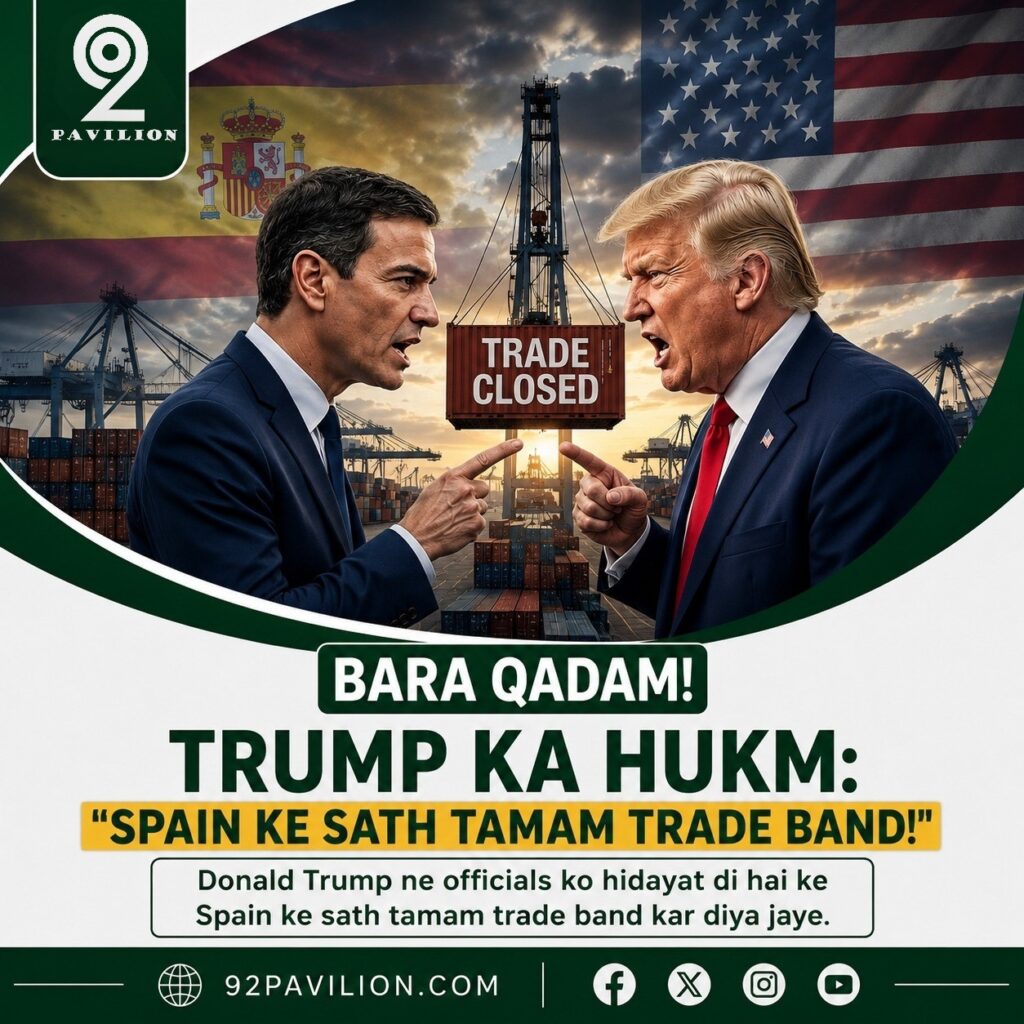
Quick Answer: Trump orders halt to all US trade with Spain, announcing the move at a NATO summit in Ankara on July 8, 2026. The decision escalates a long-running dispute over Spain’s defence spending and its refusal to let the US use its military bases during strikes on Iran. Spain’s Prime Minister downplayed the rift, calling his conversation with Trump “very cordial.”
What Trump Said
Speaking at the NATO summit, seated next to the alliance’s Secretary-General, Trump made his position blunt: “Cut off all trade with Spain, please, including visits.” He went further, calling Spain a “terrible partner” within NATO and saying the country doesn’t participate or pay its share.
The order marks the latest, and most forceful, step in a dispute that’s been building for months.
How This Dispute Started
The tension traces back to March 2026, when Spain refused to let the US military use its Rota and Moron bases for operations tied to strikes on Iran. In response, the US relocated 15 aircraft, including refuelling tankers, away from those bases.
Trump also repeatedly criticised Spain over its defence spending. NATO has pushed member countries toward spending 5 percent of GDP on defence. Spain said it could meet its military needs at a lower level, closer to 2.1 percent, a position Trump has consistently rejected.
Can the US Actually Do This?
Legally, it’s complicated. Spain is part of the European Union, and EU rules require trade negotiations to be handled collectively, not with individual member states. That’s a point Germany’s Chancellor Friedrich Merz raised directly with Trump, saying there’s no way to single out Spain in trade matters.
Still, US Trade Representative Jamieson Greer said Trump could use the International Emergency Economic Powers Act to justify targeted action against Spain, even though a Supreme Court ruling earlier this year struck down Trump’s broader global tariffs under similar legal reasoning.
Spain’s Response
Spanish Prime Minister Pedro Sanchez chose a measured tone in response. He downplayed the rift publicly, describing his conversation with Trump during the NATO summit as “very cordial,” despite the sharp rhetoric coming from Washington.
Spain has consistently defended its position, arguing it remains a committed NATO member making significant contributions to European defence, even if its spending percentage differs from what Trump has demanded.
What’s at Stake Economically
Spain’s top exports to the US include refined petroleum, pharmaceuticals, and electrical transformers, according to trade data from the Observatory of Economic Complexity. A full trade halt, if actually implemented, could disrupt these sectors on both sides.
Whether Trump follows through remains uncertain. He first floated cutting off Spanish trade back in March, a threat that drew criticism from European leaders but was never fully acted upon.
A Pattern of Escalating Threats
This isn’t an isolated incident in Trump’s approach to allies seen as falling short on defence spending. Reports have surfaced of internal discussions within the Pentagon about ways to pressure NATO members perceived as not supporting operations in the Iran war, including floating the idea of suspending Spain from the alliance entirely.
For now, the order to halt trade stands as Trump’s strongest public statement yet, even as questions remain about how, or whether, it will actually be enforced.
Frequently Asked Questions
Why did Trump order a trade halt with Spain?
The move follows Spain’s refusal to let the US use its military bases for Iran-related operations and ongoing disputes over NATO defence spending targets.
When did Trump make this announcement?
Trump ordered the halt on July 8, 2026, during a NATO summit in Ankara, Turkey.
Can the US legally cut off trade with just Spain?
It’s disputed. EU rules require collective trade negotiations, though US officials say separate legal tools could allow targeted action.
How has Spain responded to the order?
Spain’s Prime Minister downplayed the tension, describing his conversation with Trump as cordial, while defending the country’s NATO contributions.
This report is based on reporting from Reuters, CNBC, and The Associated Press.
92Pavilion tracks major international developments as they unfold. Stay with us for the latest.