
By: News Desk 92Pavilion | Updated: July 2026
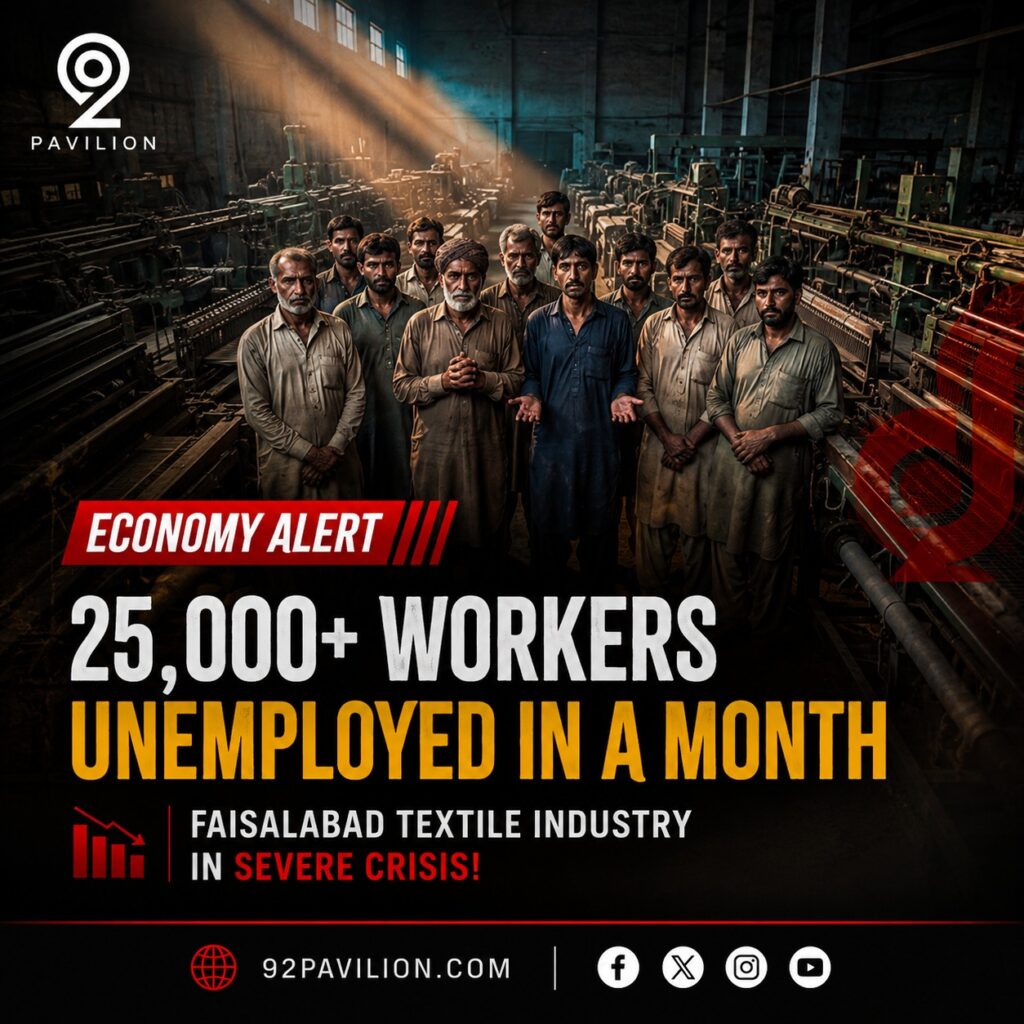
Quick Answer: The Faisalabad textile crisis continues to deepen, with industry leaders reporting that well over 100 factories, including major names like Sitara Textile Mills, have closed in recent years. Trade groups estimate that between 150,000 and 200,000 workers in the city have lost their jobs, driven by high energy costs, rising interest rates, and falling exports.
A City Built on Textiles, Now Struggling
Faisalabad has long been known as Pakistan’s textile hub. The sector here employs hundreds of thousands of workers, from large factories to small home-based operations. But that identity is now under serious strain.
Industry leaders say over a hundred factories have shut their doors in recent years. Among them is Sitara Textile Mills, one of the city’s most well-known names. A single closure there left around 900 workers without jobs overnight.
What’s Driving the Shutdowns
Rising costs sit at the center of the crisis. Chaudhry Salamat Ali of the Pakistan Hosiery Manufacturers and Exporters Association pointed to two main culprits: skyrocketing energy tariffs and high markup rates on loans.
Even factories still running haven’t escaped the pressure. Many have cut production by up to 40 percent just to stay afloat. Industry voices warn that without lower electricity and gas prices, more closures are likely in the months ahead.
The Human Cost Behind the Numbers
Behind every factory closure are real families losing their only source of income. Workers who’ve spent decades in the industry describe layoffs as devastating, both financially and emotionally.
Women workers have been especially affected. Many travel long distances from surrounding villages for factory jobs that offer little job security to begin with. For them, losing that income often means losing their only path to financial independence.
A Sector Under Pressure for Years
This isn’t a sudden crisis. Pakistan’s textile industry, which accounts for roughly 60 percent of the country’s exports, has faced mounting pressure for several years. Floods have damaged cotton crops. Energy costs have climbed sharply. Political and economic uncertainty has made international buyers cautious.
Industry body APTMA has repeatedly asked the federal government to step in with relief measures, warning that job losses would keep mounting without urgent action. Some estimates from recent years put nationwide textile job losses in the millions, though figures vary by source and time period.
What Industry Leaders Are Asking For
Trade associations have been clear about what they want. Lower electricity and gas tariffs top the list. Reduced markup rates on industrial loans come next. Faster processing of pending tax refunds is another common demand.
Without these changes, industry leaders argue, Pakistan risks losing more of its textile capacity to regional competitors like Bangladesh and Vietnam, both of which offer lower production costs.
What This Means Going Forward
For now, the outlook remains uncertain. Some factory owners hope that global buyers shifting away from other markets could eventually bring new orders to Pakistan. But that opportunity depends heavily on whether the government addresses the cost pressures driving factories to close in the first place.
Until then, workers in Faisalabad continue to face an uncertain future, caught between an industry in crisis and a livelihood with few alternatives.
Frequently Asked Questions
How many factories have closed in Faisalabad?
Industry leaders report that over 100 factories, including major names like Sitara Textile Mills, have shut down in recent years.
How many jobs have been lost?
Trade associations estimate between 150,000 and 200,000 workers in Faisalabad have lost their jobs due to factory closures.
What is causing the Faisalabad textile crisis?
High energy tariffs, elevated interest rates, falling exports, and reduced cotton production are the main factors cited by industry leaders.
What are industry groups asking the government to do?
They’re calling for lower electricity and gas prices, reduced markup rates, and faster tax refund processing.
This report is based on statements from the Pakistan Hosiery Manufacturers and Exporters Association and reporting from The News and Dawn.
92Pavilion continues to follow the stories shaping Pakistan’s economy and its workers. Stay with us for updates.