
By: News Desk 92Pavilion | Updated: July 2026
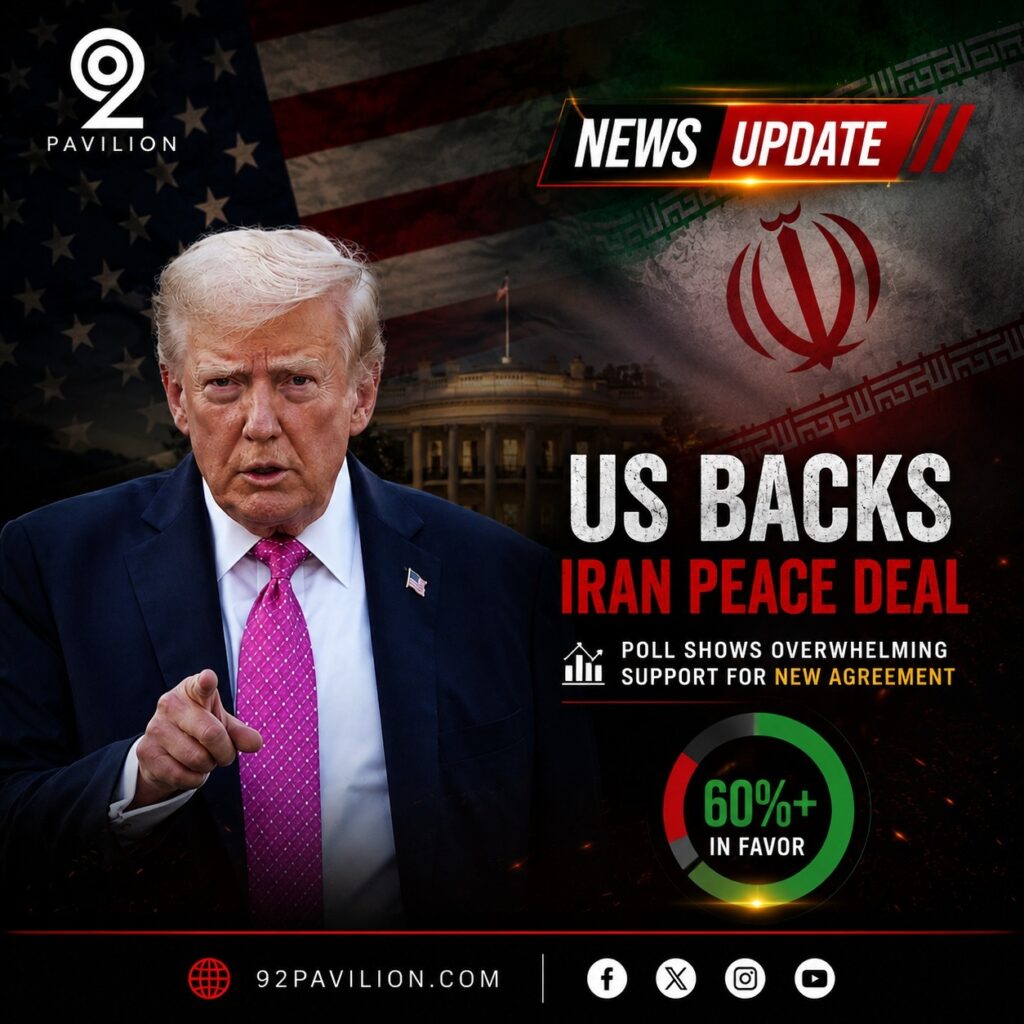
Quick Answer: A new poll on the US-Iran peace deal shows strong public backing, even as the agreement itself has run into trouble. President Trump shared results on July 20 showing 60.4 percent of American voters support the memorandum signed with Iran in June. The poll came just as fighting between the two countries resumed, putting the deal’s future in doubt.
What the Poll Found
The survey, conducted by Big Data Poll, asked voters directly whether they backed the US-Iran memorandum of understanding. 60.4 percent said yes. 23.7 percent were opposed. The rest were unsure.
Support was strongest among Trump’s own voter base, with more than three-quarters backing the deal. Notably, just over half of voters who had backed Kamala Harris also expressed support, pointing to rare common ground across party lines.
A Deal That’s Already Under Strain
The timing of the poll’s release raised eyebrows. By the time Trump shared the results, he had already declared the memorandum “over.” Strikes against Iran had resumed, with the US carrying out nine consecutive nights of airstrikes by mid-July.
Trump’s language grew sharper too. He warned that Iran would “pay many times over” for any American soldier killed, directing the message to his defense secretary and military leadership.
What the Original Deal Promised
The memorandum was signed in June, brokered with Pakistan’s help. Under its terms, the US agreed to lift its naval blockade on Iran, work toward a $300 billion reconstruction plan, and lift sanctions. In return, Iran agreed to reopen the Strait of Hormuz and reaffirm it would not pursue nuclear weapons.
Notably, the deal left out Iran’s ballistic missile program entirely. Trump defended that decision, arguing it wouldn’t be fair to restrict Iran’s missiles while other regional players kept theirs.
Americans Are Cautiously Optimistic, Not Confident
Separate polling from June tells a more complicated story. While a majority supported ending the war through negotiation, most Americans weren’t convinced the deal was actually a good one. Only 18 percent believed the US had achieved its goals in the conflict.
Nearly half of respondents said the US shouldn’t have gone to war with Iran in the first place. And a striking 61 percent said they weren’t confident the deal would actually stop Iran from building a nuclear weapon, despite the administration’s claims.
Where Things Stand Now
With fighting resumed and the original deal declared void by Trump himself, the path forward remains unclear. Mediators have since floated a new 10-day ceasefire proposal aimed at reviving talks, though Iran’s response to that offer is still pending.
For now, public opinion suggests most Americans want a deal, even if they’re skeptical it will hold. That gap, between wanting peace and trusting the process, looks likely to shape how this story develops in the weeks ahead.
Frequently Asked Questions
What did the recent poll on the US-Iran deal find?
It found that 60.4 percent of American voters support the memorandum of understanding signed between the US and Iran in June 2026.
Is the US-Iran peace deal still active?
Trump has publicly declared the deal “over” after fighting resumed, though mediators have since proposed a new ceasefire to revive talks.
What did the original deal include?
It included a US naval blockade lift, sanctions relief, a $300 billion reconstruction plan for Iran, and Iran’s commitment not to pursue nuclear weapons.
Do Americans think the deal is a good one?
Polling suggests mixed views. While most support ending the war, only a small share believe the US achieved its goals in the conflict.
This report is based on polling data from Big Data Poll, Economist/YouGov, and Strength In Numbers/Verasight, with reporting from Antiwar.com and the Libertarian Institute.
92Pavilion continues to track this developing story. Follow us for the latest on US-Iran relations.