
By: News Desk 92Pavilion | Updated: July 2026
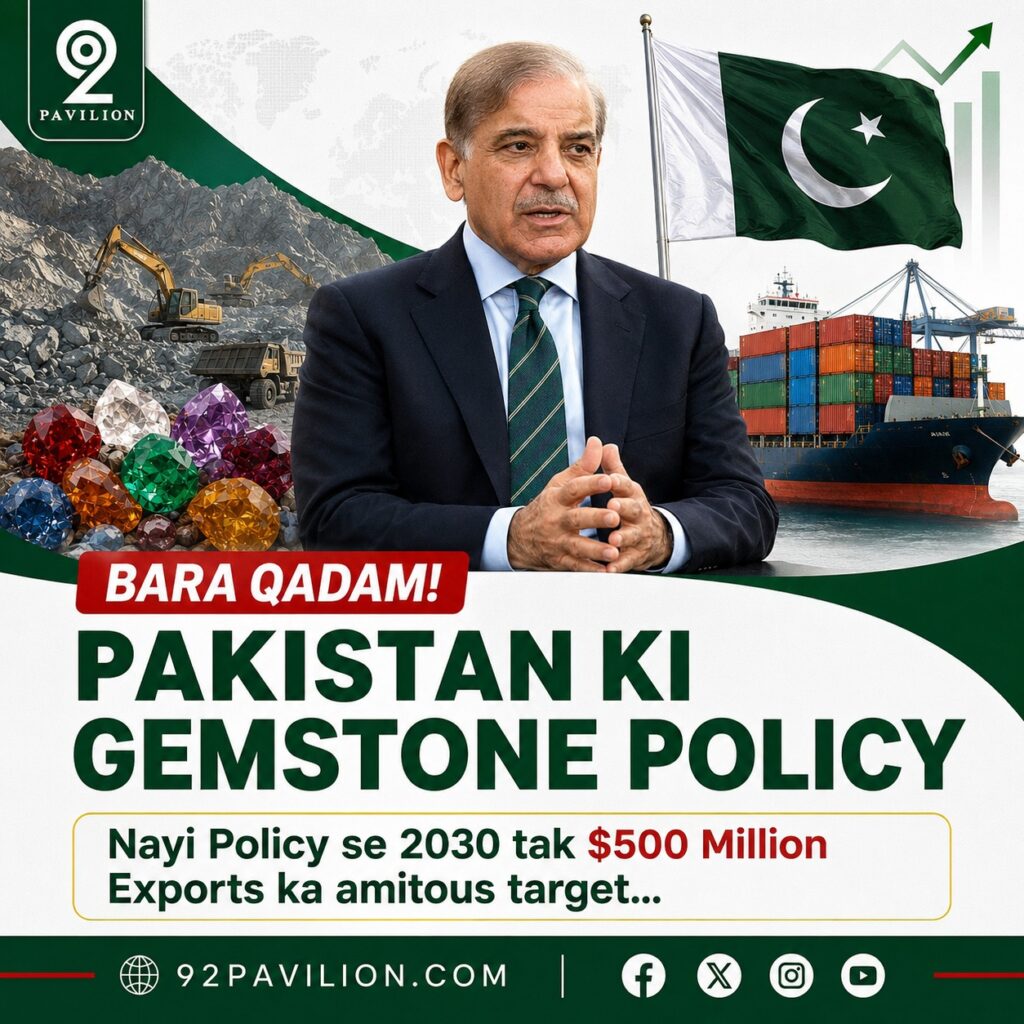
Quick Answer: The federal government has approved a new Pakistan Gemstone Policy for 2026-2030. It aims to raise annual gemstone exports from just $5-7 million to around $500 million by 2030. The plan targets an estimated $450 billion worth of untapped gemstone reserves across the country.
A Massive Resource, Barely Used
Pakistan sits on some of the richest gemstone deposits in the world. Officials estimate these reserves at around $450 billion. Yet official exports remain tiny, at just $5 to $7 million a year. That’s only about 0.3 percent of the entire global gemstone trade.
The reason is simple. More than 95 percent of gemstone trade in Pakistan happens through informal channels. Weak certification, poor regulation, and limited access to international markets have kept the sector in the shadows for decades.
What the New Policy Changes
The Economic Coordination Committee approved the National Gemstone Policy 2026-2030 to fix this gap. The plan centers on formalising the industry from the ground up.
A key piece is the creation of a National Gemstone Authority. This new statutory body will regulate the sector, maintain a national trade registry, and oversee certification systems. It will be formed by merging the existing Pakistan Gems and Jewellery Development Company into the new structure.
Building Trust Through Certification
The government also plans to set up a National Warranty Office. This office will inspect, value, and certify gemstones before export. It will work closely with Pakistan Customs, banks, and courier companies to make the process smoother and more transparent.
New minimum export price benchmarks are also part of the plan. Along with Pakistan-specific trade codes, these measures aim to stop under-invoicing, a common problem that has cost the country foreign exchange for years.
Learning From Other Countries
Officials didn’t design this policy in isolation. The plan draws on lessons from India, Thailand, Sri Lanka, and Myanmar. These countries successfully grew their gemstone exports through similar reforms, focusing on formalisation, certification, and adding value before goods leave the country.
Pakistan hopes to follow a similar path, turning raw gemstones into higher-value finished products before export, rather than selling them cheaply in their raw form.
What This Means for the Industry
For miners and traders working in the informal sector, this policy could mean real change. Easier access to financing, modern equipment, and legal trading channels could help many move into the formal economy for the first time.
The policy also plans to support regions rich in gemstone reserves, including Gilgit-Baltistan, Khyber Pakhtunkhwa, and Azad Jammu and Kashmir. These areas could see new jobs and investment if the plan is implemented well.
The Road Ahead
Turning this policy into reality will take more than approval. It requires new legislation, updated regulations, and coordination between federal and provincial governments. The government says early funding is already being arranged to help set up the new regulatory authority.
If the targets are met, Pakistan’s gemstone sector could go from a nearly invisible export category to a genuine source of national income within the next few years.
Frequently Asked Questions
Q: What is the goal of Pakistan’s new Gemstone Policy?
A: It aims to raise gemstone exports from around $5-7 million to roughly $500 million annually by 2030.
Q: Why are Pakistan’s gemstone exports so low right now?
A: More than 95 percent of gemstone trade happens informally, due to weak certification, regulation, and market access.
Q: What is the National Gemstone Authority?
A: It’s a new statutory body created under the policy to regulate the sector, manage certification, and support trade.
Q: Which regions will benefit most from this policy?
A: Gilgit-Baltistan, Khyber Pakhtunkhwa, and Azad Jammu and Kashmir are expected to see the most direct impact, given their gemstone reserves.
This report is based on statements from the Ministry of Industries and Production and reporting from Business Recorder, ProPakistani, and Arab News.
92Pavilion brings you the policy stories shaping Pakistan’s economy. Stay with us for what comes next.