
By: News Desk 92Pavilion | Updated: July 2026
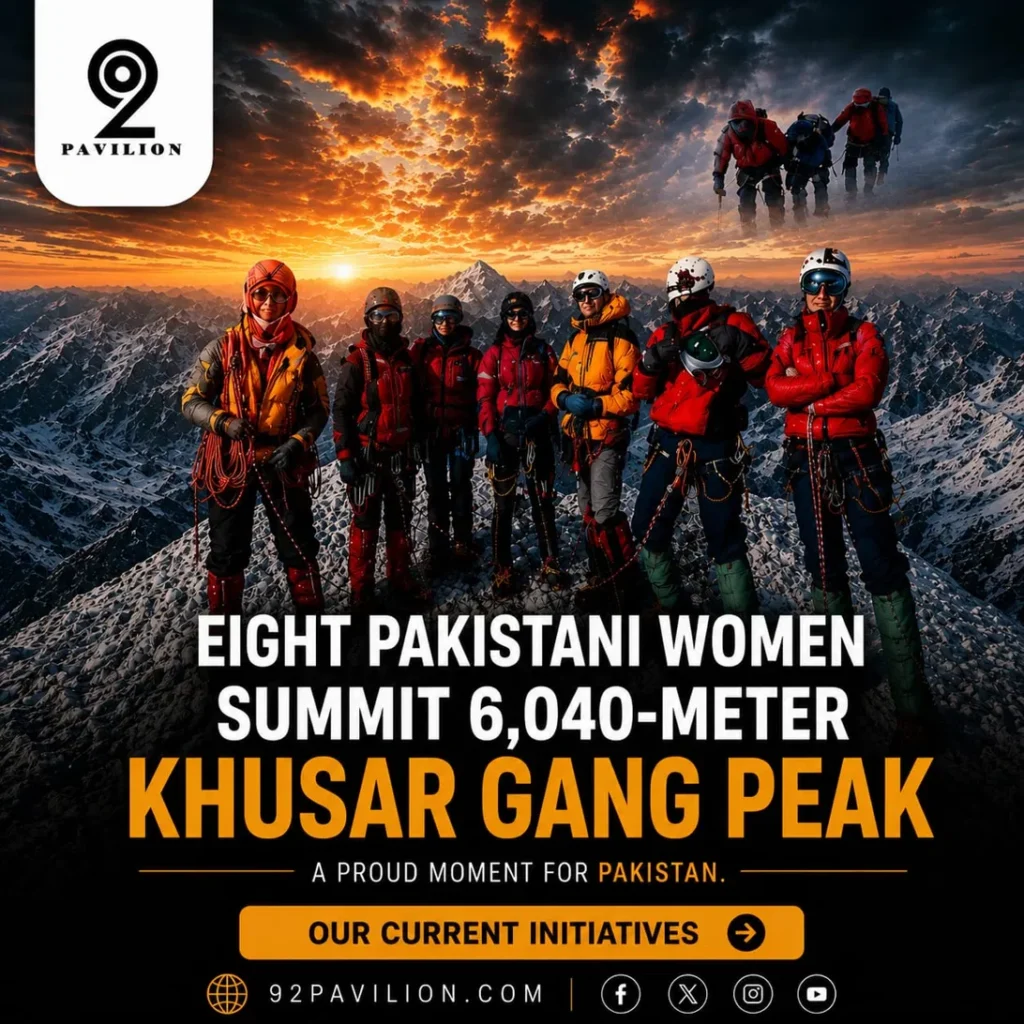
Quick Answer: Eight Pakistani women summit Khusar Gang Peak, reaching the 6,040-metre summit on the morning of July 17, 2026. The climb was organised by the Alpine Club of Pakistan under its Second Women’s Khosar Gang Expedition. The team included climbers from Gilgit-Baltistan, Punjab, Khyber Pakhtunkhwa, Balochistan, and Islamabad.
A Milestone for Women’s Mountaineering
The successful climb marks a major moment for female mountaineers in Pakistan. It reflects the growing number of women taking part in serious high-altitude expeditions across the country.
The team was led by Bibi Afzoon. Climbers came from five different regions of Pakistan, showing how mountaineering talent now spans the whole country, not just traditional climbing hubs.
Who Made the Climb
Participants were chosen through a transparent selection process. A committee of experienced women mountaineers, led by renowned Pakistani climber Naila Kiani, oversaw the selection.
Climbers on the team included Zeba Batool and Bibi Afzoon from Gilgit-Baltistan, Haiqa Ghazi and Ammara Sharif from Islamabad, and Maria Khan from Khyber Pakhtunkhwa, among others from Punjab and Balochistan.
Technical Support Behind the Climb
High-altitude guides played a key role in the expedition’s success. Ali Muhammad Sadpara, Sadiq Hussain Sadpara, and Ilyas Hushe provided technical guidance throughout the ascent.
Qaid Shigri handled the critical task of fixing ropes along the route. This work helped ensure the team’s safe passage to the summit and back.
Where Khusar Gang Peak Stands
Khusar Gang Peak rises to 6,040 metres in the Shigar Valley, part of the Karakoram range in Gilgit-Baltistan. It’s known for its scenic beauty and demanding terrain, drawing climbers looking for both adventure and technical challenge.
This marked the Alpine Club of Pakistan’s second all-women expedition to the peak, building on previous efforts to expand opportunities for female climbers.
What Officials Are Saying
Alpine Club of Pakistan Secretary General Ayaz Shigri congratulated the team after their summit. He said the achievement reflected the determination, resilience, and professional capability of Pakistani women in adventure sports.
Shigri added that the club remains committed to creating more opportunities for women climbers, both within Pakistan and on international expeditions.
A Bigger Moment for Pakistani Mountaineering
The Khusar Gang summit came the same week as another major climbing success. A separate team summited Broad Peak, one of the world’s eight-thousander mountains, during the same period.
Together, these achievements highlight Pakistan’s growing reputation as a serious mountaineering destination. Officials hope stories like this one will inspire more young women to take up climbing and other adventure sports.
Frequently Asked Questions
When did Pakistani women summit Khusar Gang Peak?
The team reached the summit on the morning of July 17, 2026.
How tall is Khusar Gang Peak? Khusar Gang Peak stands at 6,040 metres, located in the Shigar Valley in Gilgit-Baltistan.
Who organised the expedition?
The Alpine Club of Pakistan organised the climb as part of its Second Women’s Khosar Gang Expedition.
How many women were part of the team?
Eight Pakistani women mountaineers completed the climb, representing regions across the country.
This report is based on statements from the Alpine Club of Pakistan and reporting from Dawn, Samaa, and The Frontier Post.