Latest Posts
Loading latest posts…

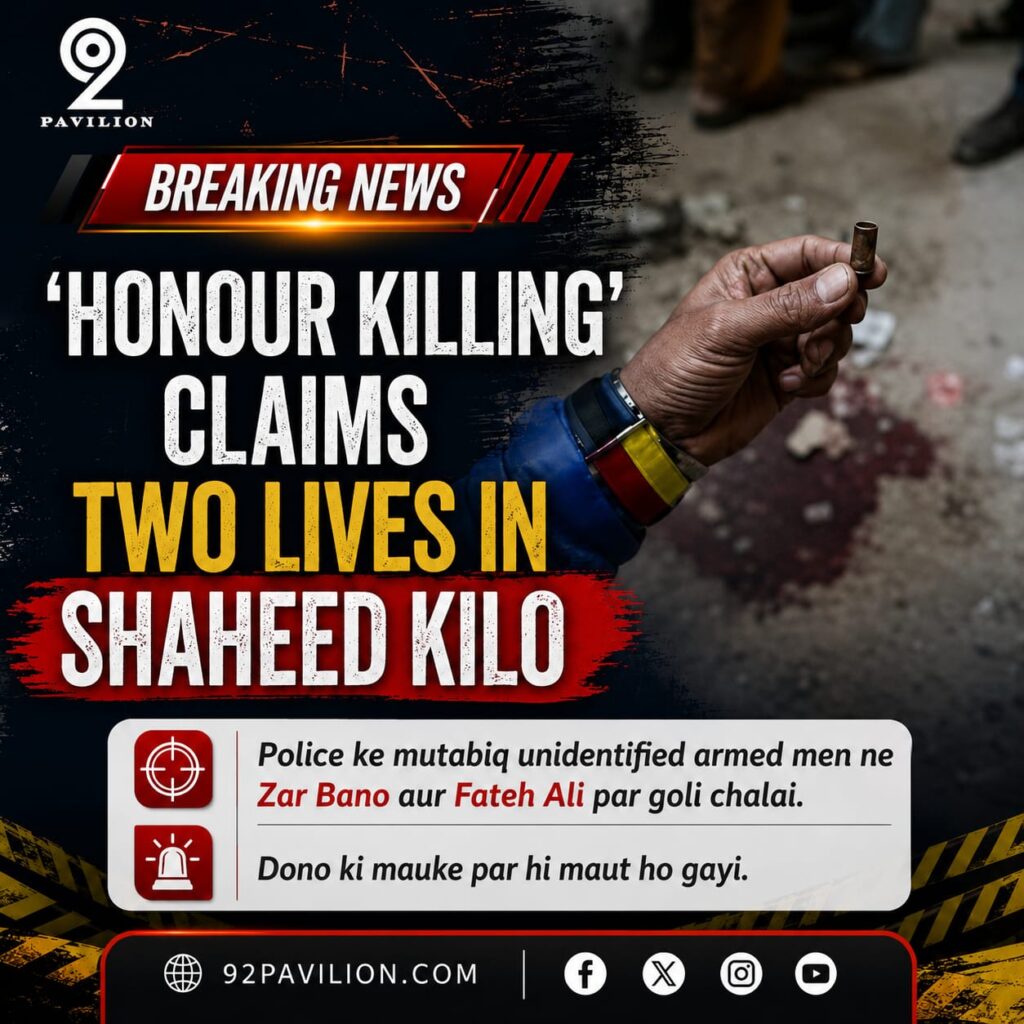
Shaheed Kilo Honour Killing: Man and Woman Shot Dead in Balochistan

Shaheed Kilo honour killing

Shaheed Kilo Honour Killing: Man and Woman Shot Dead in Balochistan

By: News Desk 92Pavilion | Updated: July 2026

Quick Answer: The Shaheed Kilo honour killing claimed two lives on July 18, 2026. Police say unidentified gunmen shot Zar Bano and Fateh Ali in the border area between Nasirabad and Jhal Magsi districts. Both died on the spot. Police have classified the case as an honour killing.

What Happened

The shooting took place in the Shaheed Kilo area. This sits along the border of Nasirabad and Jhal Magsi districts in Balochistan. Armed men opened fire on the two victims without warning, according to police.

Zar Bano and Fateh Ali suffered multiple bullet wounds. Police confirmed that both died at the scene. No arrests have been announced so far.

Police Confirm the Motive

Officials investigating the case said the killings were carried out in the name of honour. This classification is based on initial findings at the scene. Police have not released further details about a possible investigation timeline.

The attackers remain unidentified. Police have not said whether they are actively searching for suspects connected to the shooting.

A Recurring Problem in the Region

Cases like this are not isolated in Balochistan. So-called honour killings remain a persistent issue across parts of Pakistan, particularly in rural areas. Victims are often accused of bringing “dishonour” to their families, frequently over relationships or marriage choices.

Human rights groups have long pushed for stronger enforcement of existing laws. Pakistan criminalised honour killings under an amendment passed in 2016. Even so, cases continue to be reported across the country each year.

Why These Cases Are Hard to Prosecute

Legal experts point to a recurring challenge in honour killing cases. Many are carried out by relatives or people close to the victims. This can make witnesses reluctant to come forward.

Tribal and family pressure in some areas also discourages formal complaints. In several past cases, investigations have stalled without clear evidence or cooperating witnesses.

What Comes Next

As of now, no suspects have been named in the Shaheed Kilo honour killing. Local police are expected to continue their investigation into the shooting. Further updates on arrests or evidence are expected in the coming days.

Frequently Asked Questions

What is the Shaheed Kilo honour killing case?

It refers to the killing of Zar Bano and Fateh Ali, shot dead by unidentified gunmen on July 18, 2026, in Balochistan.

Where did the incident happen?

In the Shaheed Kilo area, located on the border between Nasirabad and Jhal Magsi districts.

Have any arrests been made?

No arrests had been announced at the time of this report.

Is honour killing illegal in Pakistan?

Yes. Pakistan passed a law in 2016 that closed loopholes allowing families to pardon perpetrators of honour killings.

This report is based on police statements and reporting from Dawn.

Share

Introduction

Pakistan’s political environment in 2026 remains dynamic and highly influential in shaping the country’s future. From parliamentary debates and economic policy decisions to opposition movements and electoral reforms, recent developments are playing a crucial role in determining national direction.

In this report by Eye of Pakistan, we analyze the latest political developments, government strategies, and opposition responses.

Government’s Policy Priorities in 2026

The federal government has emphasized:

  • Economic stabilization

  • Institutional reforms

  • Energy sector restructuring

  • Strengthening foreign diplomatic ties

Recent cabinet meetings focused on controlling inflation, stabilizing the Pakistani Rupee, and implementing fiscal discipline under ongoing economic reform programs.

Officials claim these measures aim to restore investor confidence and ensure sustainable growth.

Opposition’s Response and Political Strategy

Major opposition parties have intensified criticism of government policies, particularly regarding:

  • Rising inflation

  • Unemployment

  • Tax reforms

  • Utility price increases

Opposition leaders argue that economic pressure on the public has increased and demand greater transparency in parliamentary proceedings.

Political rallies and public gatherings have increased across major cities including Karachi, Lahore, and Islamabad.

Parliamentary Developments

Recent National Assembly sessions have seen heated debates over:

  • Budget allocations

  • Electoral reforms

  • Accountability laws

  • Provincial autonomy issues

Lawmakers from both treasury and opposition benches continue to exchange strong viewpoints, reflecting a vibrant yet tense political atmosphere.

Election Reforms and Democratic Process

Discussions around electoral transparency and digital voting mechanisms remain central to political discourse.

The Election Commission is reportedly reviewing:

  • Voter verification systems

  • Polling station security

  • Overseas voting procedures

Analysts believe these reforms could significantly impact future general elections.

Public Reaction and Political Climate

Public opinion appears divided. While some citizens support structural reforms and long-term stabilization plans, others express concerns over economic hardships and governance challenges.

Political analysts suggest that the coming months will be critical in determining whether current policies translate into tangible relief for the public.

Conclusion

Pakistan’s political landscape in 2026 is marked by active debate, institutional reforms, and strategic maneuvering from both government and opposition parties. As policy decisions continue to unfold, their impact on economic stability and democratic processes will remain under close observation.

Stay connected with Eye of Pakistan for reliable and timely political updates.