By: News Desk 92Pavilion
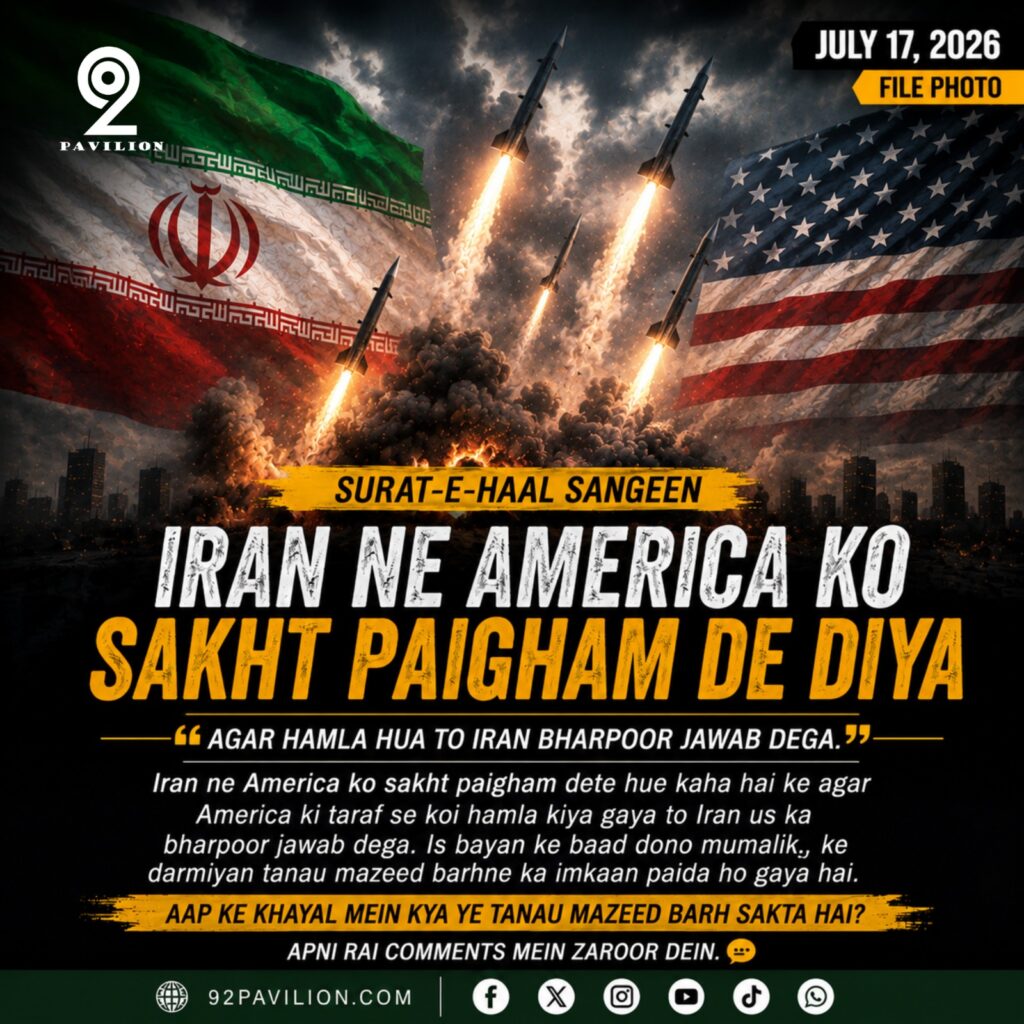
Tehran/Washington: Iran issued a stark warning to the United States on Friday, threatening a full-scale military response if American strikes continue. The warning came on the seventh consecutive day of US attacks on Iranian territory, deepening a conflict that shows no signs of slowing.
What Iran Said
Mohsen Rezaei, a senior adviser to Iran’s Supreme Leader, delivered the warning in a state television interview. He said Iran would launch full-scale offensive operations if the strikes continued for another two or three days. His comments followed a week of escalating US military action across Iranian territory.
Additionally, a spokesperson for Iran’s top military command drew a clear red line. He warned that Tehran would not allow any US interference in the Strait of Hormuz. Iran, he added, would strike infrastructure across the region if President Trump followed through on his threats against Iranian targets.
Background: A Week of Escalation
The current wave of fighting began after the US launched strikes described as an effort to “further degrade” Iran’s military capabilities. According to US Central Command, forces have hit Iranian command centers, air defense sites, missile facilities, and coastal surveillance systems near the Strait of Hormuz.
In response, Iran’s Revolutionary Guards reportedly struck a US air base in Jordan with ballistic missiles. Iranian officials say this came after a US strike near a children’s hospital in Iran. Meanwhile, Iranian media reported explosions across several southern cities, including Bandar Abbas, Qeshm Island, and Chabahar.
President Trump, for his part, warned earlier this week that US forces would target Iranian infrastructure directly if talks failed to resume. “Next week comes the power plants,” he said in a televised interview. “Next week comes the bridges.”
Regional Fallout
The conflict has already spread beyond Iran and the US. India confirmed the death of an Indian sailor after Iranian forces struck a commercial vessel in the Gulf of Oman. As a result, India has ordered shipping companies to stop sending Indian crew members through the Strait of Hormuz.
This single route carries a significant share of the world’s oil shipments. Therefore, any prolonged disruption there could push global energy prices sharply higher in the coming weeks.
Why This Matters
Analysts warn that both sides now appear locked into a cycle of retaliation. Each new strike invites a fresh response, making a swift resolution increasingly unlikely. Iran’s warning of a “full-scale offensive” signals that Tehran may be preparing for a broader confrontation rather than a limited exchange.
At the same time, Washington has shown no indication of scaling back operations. Instead, officials continue to frame the strikes as necessary to protect shipping lanes and curb Iran’s military capacity.
What Happens Next
Both governments have left the door open to diplomacy, at least in public statements. However, neither side has set a clear timeline for talks. Until that changes, further strikes and counter-strikes remain likely in the days ahead.
FAQs
What did Iran warn the US about?
Iran warned it would launch a full-scale offensive if US strikes continue, and separately warned it would treat any US interference in the Strait of Hormuz as a red line.
Why are the US and Iran fighting?
The current escalation follows US strikes aimed at degrading Iran’s military capabilities, including its ability to threaten shipping through the Strait of Hormuz.
Has Iran attacked US forces?
Yes. Iran’s Revolutionary Guards reportedly struck a US air base in Jordan with ballistic missiles, which they described as retaliation for a US strike near an Iranian hospital.
How is this affecting global shipping?
India has ordered its shipping companies to stop sending Indian sailors through the Strait of Hormuz after an Iranian strike killed a crew member, raising fears of wider disruption to oil shipments.
Is a ceasefire likely soon?
Both sides have left room for diplomacy, but neither has set a timeline for talks, and strikes have continued for seven consecutive days.