By: News Desk 92Pavilion
Islamabad: Pakistan’s fuel prices are heading upward once again. The federal government is expected to announce a fresh petrol and diesel price hike from July 18, driven by surging global oil prices. This shock comes barely a week after the last increase, and it threatens to squeeze household budgets even further.
What’s Changing From July 18
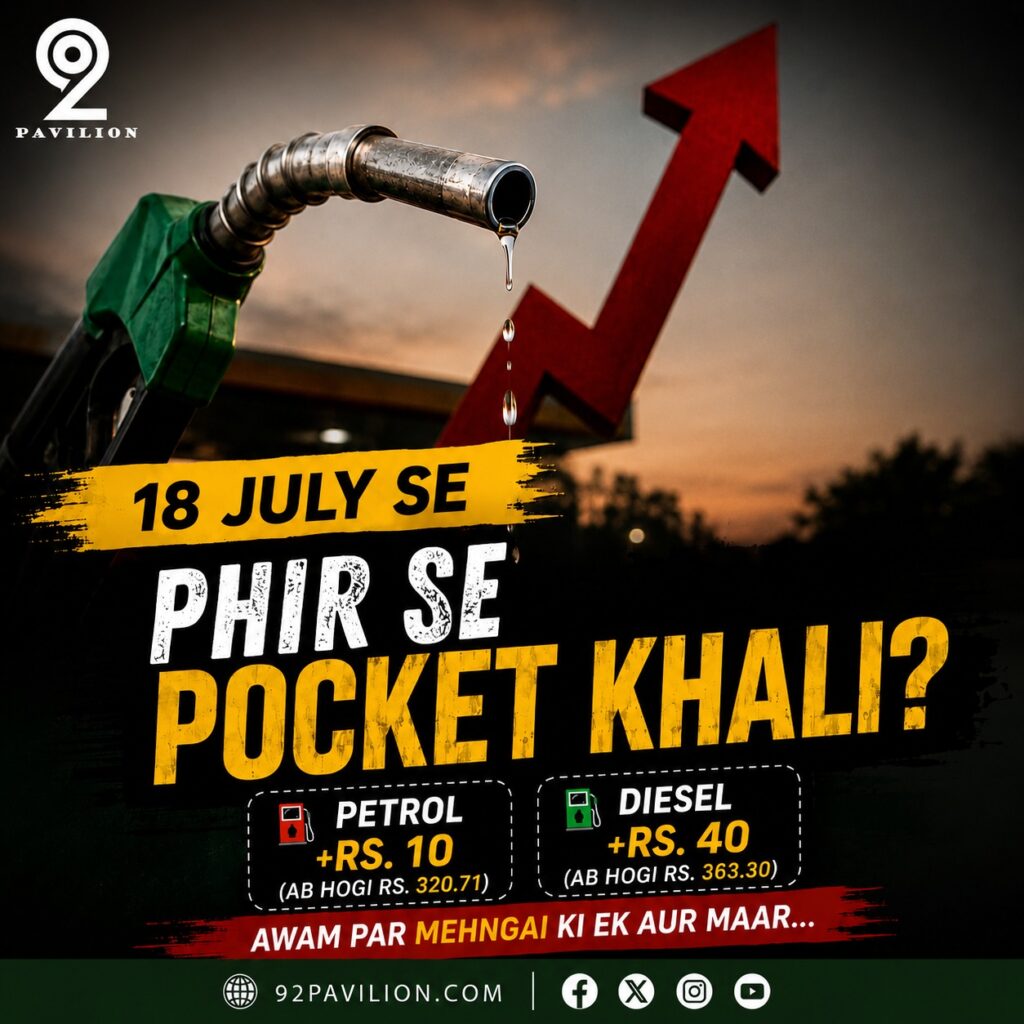
According to preliminary estimates, petrol may rise by around Rs10 per litre. As a result, the price could climb from Rs310.71 to approximately Rs320.71 per litre. Diesel, however, faces a much steeper hike. Officials expect high-speed diesel (HSD) to jump by as much as Rs40 per litre, pushing its price from Rs323.30 to around Rs363.30 per litre.
The Oil and Gas Regulatory Authority (OGRA) reviews petroleum prices every two weeks. Consequently, the government will finalize these figures based on the last few days of international price data before issuing an official notification, expected around 12:10 am on July 18.
Why Prices Are Rising
International oil markets have surged recently. This spike follows renewed conflict involving Iran and the United States, which has rattled global energy markets. As tensions escalate in the Middle East, crude oil prices continue climbing, and Pakistan imports most of its fuel needs.
Meanwhile, the government has already revised export duties on petroleum products. For instance, the diesel export duty rose from Rs8.5 to Rs15.5 per litre, effective July 16. These adjustments reflect the broader pressure building across the energy sector.
Notably, some relief may still be possible. Sources indicate the government is considering a reduction in the petroleum levy. This move could partially offset the price increase and ease the burden on consumers, though a final decision rests with the Finance Division.
Impact on Common Citizens
Diesel prices matter enormously for everyday life in Pakistan. Public transport, freight trucks, and agricultural machinery all depend heavily on diesel. Therefore, a Rs40 hike will likely raise transportation costs across the board. In turn, this typically pushes up prices for essential goods, from vegetables to packaged food.
Petrol, meanwhile, affects millions of daily commuters directly. Even a Rs10 increase adds real financial strain for salaried workers and small business owners already grappling with high inflation.
Supply Concerns Add to the Pressure
Interestingly, the anticipated hike has already triggered supply disruptions in parts of the country. Reports suggest some dealers are hoarding high-speed diesel, anticipating higher prices ahead. The Oil Companies Advisory Committee (OCAC) flagged unusually high fuel sales during the first half of July, well above normal consumption levels. This pattern suggests stockpiling rather than genuine demand, according to OGRA’s analysis presented at a recent meeting.
What Comes Next
The government will issue an official notification once it finalizes the new rates. Until then, the figures remain estimates based on Platts price assessments and current market trends. Citizens should watch for the Petroleum Division’s formal announcement, expected to take effect from midnight on July 18.
Conclusion
Pakistan’s fuel consumers face yet another price shock as global oil markets react to Middle East tensions. While petrol may rise by roughly Rs10 per litre, diesel could see a much sharper Rs40 increase, pushing rates above Rs360 per litre. The final numbers will depend on the government’s official notification, though relief through a reduced petroleum levy remains possible. As always, the outcome will directly affect transportation costs and inflation across the country.
FAQ
When will new petrol and diesel prices take effect in Pakistan?
The revised prices are expected to take effect from midnight on July 18, 2026, following the government’s official notification.
How much will petrol prices increase?
Petrol may rise by around Rs10 per litre, taking the price from Rs310.71 to approximately Rs320.71 per litre.
How much will diesel prices increase?
High-speed diesel (HSD) could rise by as much as Rs40 per litre, pushing the price from Rs323.30 to around Rs363.30 per litre.
Why are fuel prices increasing again?
Rising international crude oil prices, driven by renewed conflict between Iran and the United States, are pushing up Pakistan’s fuel import costs.
Will the government offer any relief?
Officials are considering a reduction in the petroleum levy to partially offset the increase, though a final decision has not yet been announced.
How will this affect common citizens?
Higher diesel prices typically raise transportation and freight costs, which can push up prices for essential goods and add to overall inflation.