By: News Desk 92Pavilion | Updated: July 2026
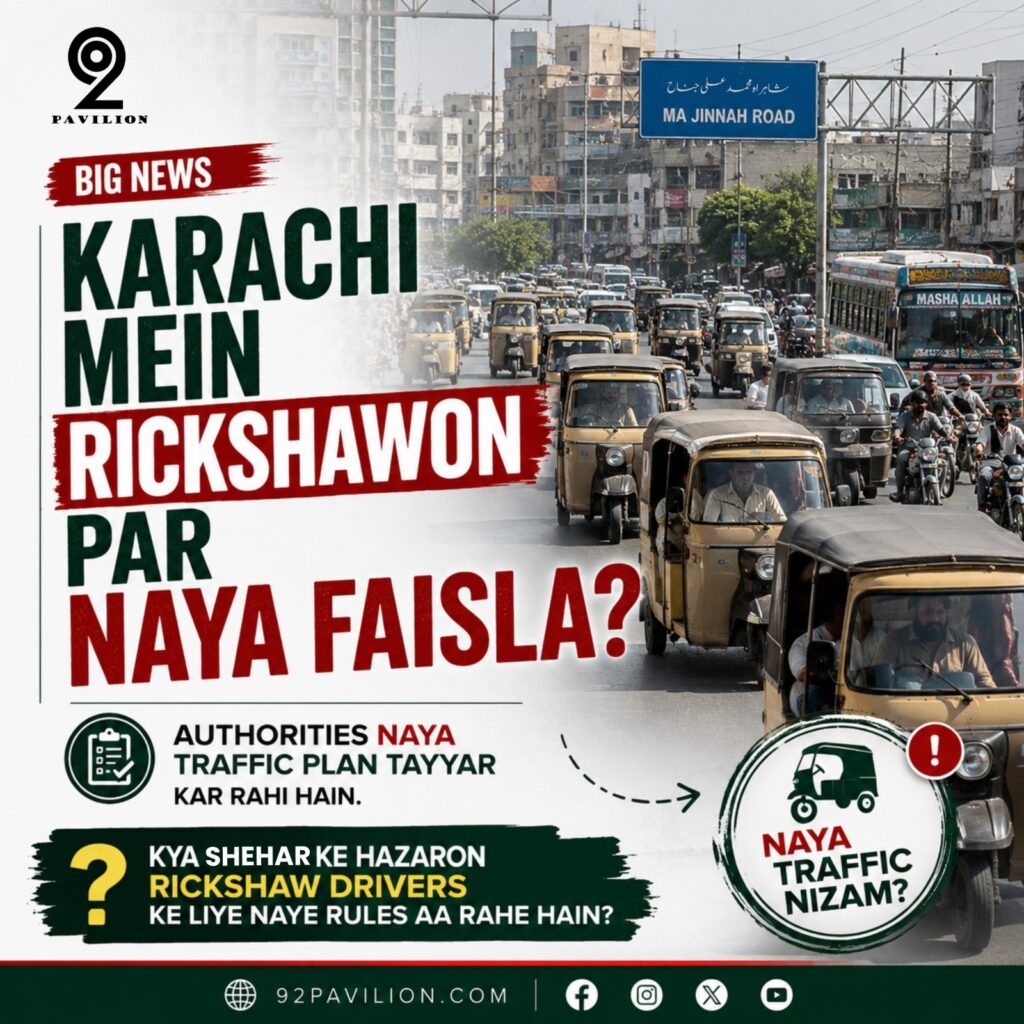
Quick Answer: Karachi Traffic Police plans a new Karachi rickshaw meter rule. Under it, only rickshaws with a working meter will be allowed to operate in the city. DIG Traffic Karachi, Pir Muhammad Shah, announced the plan at the Karachi Press Club. The department will also remove Qingqi rickshaws from major roads. No official start date has been given yet.
What Was Announced
DIG Traffic Pir Muhammad Shah shared the plan at a press briefing. He said traffic police want to bring order to rickshaw fares across the city. Right now, most rickshaws charge whatever the driver asks. There is no fixed rate. The new rule aims to fix that.
Under the Karachi rickshaw meter rule, every rickshaw must have a meter fitted and working. Drivers without one will not be allowed on the road. The DIG said this step is part of a bigger plan to improve road safety and traffic flow in the city.
Qingqi Rickshaws Face Removal Too
Alongside the meter rule, police are working to clear Qingqi rickshaws from Karachi’s main roads. These four-seater rickshaws have long been blamed for overloading, reckless driving, and blocking traffic on busy streets.
This isn’t the first move against Qingqis. In past months, Karachi authorities banned motor cab rickshaws on 25 major roads, including Shahrah-e-Faisal, I.I. Chundrigar Road, and Korangi Road. That ban was extended and remains in force until February 21, 2026. Sindh’s Home Department has also approved a full ban on four-seater Qingqi rickshaws, while smaller two-seater auto-rickshaws can still operate.
The E-Challan Problem
The DIG also touched on a separate issue that has frustrated many drivers. Karachi’s e-challan system generates fines automatically. But the DIG admitted that this system sometimes makes mistakes. Some motorists have received wrong or unfair challans.
A new policy is being prepared to fix these errors, he said. He added that lane markings and the e-challan system, despite some problems, have already helped improve traffic flow across the city.
Road Safety Numbers Behind the Push
The DIG shared a sobering figure. Last year, 164 people died in accidents involving heavy vehicles in Karachi. That number is part of why traffic police are pushing harder on rickshaw regulation and road discipline this year.
He also revealed a separate issue in vehicle records. Around 45,000 vehicles in Karachi are still registered under their previous owners’ names. Police have already taken action against some of these cases, with a few handed over to law enforcement.
What This Means for Commuters
For daily rickshaw riders, the meter rule could bring more predictable fares. No more haggling over price before every ride. But drivers may push back, since many rely on negotiating higher fares during peak hours or bad weather.
Transport experts say enforcement will be the real test. Karachi has announced rickshaw restrictions before, and compliance has often been weak. Whether this rule sticks will depend on how strictly traffic police monitor it once it rolls out.
Frequently Asked Questions
Q: What is the new Karachi rickshaw meter rule?
It requires all rickshaws operating in Karachi to have a working meter. Rickshaws without one won’t be allowed on the road.
Q: Who announced this rule?
DIG Traffic Karachi, Pir Muhammad Shah, announced it at a press briefing held at the Karachi Press Club.
Q: Are Qingqi rickshaws also being banned?
Yes. Traffic police are working to remove Qingqi rickshaws from major roads, alongside the new meter requirement for regular rickshaws.
Q: When does the meter rule take effect?
No official start date has been confirmed. The department said the plan is still being finalized.
Q: Is there already a rickshaw ban in Karachi?
Yes. Motor cab rickshaws are already banned on 25 major roads, with that restriction extended until February 21, 2026.
This report is based on statements from Karachi Traffic Police and reporting from ProPakistani, Bol News, and The Express Tribune.