By: News Desk 92Pavilion | Updated: July 2026
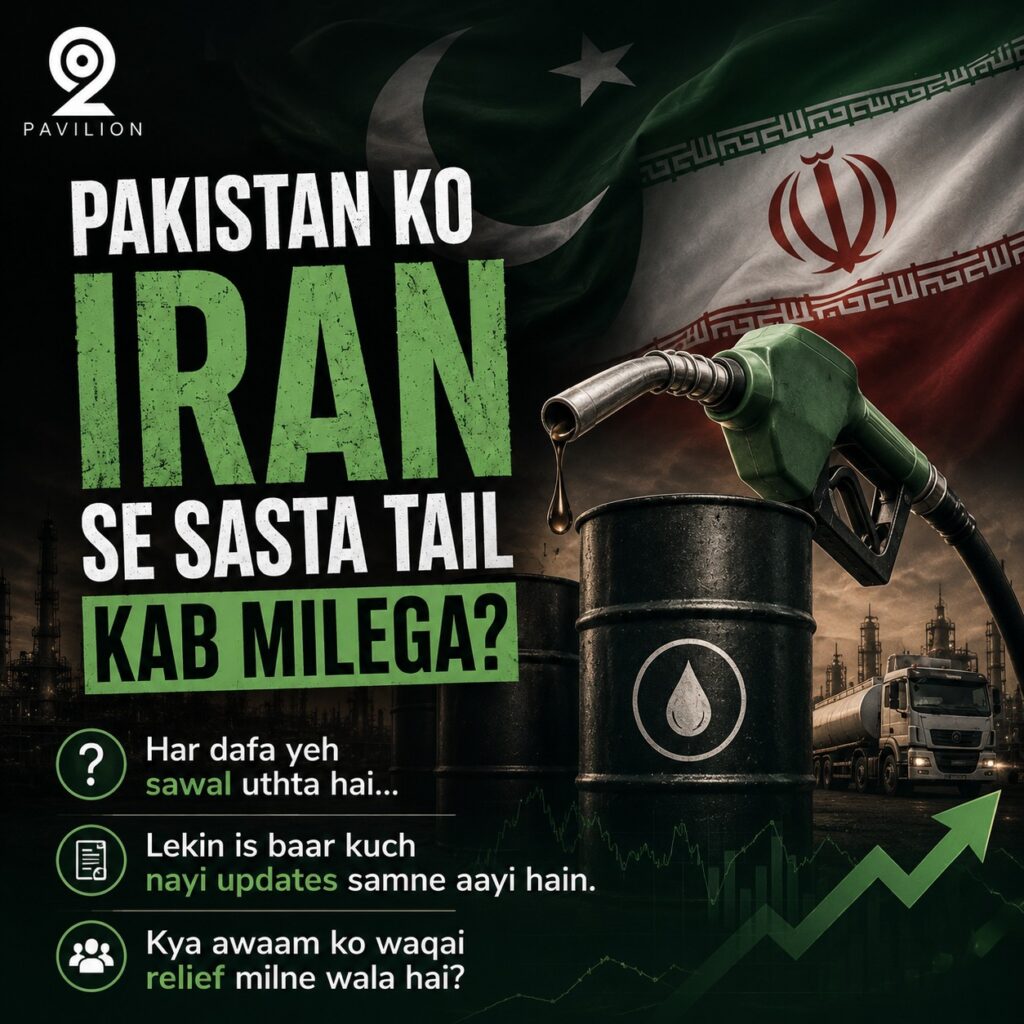
Quick Answer: Pakistan has not yet started importing cheaper oil from Iran, but Petroleum Minister Ali Pervaiz Malik has confirmed the government is actively considering it after the United States issued a temporary sanctions waiver, valid until August 21, 2026. If a deal goes through, Pakistan could import 10 to 20 percent of its petroleum needs from Iran at a discount, saving between $170 million and $340 million.
Why This Question Keeps Coming Back
Iranian oil has quietly moved into Pakistan for years through small-scale, informal border trade, limited by long-standing sanctions. That changed in urgency when the US-Israel war on Iran broke out in February 2026. Fears over the Strait of Hormuz closing, combined with a spike in global oil prices, pushed Pakistan’s own fuel prices to record highs. In just one week, petrol rose by Rs137.24 per litre and high-speed diesel by Rs184.49 per litre.
That price shock revived an old question: if Iran is right next door and has oil to sell, why isn’t Pakistan buying it?
What the Petroleum Minister Actually Said
Speaking to media in Lahore, Petroleum Minister Ali Pervaiz Malik confirmed that Pakistan is considering sourcing cheaper crude and gas from Iran, taking advantage of the temporary US sanctions relief on Iranian petroleum exports. He described the relationship between the two countries as one of “brotherhood and close neighborliness.”
According to Malik, if Pakistan sources 10 to 20 percent of its total petroleum requirement from Iran at a discount, including freight savings, the country could save between $170 million and $340 million on its import bill.
The Obstacles Nobody’s Ignoring
Not everyone sees this as a simple win. Energy experts point out that while local refineries are technically capable of processing Iranian crude, the high furnace oil yield and weak domestic demand for that byproduct create real commercial hurdles. On top of that, as long as sanctions aren’t fully lifted, any large-scale commercial deal would still run into complications involving banking channels, sovereign financing, and international trade access.
That’s why several analysts describe the idea less as a straightforward shortcut and more as a calculated risk, one where the long-term geopolitical costs could end up outweighing the savings if Pakistan moves too quickly.
Fuel Prices Have Already Started Falling
There’s already some relief. After the US-Iran conflict eased through the Islamabad Memorandum of Understanding, Pakistan cut petrol prices by Rs74 and diesel by Rs67 per litre. Prime Minister Shehbaz Sharif announced the reduction in parliament himself, crediting it to Pakistan’s mediation role in ending the conflict.
Finance officials, including Khurram Schehzad, say that if traffic through the Strait of Hormuz returns to normal levels, Pakistan’s inflation, which hit 11.7 percent in May 2026, could ease further in the months ahead.
Frequently Asked Questions
Q: When will Pakistan get cheaper oil from Iran?
A: There’s no confirmed start date yet. The government has described the plan as under active consideration, not a finalized deal.
Q: How much could Pakistan actually save?
A: Official estimates put savings between $170 million and $340 million, based on sourcing 10 to 20 percent of total petroleum imports from Iran at a discount.
Q: How long does Pakistan have to act on this?
A: The US sanctions waiver on Iranian petroleum exports runs until August 21, 2026, after which the situation will be reassessed.
Q: What’s stopping the deal from happening faster?
A: Refinery compatibility issues, restricted banking channels, and sanctions that haven’t been fully lifted remain the biggest hurdles.
This report is based on statements from Pakistan’s Ministry of Petroleum and reporting from Dawn, Arab News, and OilPrice.com.