
By: News Desk 92Pavilion | Updated: July 2026
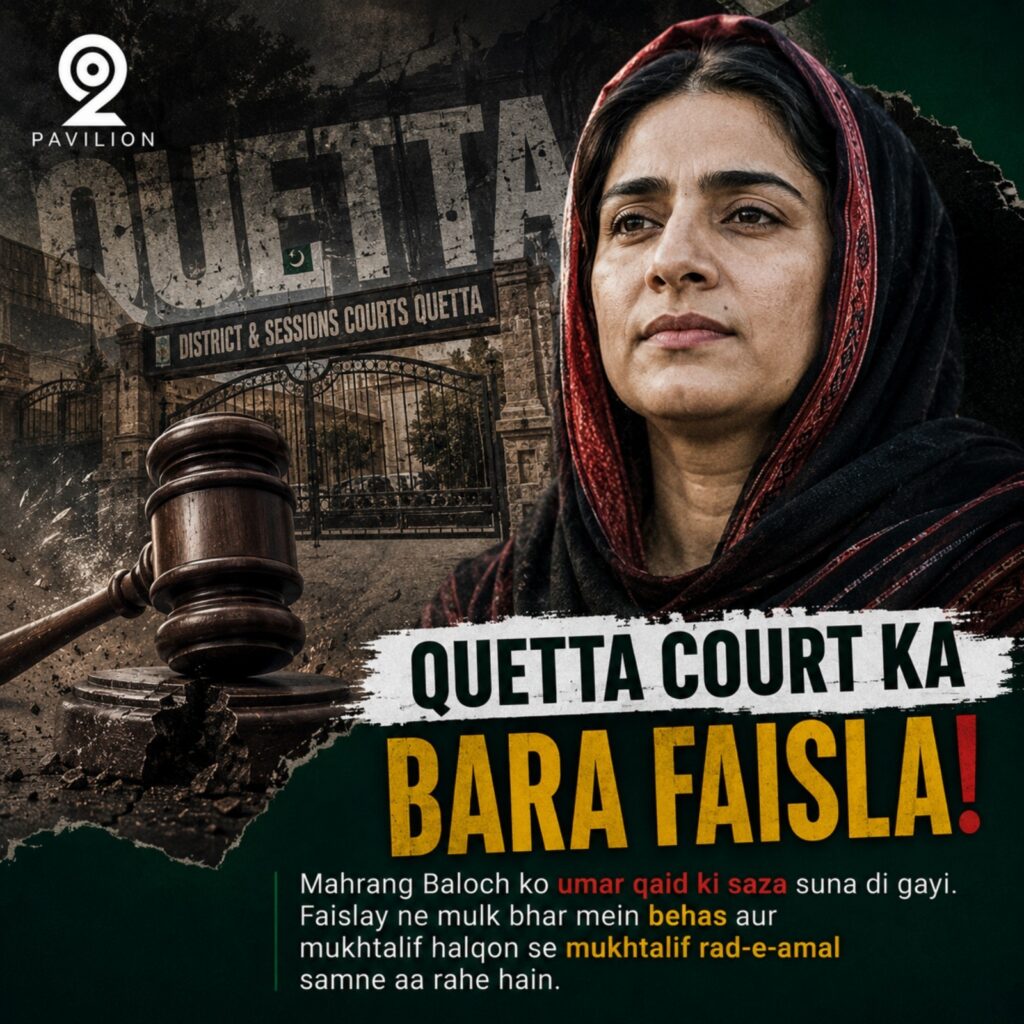
Quick Answer: On June 22, 2026, an Anti-Terrorism Court (ATC) in Quetta sentenced Baloch Yakjehti Committee (BYC) leader Dr. Mahrang Baloch to two terms of Mahrang Baloch life imprisonment, along with fellow activists Sibghatullah Shahji, Balach Qadir, and Abu Bakr Kalanchi. The verdict stems from the death of a Frontier Corps official during a July 2024 protest in Gwadar.
What the Case Was About
The case traces back to the “Raji Machi” gathering in Gwadar in July 2024, a two-week peaceful protest against enforced disappearances, extrajudicial killings, and the exploitation of Balochistan’s natural resources. Clashes during the protest left three people dead, including FC Sepoy Shabbir Ahmed.
Prosecutors argued that a crowd had attacked Shabbir Ahmed with stones, leading to his death. ATC special judge Muhammad Ali Mobeen ruled that Mahrang Baloch and Sibghatullah were “active participants” in the unlawful assembly and shared a “common objective” to commit murder, convicting them under sections 302(b), 147, and 148 of the Pakistan Penal Code.
Who Is Mahrang Baloch?
The 33-year-old trainee surgeon founded the Baloch Yakjehti Committee, a group advocating against enforced disappearances and extrajudicial killings in Balochistan. Time magazine named her one of its 100 Rising Leaders, and the BBC listed her among its 100 Most Inspiring Women, both in 2024.
She was placed under administrative detention by the Balochistan government on March 22, 2025, while leading a sit-in on Quetta’s Saryab Road, and was subsequently charged with terrorism, sedition, and murder.
Questions Over the Trial Itself
Nadia Baloch, Mahrang’s sister and a member of her legal team, told Arab News that the case was moved from an open court to a prison, and later shifted into what she described as a “faceless trial.” She said the defense team did not know where the judge or prosecutor were operating from, or who the witnesses were.
BYC member Sammi Deen Baloch alleged that prosecutors pressured judges to speed up the case, raising further doubts about whether the proceedings amounted to a fair trial.
The United Nations Responds
The UN Office of the High Commissioner for Human Rights called the Mahrang Baloch life imprisonment ruling a “travesty of justice.” UN experts said the court had inferred intent to murder based solely on participation in a protest, and criticized the use of counter-terrorism laws to suppress peaceful dissent.
The experts also noted that nearly 50 additional police complaints remain pending against Baloch, raising concerns about further prosecutions, and expressed alarm over her health and limited access to medical care in detention.
The Government’s Position
Balochistan Chief Minister Sarfraz Bugti welcomed the verdict, calling it a victory for justice. He said Shabbir Ahmed’s sacrifice would not be forgotten and stressed that there would be no leniency for those who take the law into their own hands.
Analysts, however, warn the ruling could backfire. A piece published in The Diplomat argued that the sentencing risks deepening frustration among Balochistan’s young population and could strengthen the narrative pushed by separatist groups, by blurring the line between peaceful protesters and militants.
What Happens Next
Mahrang Baloch’s legal team has confirmed plans to appeal the verdict in Pakistan’s superior courts. International pressure is also building, including a letter from Baloch American Congress president Tara Chand to the US president raising concerns about due process in the case.
Frequently Asked Questions
Q: When was Mahrang Baloch sentenced?
A: On June 22, 2026, by an Anti-Terrorism Court in Quetta.
Q: What was the case about?
A: The death of an FC official during a July 2024 protest in Gwadar, Balochistan.
Q: Was anyone else convicted alongside her?
A: Yes. Sibghatullah Shahji, Balach Qadir, and Abu Bakr Kalanchi were also sentenced to life imprisonment.
Q: What did the UN say about the verdict?
A: UN human rights experts called it a “travesty of justice” and raised concerns about due process violations during the trial.
Q: Will the verdict be appealed?
A: Yes, Mahrang Baloch’s legal team has said they will appeal in Pakistan’s superior courts.
This report is based on statements from the UN OHCHR and reporting from Arab News, Geo News, and The Diplomat.