Latest Posts
Loading latest posts…

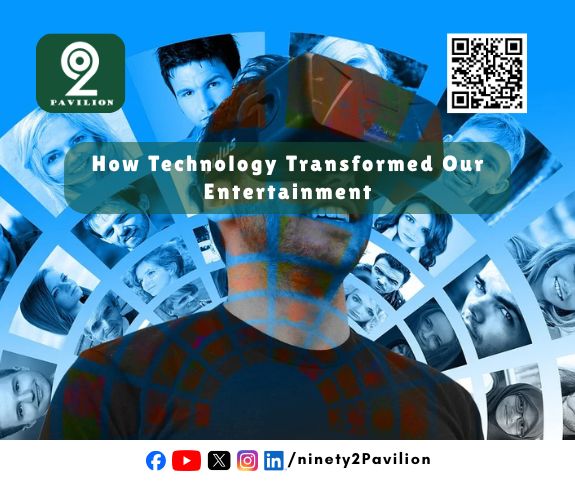
How Technology Transformed Our Entertainment

How Technology Transformed Our Entertainment

By: News Desk 92Pavilion

The way we consume entertainment in 2026 is unrecognizable from the analog traditions of the past century. Technology has not merely enhanced our leisure time; it has fundamentally re-engineered the relationship between the creator and the consumer. We have moved from a world of “appointment viewing” and physical media to a landscape of infinite, on-demand immersion. This transformation is driven by a symphony of innovations—from the democratization of content through high-speed 5G connectivity to the hyper-personalization enabled by Artificial Intelligence—turning a once passive experience into a dynamic, interactive digital ecosystem.

The most visible shift is the rise of the “Attention Economy,” where streaming platforms like Netflix and Spotify have replaced the traditional schedule with predictive algorithms. By 2026, these systems have evolved from simple recommendation engines into sophisticated predictive models that analyze mood, intent, and social context in real-time. According to the 2026 Media & Entertainment Industry Outlook, AI has become core infrastructure, allowing platforms to interpret viewing behavior down to “micro-moments”—adjusting suggestions based on whether a viewer needs comfort, stimulation, or background noise. This shift has eliminated “discovery fatigue,” ensuring that the vast ocean of digital content feels curated specifically for the individual.

Simultaneously, the physical boundaries of entertainment have dissolved through the maturation of Extended Reality (XR). Virtual and Augmented Reality are no longer niche gadgets but gateways to “Experiential Learning” and “Spatial Entertainment.” Fans can now attend virtual concerts that rival the sensory impact of live events or step directly into the heart of a film’s narrative. In 2026, the standardization of 4K and the emergence of 8K video, coupled with cloud gaming services like NVIDIA GeForce NOW, have removed the need for expensive hardware. High-end, immersive stories are now accessible on any device with a stable internet connection, effectively democratizing top-tier entertainment for a global audience.

Furthermore, technology has empowered the “Creator Economy,” shifting the balance of power away from traditional Hollywood gatekeepers. Generative AI tools now allow independent creators to produce cinematic-quality visual effects and localized audio with a fraction of the traditional budget. This has led to a flourishing of “hyper-local” content that resonates with niche global communities. As we navigate this landscape, the 2026 digital media trend emphasizes “always-on fandom,” where social media, gaming, and commerce are integrated into a single, seamless experience. Technology has not just changed how we watch; it has changed how we participate, making us co-authors in a flourishing world of synthetic and human creativity


Share

Introduction

Pakistan’s political environment in 2026 remains dynamic and highly influential in shaping the country’s future. From parliamentary debates and economic policy decisions to opposition movements and electoral reforms, recent developments are playing a crucial role in determining national direction.

In this report by Eye of Pakistan, we analyze the latest political developments, government strategies, and opposition responses.

Government’s Policy Priorities in 2026

The federal government has emphasized:

  • Economic stabilization

  • Institutional reforms

  • Energy sector restructuring

  • Strengthening foreign diplomatic ties

Recent cabinet meetings focused on controlling inflation, stabilizing the Pakistani Rupee, and implementing fiscal discipline under ongoing economic reform programs.

Officials claim these measures aim to restore investor confidence and ensure sustainable growth.

Opposition’s Response and Political Strategy

Major opposition parties have intensified criticism of government policies, particularly regarding:

  • Rising inflation

  • Unemployment

  • Tax reforms

  • Utility price increases

Opposition leaders argue that economic pressure on the public has increased and demand greater transparency in parliamentary proceedings.

Political rallies and public gatherings have increased across major cities including Karachi, Lahore, and Islamabad.

Parliamentary Developments

Recent National Assembly sessions have seen heated debates over:

  • Budget allocations

  • Electoral reforms

  • Accountability laws

  • Provincial autonomy issues

Lawmakers from both treasury and opposition benches continue to exchange strong viewpoints, reflecting a vibrant yet tense political atmosphere.

Election Reforms and Democratic Process

Discussions around electoral transparency and digital voting mechanisms remain central to political discourse.

The Election Commission is reportedly reviewing:

  • Voter verification systems

  • Polling station security

  • Overseas voting procedures

Analysts believe these reforms could significantly impact future general elections.

Public Reaction and Political Climate

Public opinion appears divided. While some citizens support structural reforms and long-term stabilization plans, others express concerns over economic hardships and governance challenges.

Political analysts suggest that the coming months will be critical in determining whether current policies translate into tangible relief for the public.

Conclusion

Pakistan’s political landscape in 2026 is marked by active debate, institutional reforms, and strategic maneuvering from both government and opposition parties. As policy decisions continue to unfold, their impact on economic stability and democratic processes will remain under close observation.

Stay connected with Eye of Pakistan for reliable and timely political updates.