
Latest Posts
Loading latest posts…

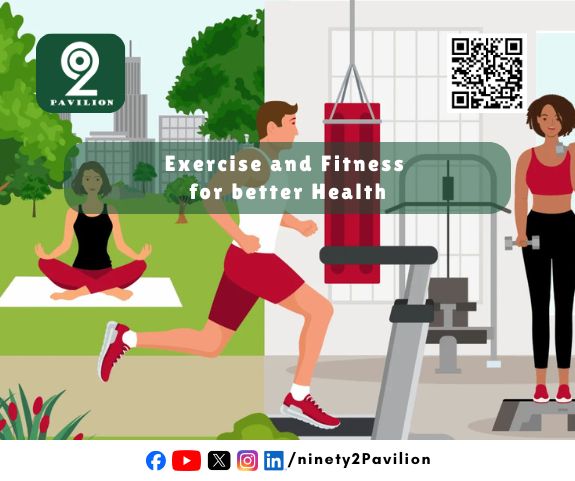
Exercise and Fitness for better Health

Exercise and Fitness for better Health

By: News Desk 92Pavilion

In 2026, the concept of fitness has evolved far beyond the traditional confines of aesthetic goals and calorie counting. It is now recognized as a sophisticated pillar of “Longevity Science,” where movement is treated as a personalized medicine designed to optimize both the body and the brain. As sedentary lifestyles remain a global health challenge, the definition of exercise has expanded to include a holistic “Bio-Specific” approach—tailoring physical activity to an individual’s genetic markers, recovery metrics, and life stage. Today, staying fit is no longer about following a generic plan; it is about harnessing technology and evidence-based movement to build a resilient, high-functioning version of oneself.

The current gold standard for adult health remains grounded in the World Health Organization (WHO) and American College of Sports Medicine (ACSM) guidelines. For optimal cardiovascular and metabolic health, adults should aim for at least 150 to 300 minutes of moderate-intensity aerobic activity per week, or 75 to 150 minutes of vigorous-intensity exercise. However, the standout trend of 2026 is the “Strength Renaissance.” Resistance training is no longer just for athletes; it is essential for everyone. Experts now recommend at least two sessions per week of muscle-strengthening activities that engage all major muscle groups. This focus on “Functional Fitness” is critical for maintaining bone density, metabolic rate, and physical independence as we age.

Technology has fundamentally reshaped the fitness experience through the “Hyper-Personalization” of data. Wearable technology remains the #1 global trend, with roughly 40% of adults now using smartwatches or biosensors to track real-time health metrics. In 2026, we have moved past simple step counting; users now monitor “Heart Rate Variability” (HRV) and “Readiness Scores” to determine the optimal intensity of their daily workout. This prevents overtraining and injury by alerting the individual when their body requires active recovery rather than high-intensity stress. Artificial Intelligence now acts as a digital coach, synthesizing this biometric data to create “Adaptive Programming” that evolves with the user’s progress.

Furthermore, the “Mind-Body Convergence” has become a central theme in modern fitness. There is a growing realization that physical exercise is one of the most effective tools for mental health management, with nearly 87% of younger exercisers reporting that working out significantly improves their psychological well-being. This has led to the rise of “Hybrid Training,” which seamlessly blends high-intensity interval training (HIIT) with mobility work, Pilates, and mindfulness practices. Ultimately, exercise and fitness in 2026 is an inclusive, data-driven journey. Whether through a virtual reality home workout or a community-focused boutique studio, the goal remains the same: moving more, sitting less, and investing in a future of vibrant health


Share

Introduction

Pakistan’s political environment in 2026 remains dynamic and highly influential in shaping the country’s future. From parliamentary debates and economic policy decisions to opposition movements and electoral reforms, recent developments are playing a crucial role in determining national direction.

In this report by Eye of Pakistan, we analyze the latest political developments, government strategies, and opposition responses.

Government’s Policy Priorities in 2026

The federal government has emphasized:

  • Economic stabilization

  • Institutional reforms

  • Energy sector restructuring

  • Strengthening foreign diplomatic ties

Recent cabinet meetings focused on controlling inflation, stabilizing the Pakistani Rupee, and implementing fiscal discipline under ongoing economic reform programs.

Officials claim these measures aim to restore investor confidence and ensure sustainable growth.

Opposition’s Response and Political Strategy

Major opposition parties have intensified criticism of government policies, particularly regarding:

  • Rising inflation

  • Unemployment

  • Tax reforms

  • Utility price increases

Opposition leaders argue that economic pressure on the public has increased and demand greater transparency in parliamentary proceedings.

Political rallies and public gatherings have increased across major cities including Karachi, Lahore, and Islamabad.

Parliamentary Developments

Recent National Assembly sessions have seen heated debates over:

  • Budget allocations

  • Electoral reforms

  • Accountability laws

  • Provincial autonomy issues

Lawmakers from both treasury and opposition benches continue to exchange strong viewpoints, reflecting a vibrant yet tense political atmosphere.

Election Reforms and Democratic Process

Discussions around electoral transparency and digital voting mechanisms remain central to political discourse.

The Election Commission is reportedly reviewing:

  • Voter verification systems

  • Polling station security

  • Overseas voting procedures

Analysts believe these reforms could significantly impact future general elections.

Public Reaction and Political Climate

Public opinion appears divided. While some citizens support structural reforms and long-term stabilization plans, others express concerns over economic hardships and governance challenges.

Political analysts suggest that the coming months will be critical in determining whether current policies translate into tangible relief for the public.

Conclusion

Pakistan’s political landscape in 2026 is marked by active debate, institutional reforms, and strategic maneuvering from both government and opposition parties. As policy decisions continue to unfold, their impact on economic stability and democratic processes will remain under close observation.

Stay connected with Eye of Pakistan for reliable and timely political updates.