Latest Posts
Building a Vibrant Cultural FutureA Journey Towards ProsperityArab nations face an inevitable declineBlogging Revenue in Pakistan’s 2026 EconomyWhy China is Investing in Pakistan’s Gwadar PortThe Rising Spirit of Pakistani SportsVoice-Over Economy in Pakistan 2026India’s Investment in Iran,Chabahar PortEvent Management Business in Pakistan 2026The Volatile Trajectory of Pakistan-Afghanistan Relations in 2026Why Pakistan Must Overhaul Its InfrastructureEvolution of Goods and Equipment in Modern SportsThe Current Situation of Sports in PakistanGovernment Initiatives for Sports in PakistanAssessing Sports Infrastructure and Facilities in PakistanSialkot and the Renaissance of Pakistan’s Sports Goods IndustryEmerging Sports Trends in 2026Legacy of Popular Traditional SportsJourney Through the Background of Sports in PakistanInfrastructure and Framework Deficits in Pakistani Sports InstitutionsLevelling the Field of SportsThe Roadmap for Pakistan’s Islamic Financial TransitionApartheid Structure in Occupied KashmirThe Strategic Role of the SCO in 2026Complexities of Illegal Immigrant RepatriationPakistan’s Strategic Role in Regional Power DynamicsPakistan’s Strategic Role in the South Asian Power PlayPakistan’s Strategic Tightrope in the US-China RivalryPakistan-China Relations in a Changing Geopolitical EnvironmentForeign Relation of Pakistan with Neighboring CountriesGlobal Response and the Reshaping World Order in 2026Impacts of International Structure on Pakistan’s Foreign PolicyEnduring Conflict Between India and PakistanAncient Roman and Modern EntertainmentCultivating Pakistan’s Future Tech WorkforceBuilding, Champions of the WorldDeciphering the Boundary Between Art and EntertainmentDevelopment of Pakistan’s Entertainment IndustryEntertainment and the Innovative Technology Industry in 2026Flourishing World of Entertainment in 2026How Technology Transformed Our EntertainmentInterrelationship Between Culture and Visual Entertainment MediaPakistan’s Entertainment Industry Set to ThrivePop Culture, Media Representation, and the Architecture of IdentityThe Evolution of Pakistan’s Entertainment IndustryThe Transformative Power of Entertainment on Modern SocietyStrategic Agenda for Pakistan’s Entertainment IndustryThe Economic Impact of the Entertainment IndustryPakistan Was Not in the Room but Was the Reason the Room Existed.

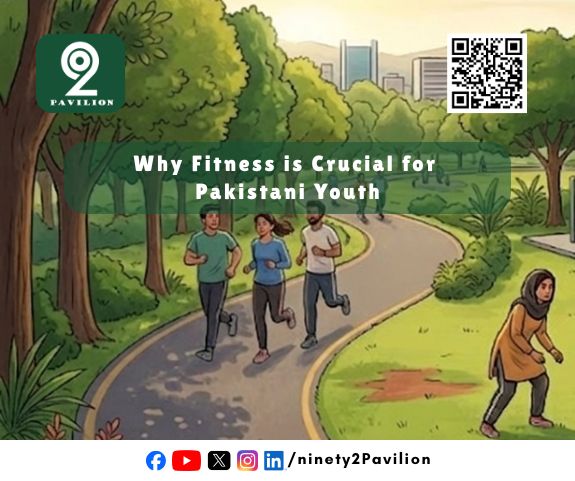
Why Fitness is Crucial for Pakistani Youth

Why Fitness is Crucial for Pakistani Youth

By: News Desk 92Pavilion

As we navigate through 2026, Pakistan stands at a unique demographic crossroads, with nearly 68% of its population under the age of 30. This “youth bulge” represents the nation’s most significant asset, yet its potential is increasingly threatened by a silent crisis of physical inactivity and rising metabolic disorders. For the youth of Pakistan, fitness is no longer an optional hobby or a pursuit reserved for athletes; it has become a fundamental pillar of national survival and individual prosperity. In an era defined by rapid urbanization and the pervasive influence of digital screens, reclaiming physical fitness is the only way to safeguard the health, productivity, and mental well-being of the generation destined to lead the country.

The most urgent reason for prioritizing fitness in 2026 is the alarming surge in non-communicable diseases (NCDs) among young adults. Recent clinical reports from major urban centers like Islamabad and Karachi show that metabolic conditions—such as Type 2 diabetes, hypertension, and obesity—are no longer exclusive to older populations. Medics are increasingly diagnosing teenagers with “tripledemic” conditions, where obesity, high blood pressure, and elevated blood sugar appear simultaneously. This shift is primarily attributed to a sedentary lifestyle, where physical activity levels in urban areas are significantly lower than in rural settings. Engaging in regular fitness—at least 150 minutes of moderate activity per week—is the primary defense against this trend, acting as a biological shield that preserves cardiovascular health and metabolic efficiency.

Beyond the physical benefits, fitness has emerged as a critical tool for mental health management among Pakistani students and young professionals. In 2026, the academic and economic pressures on the youth have reached unprecedented levels, contributing to a spike in anxiety and depressive symptoms. Research conducted in local universities highlights a powerful correlation: young people who engage in at least 60 minutes of daily physical exercise experience a 45% reduction in depressive symptoms compared to their sedentary peers. Exercise serves as a natural mood elevator, releasing endorphins that mitigate the physiological effects of stress. Whether it is a game of cricket in a local “mohalla” or a structured gym session, physical movement provides a necessary psychological reset that fosters resilience in a competitive world.

Furthermore, fitness is the bedrock of “Human Capital” development. A healthy youth population is a productive one. In 2026, as Pakistan aims to improve its standing on the Youth Development Index, the focus has shifted toward creating a “fit workforce.” Physical fitness enhances cognitive function, memory, and focus, which are essential for academic success and professional innovation. By fostering a culture of movement—through school sports, public parks, and accessible fitness technology—the nation can ensure that its youth are not just surviving, but thriving. Ultimately, fitness for Pakistani youth is about empowerment. It is about building a generation that is physically strong, mentally sharp, and ready to carry the aspirations of a nation toward a more vibrant and healthy 2026 and beyond


Share

Introduction

Pakistan’s political environment in 2026 remains dynamic and highly influential in shaping the country’s future. From parliamentary debates and economic policy decisions to opposition movements and electoral reforms, recent developments are playing a crucial role in determining national direction.

In this report by Eye of Pakistan, we analyze the latest political developments, government strategies, and opposition responses.

Government’s Policy Priorities in 2026

The federal government has emphasized:

  • Economic stabilization

  • Institutional reforms

  • Energy sector restructuring

  • Strengthening foreign diplomatic ties

Recent cabinet meetings focused on controlling inflation, stabilizing the Pakistani Rupee, and implementing fiscal discipline under ongoing economic reform programs.

Officials claim these measures aim to restore investor confidence and ensure sustainable growth.

Opposition’s Response and Political Strategy

Major opposition parties have intensified criticism of government policies, particularly regarding:

  • Rising inflation

  • Unemployment

  • Tax reforms

  • Utility price increases

Opposition leaders argue that economic pressure on the public has increased and demand greater transparency in parliamentary proceedings.

Political rallies and public gatherings have increased across major cities including Karachi, Lahore, and Islamabad.

Parliamentary Developments

Recent National Assembly sessions have seen heated debates over:

  • Budget allocations

  • Electoral reforms

  • Accountability laws

  • Provincial autonomy issues

Lawmakers from both treasury and opposition benches continue to exchange strong viewpoints, reflecting a vibrant yet tense political atmosphere.

Election Reforms and Democratic Process

Discussions around electoral transparency and digital voting mechanisms remain central to political discourse.

The Election Commission is reportedly reviewing:

  • Voter verification systems

  • Polling station security

  • Overseas voting procedures

Analysts believe these reforms could significantly impact future general elections.

Public Reaction and Political Climate

Public opinion appears divided. While some citizens support structural reforms and long-term stabilization plans, others express concerns over economic hardships and governance challenges.

Political analysts suggest that the coming months will be critical in determining whether current policies translate into tangible relief for the public.

Conclusion

Pakistan’s political landscape in 2026 is marked by active debate, institutional reforms, and strategic maneuvering from both government and opposition parties. As policy decisions continue to unfold, their impact on economic stability and democratic processes will remain under close observation.

Stay connected with Eye of Pakistan for reliable and timely political updates.