Date: October 27, 2026 | 92 Pavilion News
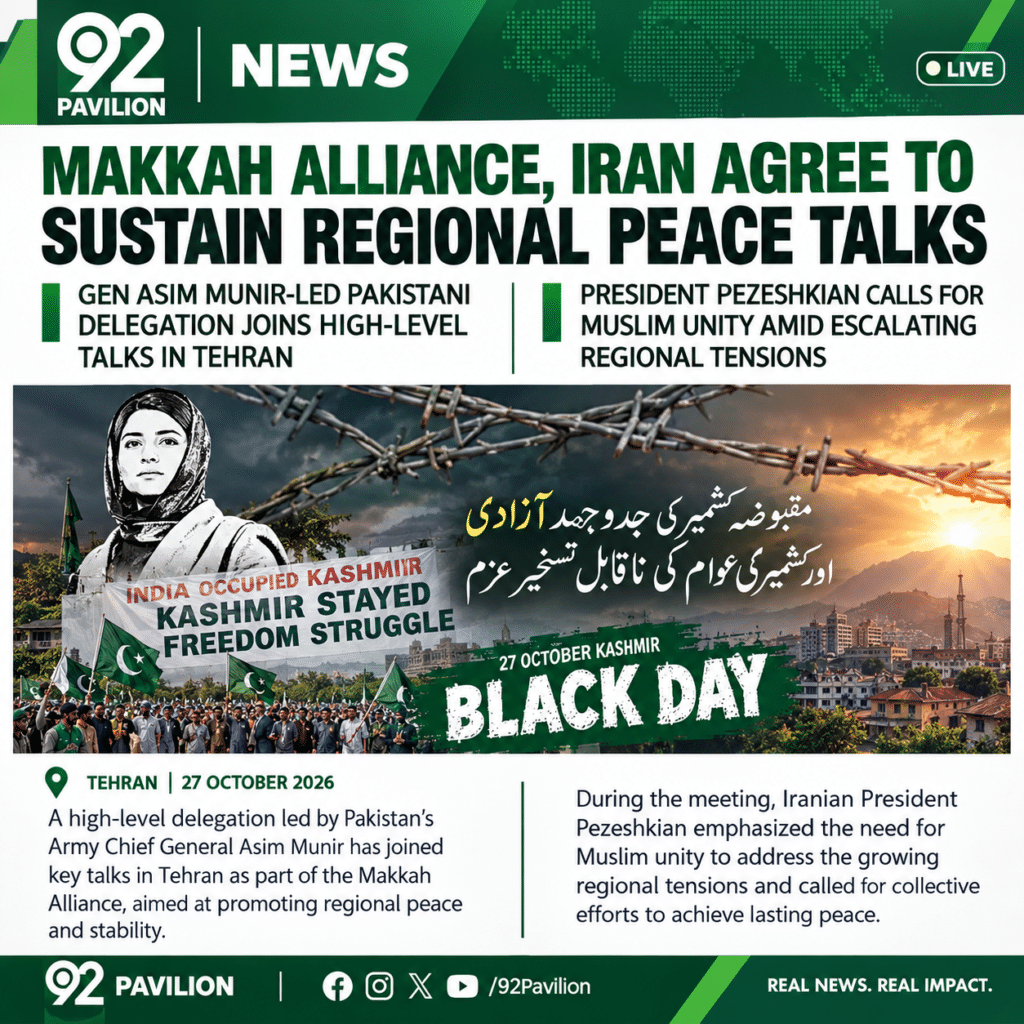
Pakistan Delegation Joins High-Level Talks in Tehran
Pakistan is continuing its diplomatic efforts to promote regional peace and stability as a high-level Pakistani delegation, led by General Asim Munir, joins discussions in Tehran under the Makkah Alliance framework.
The talks focus on strengthening regional cooperation, maintaining peace, and addressing growing tensions across the region. Diplomatic engagement between regional countries is considered an important step toward reducing conflicts and building mutual understanding.
President Pezeshkian Calls for Muslim Unity
Iranian President Masoud Pezeshkian has emphasized the importance of unity among Muslim countries amid escalating regional tensions. Collective diplomatic efforts and stronger cooperation can play a significant role in addressing shared challenges and supporting long-term stability.
The discussions highlight the importance of dialogue, mutual respect, and coordinated efforts to prevent further escalation and encourage peaceful solutions.
Kashmir Black Day: Remembering the Struggle for Freedom
October 27 is observed by Pakistanis and Kashmiris around the world as Kashmir Black Day, marking the beginning of the Indian military presence in Jammu and Kashmir in 1947. The day is observed to express solidarity with the Kashmiri people and highlight their longstanding demand for self-determination.
The occasion also draws attention to the humanitarian concerns and political challenges faced by Kashmiris, with calls for a peaceful resolution in accordance with relevant United Nations resolutions and the aspirations of the Kashmiri people.
The Road Toward Regional Peace
As diplomatic discussions continue, regional cooperation, constructive dialogue, and peaceful engagement remain essential for a more stable future. The ongoing talks offer an opportunity for countries to work together toward reducing tensions and promoting lasting peace.
92 Pavilion News — Real News. Real Stories.
Editorial note: This article is based on the information provided in the supplied news graphic. Verify the reported diplomatic meeting and delegation details with reliable news sources before publication.
Introduction
Pakistan’s political environment in 2026 remains dynamic and highly influential in shaping the country’s future. From parliamentary debates and economic policy decisions to opposition movements and electoral reforms, recent developments are playing a crucial role in determining national direction.
In this report by Eye of Pakistan, we analyze the latest political developments, government strategies, and opposition responses.
Government’s Policy Priorities in 2026
The federal government has emphasized:
Recent cabinet meetings focused on controlling inflation, stabilizing the Pakistani Rupee, and implementing fiscal discipline under ongoing economic reform programs.
Officials claim these measures aim to restore investor confidence and ensure sustainable growth.
Opposition’s Response and Political Strategy
Major opposition parties have intensified criticism of government policies, particularly regarding:
Rising inflation
Unemployment
Tax reforms
Utility price increases
Opposition leaders argue that economic pressure on the public has increased and demand greater transparency in parliamentary proceedings.
Political rallies and public gatherings have increased across major cities including Karachi, Lahore, and Islamabad.
Parliamentary Developments
Recent National Assembly sessions have seen heated debates over:
Lawmakers from both treasury and opposition benches continue to exchange strong viewpoints, reflecting a vibrant yet tense political atmosphere.
Election Reforms and Democratic Process
Discussions around electoral transparency and digital voting mechanisms remain central to political discourse.
The Election Commission is reportedly reviewing:
Analysts believe these reforms could significantly impact future general elections.
Public Reaction and Political Climate
Public opinion appears divided. While some citizens support structural reforms and long-term stabilization plans, others express concerns over economic hardships and governance challenges.
Political analysts suggest that the coming months will be critical in determining whether current policies translate into tangible relief for the public.
Conclusion
Pakistan’s political landscape in 2026 is marked by active debate, institutional reforms, and strategic maneuvering from both government and opposition parties. As policy decisions continue to unfold, their impact on economic stability and democratic processes will remain under close observation.
Stay connected with Eye of Pakistan for reliable and timely political updates.