Zindagi hamesha ek jaisi nahi rehti. Kabhi khushi milti hai, kabhi pareshani, kabhi kamyabi aur kabhi aise mushkil halaat ka samna karna parta hai jahan insaan khud ko bilkul akela mehsoos karta hai. Lekin ek Musalman ke liye sab se bari taqat Allah par yaqeen aur sabr hai.
Sabr ka matlab kya hai?
Sabr ka matlab sirf khamosh rehna nahi, balkay mushkil halaat mein apne aap ko sambhalna, Allah ke faislon par yaqeen rakhna aur mayoos na hona hai. Jab insaan kisi pareshani mein hota hai to use lagta hai ke shayad ab kuch behtar nahi hoga, lekin Allah ki rehmat se kabhi mayoos nahi hona chahiye.
Quran Pak mein Sabr ki Taleem
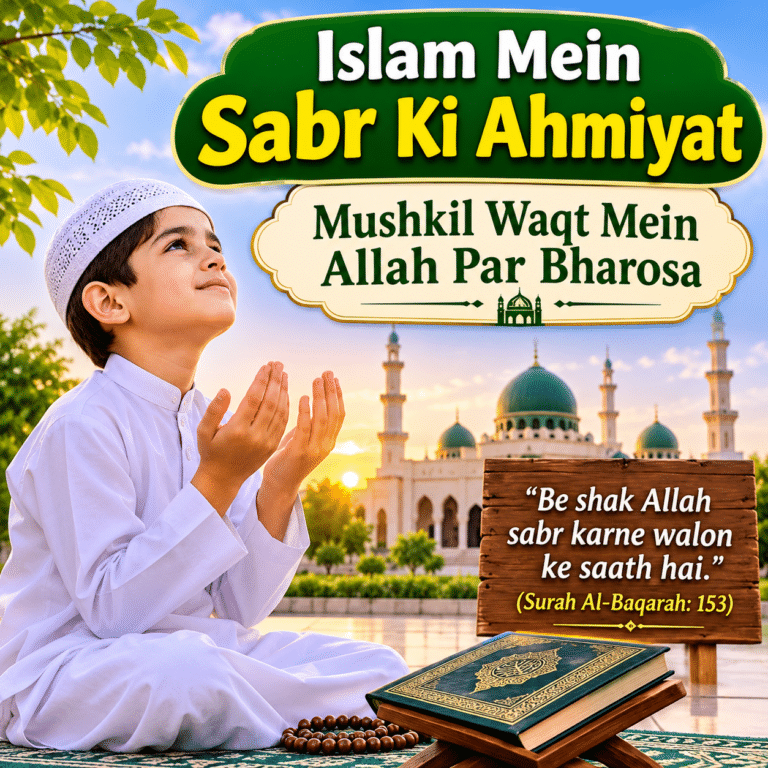
Allah Ta’ala Quran Pak mein farmata hai:
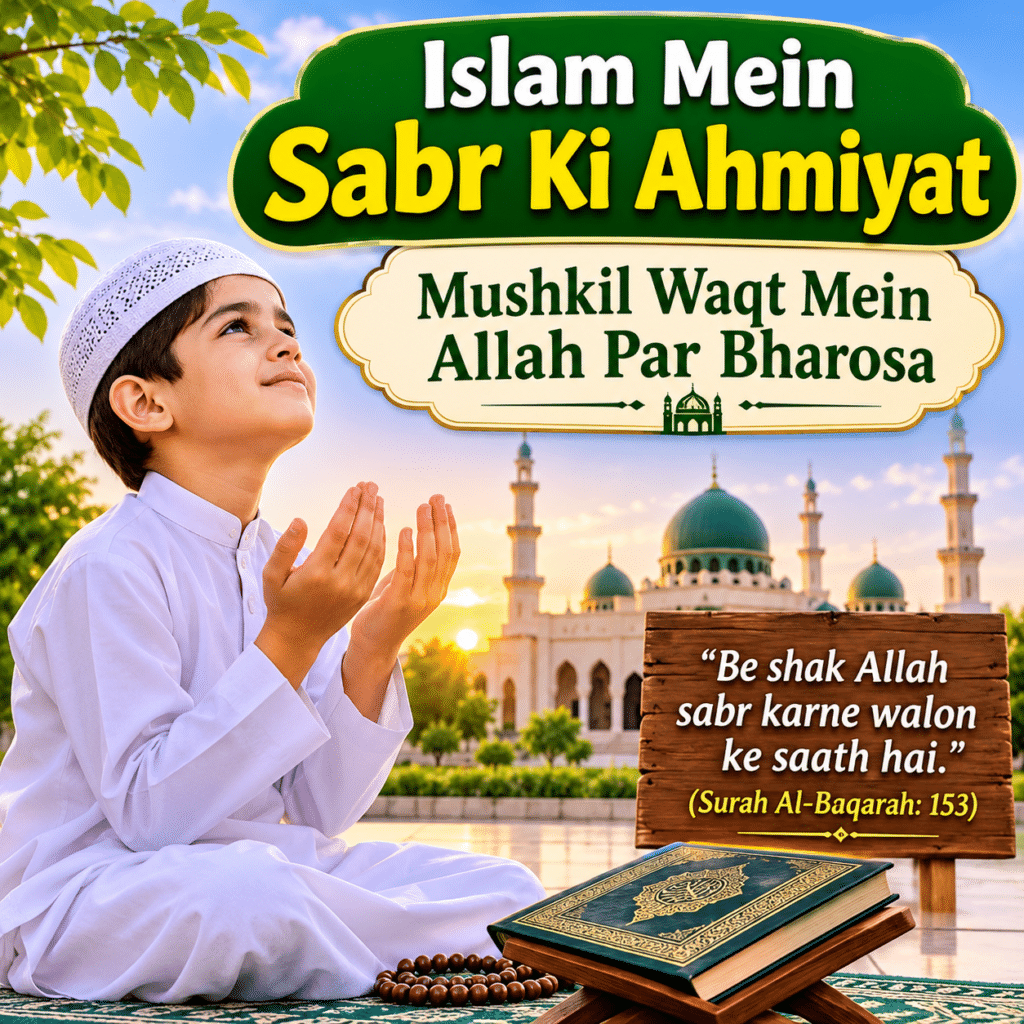
“Be shak Allah sabr karne walon ke saath hai.”
(Surah Al-Baqarah: 153)
Yeh ayat humein samjhati hai ke mushkil waqt mein sabr karna aur Allah se madad mangna chahiye.
Mushkil Waqt Mein Kya Karna Chahiye?
- Paanch waqt ki namaz ki pabandi karein.
- Har pareshani mein Allah se dua karein.
- Quran Pak ki tilawat karein.
- Apni zindagi ki nematon par shukar ada karein.
- Kabhi bhi Allah ki rehmat se mayoos na hon.
Allah Par Bharosa Rakhein
Kabhi kabhi Allah hamari dua ka jawab foran nahi deta, kyun ke Allah behtar jaanta hai ke hamare haq mein kya acha hai. Ho sakta hai jis cheez ko hum apne liye behtar samajh rahe hon, woh hamare liye behtar na ho.
Is liye apni koshish jari rakhein, dua karte rahein aur Allah par bharosa rakhein.
Aakhri Paigham
Yaad rakhein! Raat kitni bhi gehri kyun na ho, subah zaroor hoti hai. Isi tarah zindagi ki mushkilein bhi hamesha nahi rehtin. Allah par yaqeen rakhein, sabr karein aur umeed ka daman kabhi na chhorein.
Allah hum sab ko mushkil waqt mein sabr, har haal mein shukar aur hamesha apne upar bharosa rakhne ki taufeeq ata farmaye. Ameen! ❤️
Introduction
Pakistan’s political environment in 2026 remains dynamic and highly influential in shaping the country’s future. From parliamentary debates and economic policy decisions to opposition movements and electoral reforms, recent developments are playing a crucial role in determining national direction.
In this report by Eye of Pakistan, we analyze the latest political developments, government strategies, and opposition responses.
Government’s Policy Priorities in 2026
The federal government has emphasized:
Recent cabinet meetings focused on controlling inflation, stabilizing the Pakistani Rupee, and implementing fiscal discipline under ongoing economic reform programs.
Officials claim these measures aim to restore investor confidence and ensure sustainable growth.
Opposition’s Response and Political Strategy
Major opposition parties have intensified criticism of government policies, particularly regarding:
Rising inflation
Unemployment
Tax reforms
Utility price increases
Opposition leaders argue that economic pressure on the public has increased and demand greater transparency in parliamentary proceedings.
Political rallies and public gatherings have increased across major cities including Karachi, Lahore, and Islamabad.
Parliamentary Developments
Recent National Assembly sessions have seen heated debates over:
Lawmakers from both treasury and opposition benches continue to exchange strong viewpoints, reflecting a vibrant yet tense political atmosphere.
Election Reforms and Democratic Process
Discussions around electoral transparency and digital voting mechanisms remain central to political discourse.
The Election Commission is reportedly reviewing:
Analysts believe these reforms could significantly impact future general elections.
Public Reaction and Political Climate
Public opinion appears divided. While some citizens support structural reforms and long-term stabilization plans, others express concerns over economic hardships and governance challenges.
Political analysts suggest that the coming months will be critical in determining whether current policies translate into tangible relief for the public.
Conclusion
Pakistan’s political landscape in 2026 is marked by active debate, institutional reforms, and strategic maneuvering from both government and opposition parties. As policy decisions continue to unfold, their impact on economic stability and democratic processes will remain under close observation.
Stay connected with Eye of Pakistan for reliable and timely political updates.