By: 92Pavilion | Updated: August 22, 2026
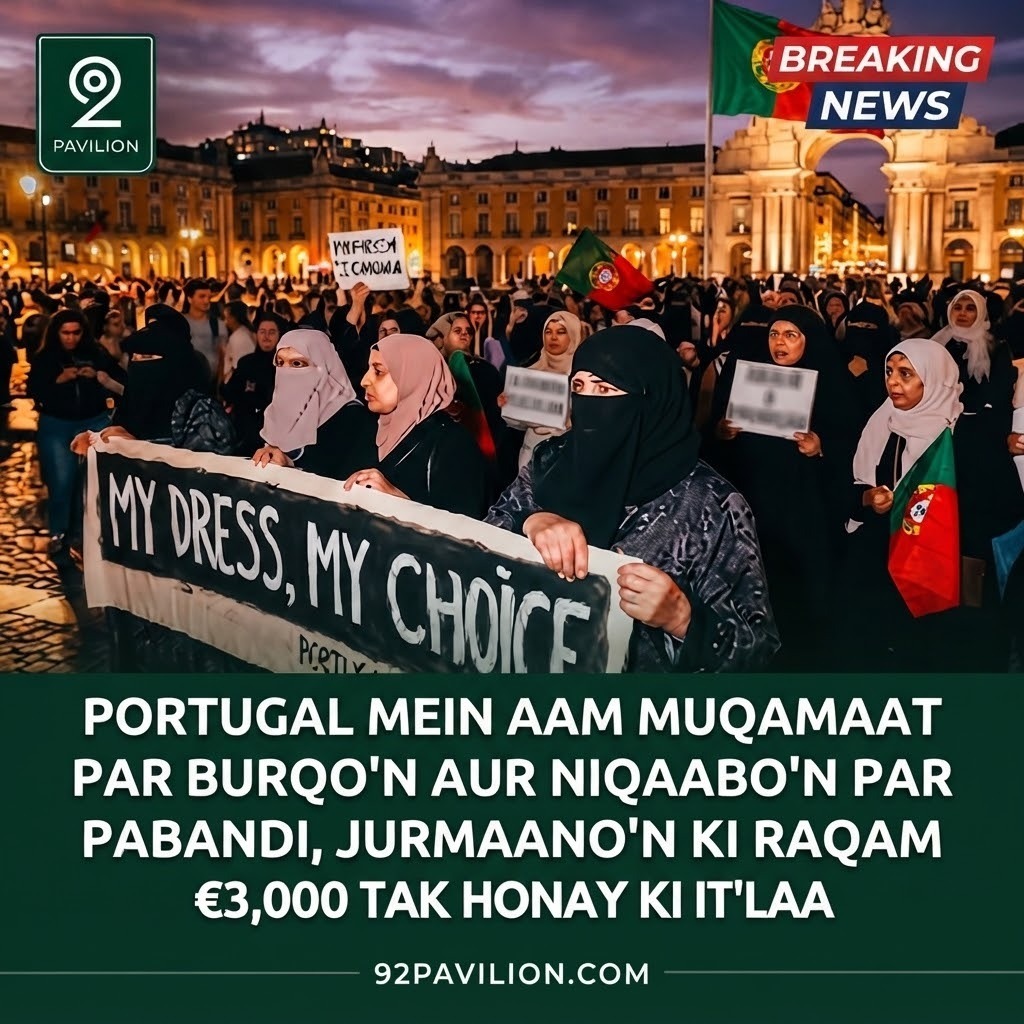
Quick Answer: Portugal has officially enacted a law banning face coverings, including the burqa and niqab, in most public spaces. President António José Seguro signed the legislation, which sets fines ranging from €150 to €3,000 depending on whether the violation is deemed negligent or intentional. The law has drawn strong criticism from human rights groups and Muslim communities in the country.
What the Law Says
The legislation, widely referred to in local media as the “burqa law,” prohibits clothing designed to conceal the face or prevent identification in public spaces. It also separately criminalises forcing another person to cover their face for reasons related to gender, religion, age, or origin, with that offence carrying a potential prison term of up to three years.
Fines for wearing a face covering in public range from €150 to €750 in cases of negligence, and €400 to €3,000 where intent is established. The law includes exemptions for health, professional, artistic, entertainment, and weather-related reasons, and it does not apply inside places of worship, diplomatic missions, or aboard aircraft.
How the Law Was Passed
The bill was introduced by the far-right Chega party, led by André Ventura, who has campaigned against the burqa and niqab for years, arguing the restrictions protect women and uphold Portuguese values. Parliament approved the bill in July with backing from the governing right-wing coalition and far-right lawmakers, while left-wing parties voted against it.
Before the bill reached the president’s desk, it drew negative opinions from the Portuguese Bar Association, the High Council of the Public Prosecutor’s Office, and the Portuguese Association of Women Lawyers, with critics raising concerns about its constitutionality.
Reaction From Rights Groups
Amnesty International’s Portugal chapter described the new law as a threat to human rights. Critics, including Muslim advocacy groups, argue that banning face coverings does not liberate women but instead takes away their right to choose how they dress, effectively replacing one set of restrictions with another.
Supporters, including President Seguro, acknowledged the issue carries significant social and cultural sensitivity, while maintaining the law addresses concerns around identification and public interaction in shared spaces.
Part of a Wider European Trend
Portugal now joins France, Belgium, Austria, Denmark, and the Netherlands among European countries with full or partial bans on face coverings in public. France was the first to introduce such a ban in 2011, a move later upheld by the European Court of Human Rights, which ruled that member states have wide discretion to set conditions for shared public life.
Spain’s Balearic Islands are separately considering similar restrictions, with proposed fines reportedly running much higher than Portugal’s, though that legislation has not yet been finalised.
Why the Numbers Involved Matter
Reports note that only a small minority of Muslim women in Europe wear full-face coverings, and such veils remain rare in Portugal specifically. Even so, the issue has become a flashpoint in broader European debates over religious expression, security, and integration, with protests held in Lisbon over the past year against the proposed ban.
Frequently Asked Questions
What does Portugal’s new law ban?
It bans face coverings, including the burqa and niqab, in most public spaces, along with forcing someone else to wear one.
How much are the fines for violating the law?
Fines range from €150 to €750 for negligent violations and €400 to €3,000 where intent is proven.
Are there any exemptions to the ban?
Yes, exemptions apply for health, professional, artistic, entertainment, or weather-related reasons, as well as in places of worship, diplomatic missions, and on aircraft.
Which other European countries have similar bans?
France, Belgium, Austria, Denmark, and the Netherlands already have full or partial bans on face coverings in public.
This report is based on reporting from Euronews, Al Jazeera, GB News, 5Pillars, and the American Tribune.
92Pavilion brings you timely, verified updates from around the world. Stay with us for continued coverage.