By: News Desk 92Pavilion | Updated: August 16, 2026
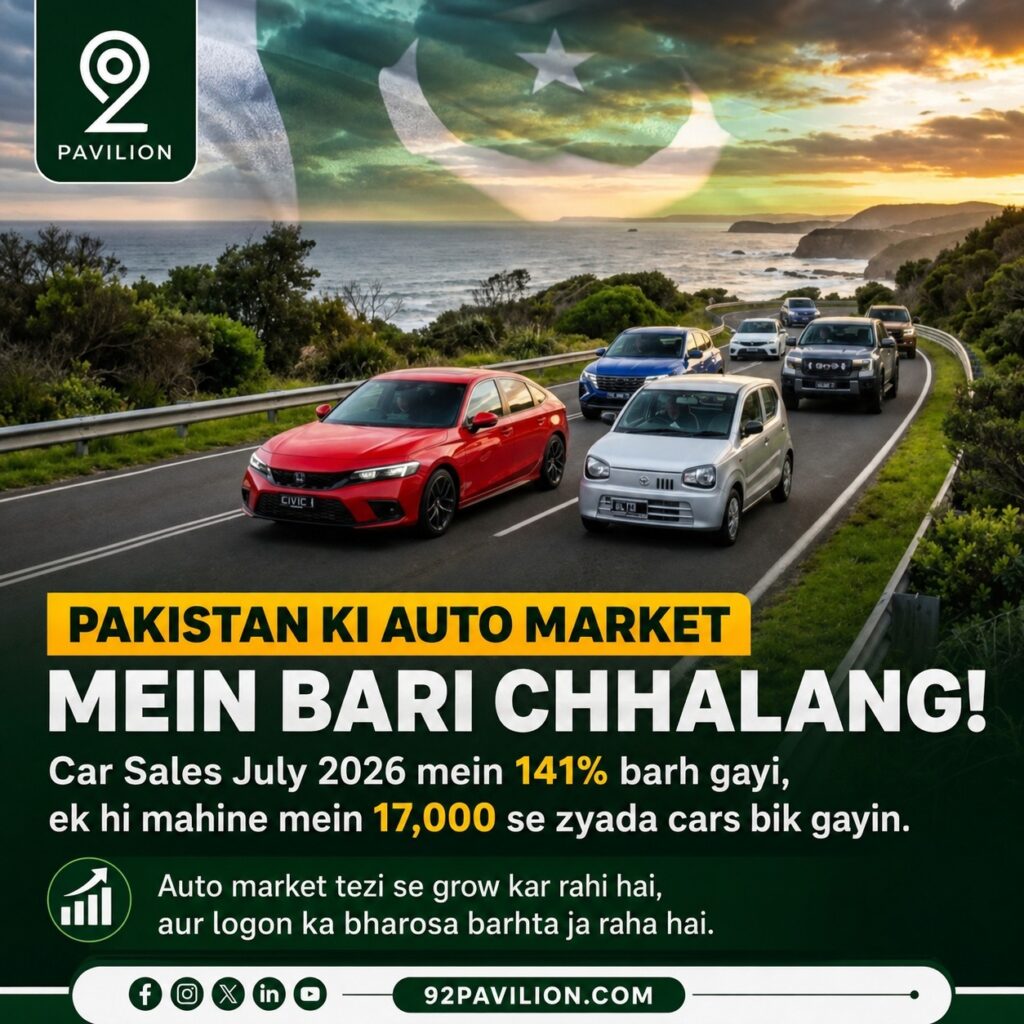
Quick Answer: Pakistan’s car sales jumped 141.28 percent year-on-year in July 2026, according to the Pakistan Automotive Manufacturers Association. Automakers sold 17,216 vehicles during the month, compared with just 7,135 units in July 2025. Analysts credit eased bank leasing policies and lower interest rates for the sharp rebound, which marks the start of the new fiscal year on a strong note.
A Sharp Turnaround for the Auto Sector
Car sales in Pakistan more than doubled in July 2026 compared with the same month last year. According to PAMA data, total sales reached 17,216 units, up from 7,135 units in July 2025. This marks the first month of fiscal year 2026-27, and the figures point to a strong recovery after years of weak demand driven by high vehicle prices and expensive financing.
Which Models Led the Growth
The Suzuki Alto remained the top-selling car during the month. Its sales surged 210 percent to 7,217 units, up from 2,327 units a year earlier. As a result, the Alto alone accounted for roughly 42 percent of all passenger cars sold in July.
Toyota’s combined Corolla, Yaris, and Corolla Cross sales followed, rising 77 percent to 4,283 units from 2,418 units. Meanwhile, Honda’s Civic and City sales climbed 121 percent to 2,529 units, compared with 1,143 units in July 2025.
Among smaller models, the Suzuki Swift posted the sharpest percentage gain of any major model. Its sales soared 287 percent, jumping to 2,018 units from just 522 units the previous year. Suzuki Cultus sales also grew, rising 64 percent to 392 units, while Suzuki Every sales increased 114 percent to 493 units.
Not Every Segment Benefited Equally
While most models posted strong gains, a few saw declines. Hyundai Sonata sales fell 62 percent to 25 units, down from 66 units in July 2025. Similarly, jeep and pickup sales dropped 33 percent to 2,602 units, partly due to growing competition from SUV models now available in the market.
What’s Driving the Recovery
Leena Abid, an auto analyst at Arif Habib Limited, said the year-on-year growth was led primarily by strength across passenger cars, which grew 141 percent. Industry experts point to eased bank leasing policies and lower interest rates as key factors behind the rebound. Notably, the State Bank of Pakistan kept its policy rate unchanged at 11.5 percent at its July 27 meeting, providing a stable financing environment for buyers.
Growth Beyond Passenger Cars
The recovery extended beyond passenger vehicles. Truck sales rose 169 percent to 854 units, while bus sales increased 14 percent to 65 units. Two- and three-wheelers, including motorbikes and rickshaws, grew 40.7 percent to 177,089 units. Farm tractor sales also rose 4 percent to 1,242 units, ending several months of decline, with the Punjab government’s tractor scheme helping support demand among growers.
Electric Vehicles Also Gained Ground
Electric vehicle sales grew as well during the month. Sales of the Dewan Honri-VE doubled to 48 units, up from 24 units in July 2025, reflecting rising consumer interest in electric mobility and alternative vehicle technologies.
Industry Voices on What Comes Next
Industry figures have also called for further policy support. Mashood Khan urged greater localisation of vehicles and auto parts, arguing that it could help strengthen the national economy. Separately, some analysts have called for lowering the sales tax on small cars from 18 percent to single digits, a move they say would further support demand in the entry-level segment.
Frequently Asked Questions
How much did car sales grow in July 2026?
Car sales grew 141.28 percent year-on-year, reaching 17,216 units compared with 7,135 units in July 2025.
Which car had the highest sales in July 2026?
The Suzuki Alto led the market with 7,217 units sold, followed by the Toyota Corolla and Yaris combined at 4,283 units.
Why did car sales increase so sharply?
Analysts attribute the rebound to eased bank leasing policies and lower interest rates, which made vehicle financing more accessible.
Did every vehicle category see growth?
Most categories grew, though jeep and pickup sales fell 33 percent and Hyundai Sonata sales dropped 62 percent.
This report is based on reporting from Business Recorder, The Express Tribune, Dawn, and PakWheels.
92Pavilion brings you Pakistan’s business and industry news as it happens. Stay with us for updates on this developing story.