
By: News Desk 92Pavilion | Updated: August 6, 2026
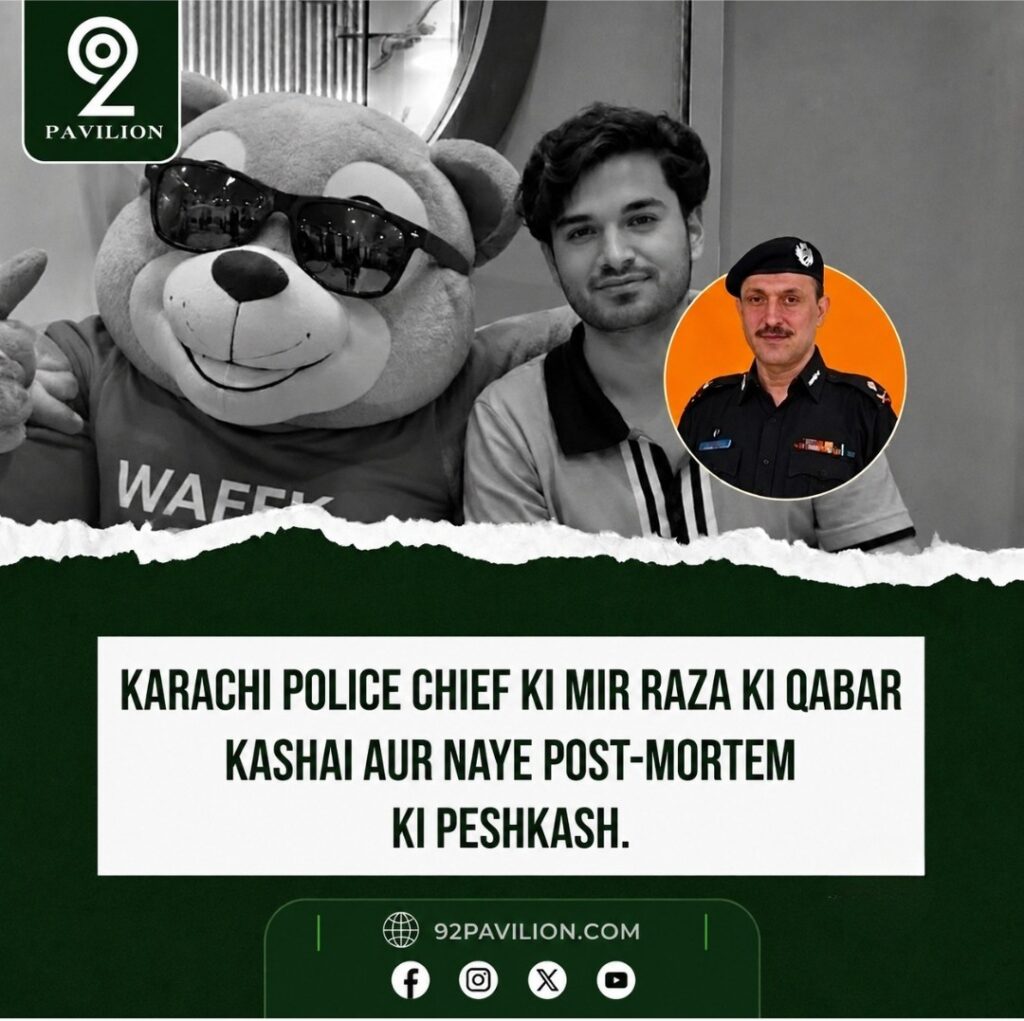
Quick Answer: Karachi’s Additional Inspector General of Police, Azad Khan, says Mir Raza Ali’s body could be exhumed for a fresh post-mortem examination if his family formally requests it. Days later, Mir Raza’s father filed exactly that request in a Karachi court. He hopes it will resolve growing questions about the original autopsy findings.
An Offer Made Public
The exhumation offer came as Azad Khan addressed mounting criticism of the original post-mortem report. Speaking to reporters, he said the body could be exhumed for a new examination. The family would need to make a formal request through proper channels, he added, and all legal requirements would need to be met.
At the same time, Khan defended the original process. He noted that the concerned Medico-Legal Officer had prepared the post-mortem report, and police had based their investigation on that document.
The Father Takes Him Up on It
Just a day later, Mir Raza’s father filed a formal application in a Karachi court. He requested exactly that: exhumation of his son’s body for a fresh post-mortem examination. The move followed weeks of growing distrust in the original findings, both from the family and from Police Surgeon Dr Samia Syed, who had publicly flagged serious concerns about the autopsy.
For Mir Raza’s father, the request marks another step in a campaign he’s pursued since his son’s death. He wants to prove his son was murdered, not that he died by suicide, as some investigators have suggested.
Why the Original Autopsy Is Under Fire
The controversy traces back to Dr Samia’s review of the post-mortem findings. She identified 14 specific shortcomings in how doctors conducted the examination. Among them: no X-rays, no gunshot residue testing on the hands, and no internal examination of the skull or neck, despite these being standard steps in cases involving firearm injuries.
Police officials pushed back on her assessment. They noted that Dr Samia had based her conclusions on photographs rather than a physical examination of the body. Still, the scale and specificity of her concerns kept pressure on authorities to consider a second look.
A Family That Never Accepted the Official Version
From early on, Mir Raza’s family rejected the possibility that he died by suicide. His father points to how quickly the body was released. Authorities handed it over to the family within just an hour of the post-mortem, he says, a timeline he believes may have compromised the investigation’s thoroughness.
The family has consistently maintained that Mir Raza was kidnapped, tortured, and killed. That version of events stands in direct contrast to the theory some investigators have pursued, based on evidence about his state of mind before his death.
What a Fresh Post-Mortem Could Resolve
If the court approves the exhumation, a new examination could address several of the specific gaps Dr Samia identified. Gunshot residue testing and a more detailed internal examination would be central to that review. These findings could play a decisive role in determining whether Mir Raza’s death gets classified as suicide or murder.
Given how central the post-mortem controversy has become to the public conversation around this case, the court’s decision on the exhumation request is likely to draw close attention in the days ahead.
Where the Investigation Stands
Alongside the post-mortem dispute, Sindh’s police chief has proposed forming a medical board. It would help settle the disagreement between the police surgeon and the original medico-legal officer. Investigators, meanwhile, continue reviewing CCTV footage, phone records, and other forensic evidence as the broader case remains open.
Frequently Asked Questions
Why did Karachi’s police chief offer to exhume Mir Raza’s body?
The offer came amid growing public scrutiny of the original post-mortem report, following concerns raised by a police surgeon about its findings.
Has the family formally requested exhumation?
Yes. Mir Raza’s father filed a court application requesting exhumation for a fresh post-mortem examination.
Why does the family want a new autopsy?
They believe the original findings don’t reflect what actually happened to their son, and continue to reject the suicide theory.
What could a new post-mortem reveal?
It could address gaps identified by the police surgeon, including gunshot residue testing and a more detailed internal examination, potentially clarifying the cause of death.
This report is based on reporting from ARY News, Daily Pakistan, and Dawn.