By: News Desk 92Pavilion | Updated: August 15, 2026
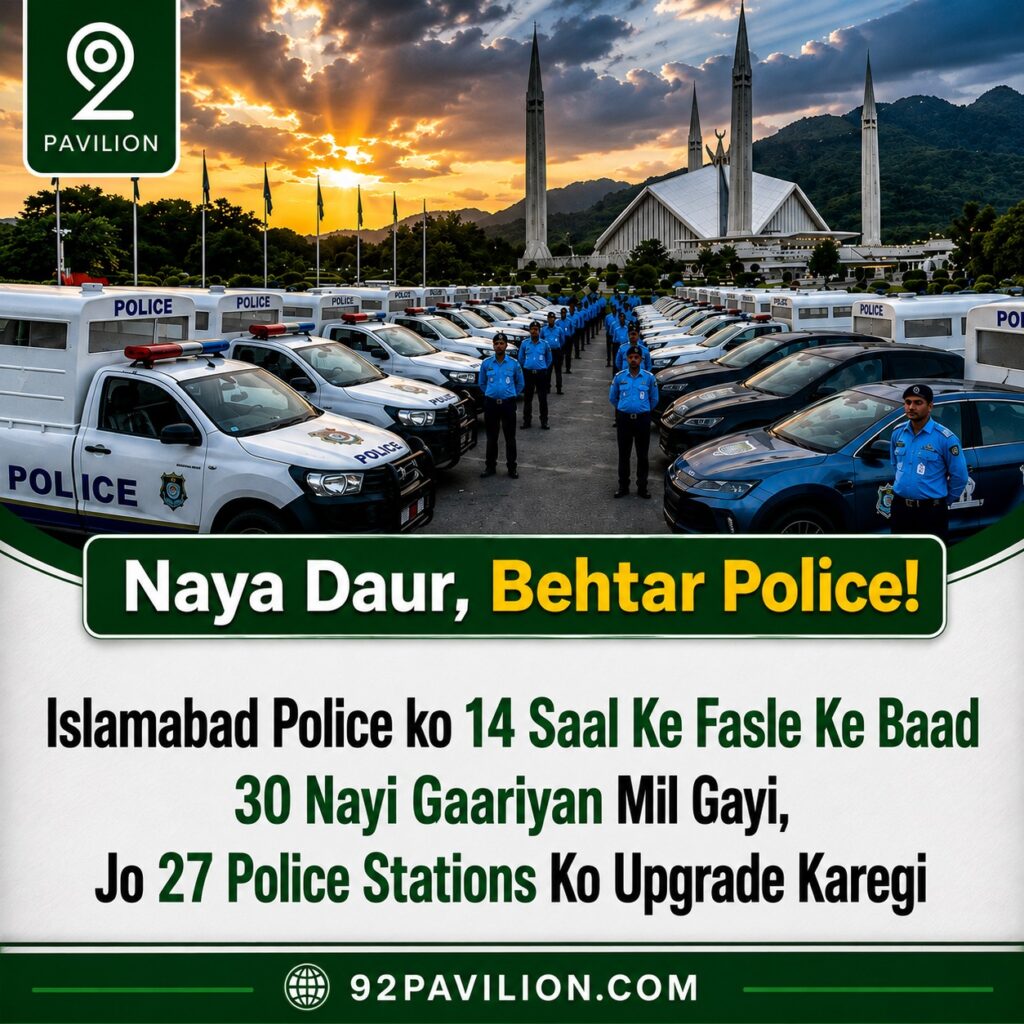
Quick Answer: Islamabad’s 27 police stations received 30 new vehicles on August 15, ending a 14-year wait for updated transport. Interior Minister Mohsin Naqvi and Minister of State Talal Chaudhry handed over the keys during a ceremony at Police Lines. The new fleet includes electric vehicles and forms part of a broader plan that also involves recruiting 9,000 new personnel and upgrading police station infrastructure across the capital.
A Long-Overdue Upgrade
For 14 years, Islamabad’s police force operated with an ageing fleet of vehicles. That changed on Saturday, when authorities distributed 30 new vehicles across all 27 police stations in the federal capital. Officials say the move will improve response times and give officers far greater mobility while handling emergencies and public complaints.
The Handover Ceremony
Interior Minister Mohsin Naqvi and Minister of State for Interior Talal Chaudhry personally handed over the vehicle keys during a ceremony held at Police Lines. Speaking on the occasion, Naqvi said modern policing simply isn’t possible without functional vehicles. He added that meeting police requirements in line with the times is essential to achieving real results, and that the new fleet would directly improve response times across the city.
Electric Vehicles Join the Fleet
Notably, the new fleet includes electric vehicles, reflecting the government’s broader push toward environmentally friendly policies. Naqvi explained that shifting to EVs would also help cut down petroleum expenditure for the department. In other words, the upgrade serves two goals at once: better mobility for officers and lower fuel costs for the force over time.
More Reforms in the Pipeline
Chaudhry confirmed that all 27 police stations across Islamabad received vehicles under this rollout. He also noted that the stations had been relying on 14-year-old vehicles before this update. Beyond the new fleet, construction and rehabilitation work is underway at all 27 stations, and officials expect that work to be completed by the end of the year.
In addition, the government is recruiting around 9,000 new personnel to address a long-standing staffing shortage. Chaudhry emphasised that merit will be strictly maintained throughout the recruitment process, ensuring the expansion strengthens the force without compromising standards.
Part of a Larger Modernisation Push
Naqvi said all necessary resources are being provided to Islamabad police to strengthen public safety and security in the capital. With better equipment, he said, officers will be able to perform their duties more effectively. Together, the new vehicles, station upgrades, and recruitment drive form part of a wider effort to transform Islamabad police into what officials describe as a model force for the rest of the country.
Frequently Asked Questions
How many vehicles did Islamabad police receive?
They received 30 new vehicles, distributed across all 27 police stations in the federal capital.
Why did it take 14 years for an upgrade?
Officials did not detail the specific reasons for the delay, but confirmed the force had been operating with 14-year-old vehicles until this rollout.
Do the new vehicles include electric cars?
Yes. The fleet includes EVs, aligned with the government’s environmentally friendly policy goals.
What other reforms are planned for Islamabad police?
The government is recruiting around 9,000 new personnel and upgrading infrastructure at all 27 police stations, with completion expected by the end of the year.
This report is based on reporting from Dawn, The Nation, Pakistan Observer, and Bloom Pakistan.
92Pavilion brings you Islamabad’s city and administration news as it happens. Stay with us for updates on this developing story.