By: News Desk 92Pavilion | Updated: July 2026
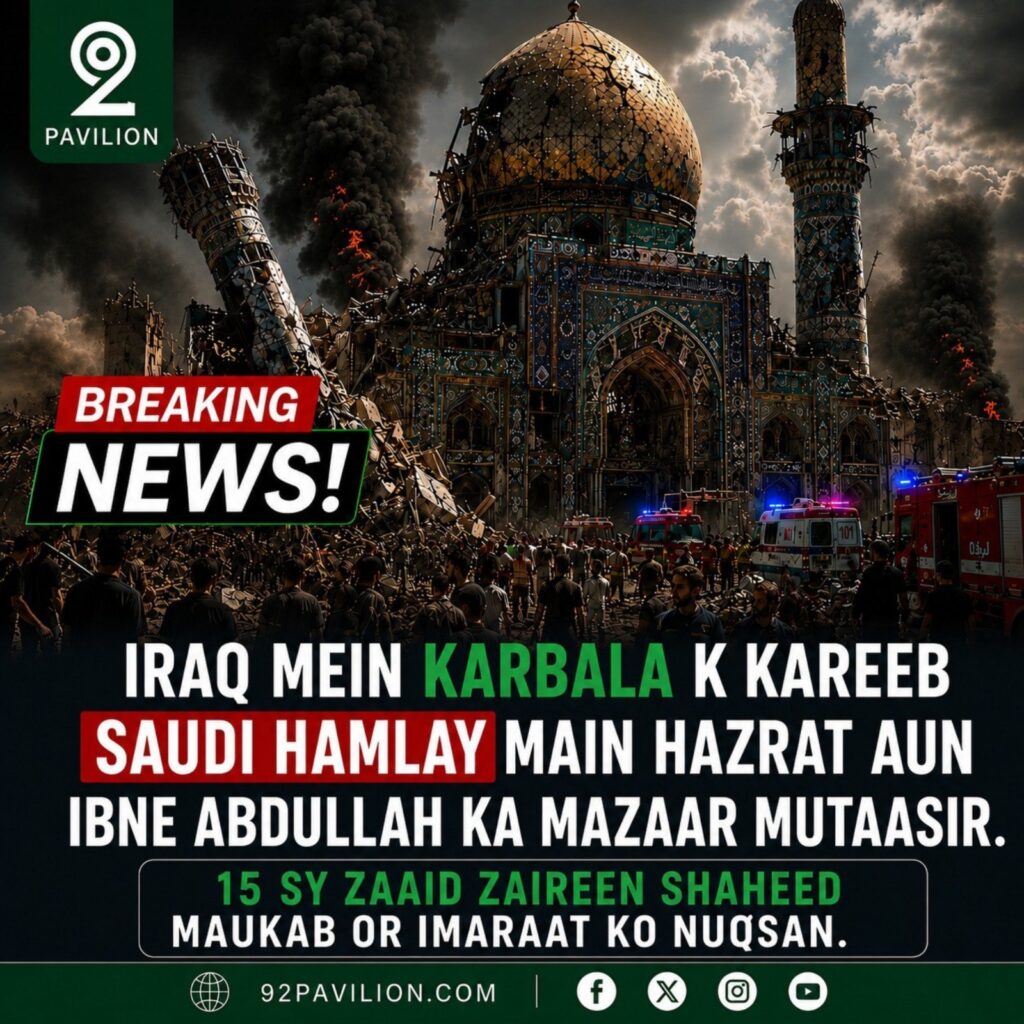
Quick Answer: Viral posts circulating on social media claim that a joint attack near Karbala, Iraq, damaged the shrine of Hazrat Aun ibn Abdullah and killed 15 or more pilgrims. These specific Karbala shrine attack claims have not been confirmed by any established news agency or official Iraqi source. They appear to have originated from a small number of Instagram accounts, not verified journalism.
What’s Circulating Online
Over the past few days, graphics and posts have spread across social media platforms describing a devastating strike on a religious site near Karbala. The claims include specific details: that the shrine of Hazrat Aun ibn Abdullah, a historic site associated with the Battle of Karbala, sustained major structural damage, and that more than 15 pilgrims lost their lives in the attack.
These posts have circulated widely, often accompanied by dramatic imagery, during a period of heightened tension in the region tied to real military activity in Iraq.
Why the Timing Made This Believable
It’s worth understanding why these claims spread so quickly. They emerged during a period when genuine strikes were, in fact, taking place across Iraq. On July 28 and 29, 2026, the United States and Saudi Arabia carried out real joint strikes targeting Popular Mobilization Forces sites in several Iraqi provinces, including Karbala, just days before the Arbaeen pilgrimage.
That real event, confirmed by outlets including Shafaq News, CNN, and Iranian state media, killed at least 20 people and wounded dozens, mostly security personnel. A separate, verified strike also hit a roadside pilgrim rest station near Karbala, though officials confirmed that particular incident caused no casualties.
Because genuine strikes were happening in the same region during the same window, more dramatic and specific claims, like the ones about the Hazrat Aun ibn Abdullah shrine, found fertile ground to spread.
What Hasn’t Been Confirmed
Despite the real backdrop of military activity, the specific claims about the shrine attack don’t hold up under scrutiny. No established news agency covering the story, including outlets based in Iraq and across the region, has reported damage to this particular shrine. No official statement from Iraqi authorities, Saudi officials, or US Central Command has referenced an attack on the site.
The claims appear to trace back to a small number of social media accounts rather than any verified reporting on the ground. When checked against available evidence, no substantiation exists for either the structural damage claim or the specific pilgrim casualty figure being shared.
A Pattern Worth Recognizing
This isn’t an unusual pattern during periods of conflict. When real, confirmed violence is already happening in a region, false or exaggerated claims about additional attacks tend to spread faster and gain more traction, precisely because the underlying situation makes them seem plausible.
Religious sites, in particular, carry heavy emotional weight, which can make claims involving them spread especially quickly, even without verification. This is one reason why careful sourcing matters during fast-moving, sensitive situations like this one.
What We Know for Certain
To be clear about what has actually been verified: real strikes did hit multiple Iraqi provinces, including Karbala, in the days before Arbaeen. Real casualties were reported among security forces on both the Iraqi and Iranian sides. A real strike did hit a pilgrim rest station near Karbala, without causing casualties, according to officials.
What has not been verified is any specific claim about the Hazrat Aun ibn Abdullah shrine being damaged, or the specific pilgrim death toll being shared in viral posts.
Why This Matters
Getting this right matters, especially around a moment as significant as Arbaeen, one of the largest religious gatherings in the world. Spreading unverified claims, even unintentionally, can add confusion and fear for the millions of pilgrims and their families following news from the region, at a time when accurate information is critical.
Frequently Asked Questions
Is it true that a shrine near Karbala was attacked and destroyed?
This specific claim has not been confirmed by any established news agency or official source. It remains unverified.
Did any real attacks happen near Karbala recently?
Yes. Real US-Saudi strikes hit several Iraqi provinces, including Karbala, in late July 2026, though they targeted security force positions, not religious shrines.
Where did the shrine attack claims originate?
They appear to have spread through a small number of social media accounts rather than verified news reporting.
Should I share posts about the shrine attack?
Given the lack of verification, it’s best to rely on established news sources for updates rather than unverified social media claims, especially on sensitive topics like this one.
This fact-check is based on verified reporting from Shafaq News, CNN, and Mehr News Agency regarding actual events in Iraq, cross-checked against the specific claims circulating online.
92Pavilion is committed to accurate reporting, especially during sensitive and fast-moving situations. Stay with us for verified updates only.