Latest Posts
Building a Vibrant Cultural FutureA Journey Towards ProsperityArab nations face an inevitable declineBlogging Revenue in Pakistan’s 2026 EconomyWhy China is Investing in Pakistan’s Gwadar PortThe Rising Spirit of Pakistani SportsVoice-Over Economy in Pakistan 2026India’s Investment in Iran,Chabahar PortEvent Management Business in Pakistan 2026The Volatile Trajectory of Pakistan-Afghanistan Relations in 2026Why Pakistan Must Overhaul Its InfrastructureEvolution of Goods and Equipment in Modern SportsThe Current Situation of Sports in PakistanGovernment Initiatives for Sports in PakistanAssessing Sports Infrastructure and Facilities in PakistanSialkot and the Renaissance of Pakistan’s Sports Goods IndustryEmerging Sports Trends in 2026Legacy of Popular Traditional SportsJourney Through the Background of Sports in PakistanInfrastructure and Framework Deficits in Pakistani Sports InstitutionsLevelling the Field of SportsThe Roadmap for Pakistan’s Islamic Financial TransitionApartheid Structure in Occupied KashmirThe Strategic Role of the SCO in 2026Complexities of Illegal Immigrant RepatriationPakistan’s Strategic Role in Regional Power DynamicsPakistan’s Strategic Role in the South Asian Power PlayPakistan’s Strategic Tightrope in the US-China RivalryPakistan-China Relations in a Changing Geopolitical EnvironmentForeign Relation of Pakistan with Neighboring CountriesGlobal Response and the Reshaping World Order in 2026Impacts of International Structure on Pakistan’s Foreign PolicyEnduring Conflict Between India and PakistanAncient Roman and Modern EntertainmentCultivating Pakistan’s Future Tech WorkforceBuilding, Champions of the WorldDeciphering the Boundary Between Art and EntertainmentDevelopment of Pakistan’s Entertainment IndustryEntertainment and the Innovative Technology Industry in 2026Flourishing World of Entertainment in 2026How Technology Transformed Our EntertainmentInterrelationship Between Culture and Visual Entertainment MediaPakistan’s Entertainment Industry Set to ThrivePop Culture, Media Representation, and the Architecture of IdentityThe Evolution of Pakistan’s Entertainment IndustryThe Transformative Power of Entertainment on Modern SocietyStrategic Agenda for Pakistan’s Entertainment IndustryThe Economic Impact of the Entertainment Industry

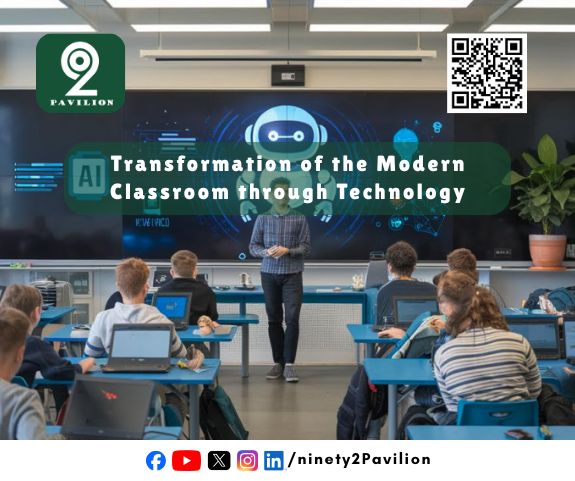
Transformation of the Modern Classroom through Technology

Transformation of the Modern Classroom through Technology

By: News Desk 92Pavilion

In 2026, the classroom has transcended its physical boundaries, evolving into a dynamic ecosystem where technology is no longer a luxury but a fundamental literacy. The integration of digital tools has shifted the educational paradigm from a passive, content-heavy model to one defined by interactive dialogue and personalized exploration. At the heart of this transformation is Artificial Intelligence, which now serves as a co-pilot for both educators and students. Through AI-driven adaptive learning platforms, the centuries-old challenge of “teaching to the middle” is being dismantled. These systems analyze real-time performance data to adjust the difficulty and pacing of lessons, ensuring that students who struggle receive immediate scaffolds while advanced learners are pushed toward deeper inquiry.

The rise of immersive technologies like Virtual and Augmented Reality (VR/AR) has further revolutionized the sensory experience of learning. Abstract concepts that were once confined to the pages of a textbook—such as the molecular structure of a virus or the architectural nuances of ancient Rome—are now tangible. Students can embark on virtual field trips to the surface of Mars or conduct high-risk chemistry experiments in a safe, simulated environment. This “experiential learning” has proven to be a powerful catalyst for engagement, particularly for students who previously found traditional lecture formats alienating. By stimulating multiple senses, these tools help cement long-term memory and foster a genuine curiosity that extends beyond the classroom walls.

However, the widespread adoption of technology also highlights the critical importance of the “digital divide” and the human element in education. As of 2026, while 19% of schools in developing regions like Pakistan have integrated digital tools, millions of children still lack reliable internet access. This disparity risks creating a two-tier educational system where technology widens the gap rather than bridging it. Furthermore, the 2025–2026 Education Insights Report emphasizes that technology is only as effective as the pedagogy behind it. Without intentional teacher training, high-tech gadgets can become expensive distractions. The most successful modern classrooms are those where technology automates administrative burdens—like grading and attendance—allowing teachers to focus on their true calling: mentorship, emotional support, and fostering critical thinking.

Ultimately, the goal of classroom technology in the mid-2020s is not to replace the teacher but to amplify their impact. As we move toward a future defined by microlearning and hybrid models, the focus has shifted toward “digital citizenship.” Students are being taught not just how to use tools, but how to navigate the ethical complexities of AI, data privacy, and information literacy. In this high-tech landscape, the classroom remains a sanctuary of human connection, powered by digital innovation to prepare the next generation for a world that is increasingly complex, interconnected, and digitized

Share

Introduction

Pakistan’s political environment in 2026 remains dynamic and highly influential in shaping the country’s future. From parliamentary debates and economic policy decisions to opposition movements and electoral reforms, recent developments are playing a crucial role in determining national direction.

In this report by Eye of Pakistan, we analyze the latest political developments, government strategies, and opposition responses.

Government’s Policy Priorities in 2026

The federal government has emphasized:

  • Economic stabilization

  • Institutional reforms

  • Energy sector restructuring

  • Strengthening foreign diplomatic ties

Recent cabinet meetings focused on controlling inflation, stabilizing the Pakistani Rupee, and implementing fiscal discipline under ongoing economic reform programs.

Officials claim these measures aim to restore investor confidence and ensure sustainable growth.

Opposition’s Response and Political Strategy

Major opposition parties have intensified criticism of government policies, particularly regarding:

  • Rising inflation

  • Unemployment

  • Tax reforms

  • Utility price increases

Opposition leaders argue that economic pressure on the public has increased and demand greater transparency in parliamentary proceedings.

Political rallies and public gatherings have increased across major cities including Karachi, Lahore, and Islamabad.

Parliamentary Developments

Recent National Assembly sessions have seen heated debates over:

  • Budget allocations

  • Electoral reforms

  • Accountability laws

  • Provincial autonomy issues

Lawmakers from both treasury and opposition benches continue to exchange strong viewpoints, reflecting a vibrant yet tense political atmosphere.

Election Reforms and Democratic Process

Discussions around electoral transparency and digital voting mechanisms remain central to political discourse.

The Election Commission is reportedly reviewing:

  • Voter verification systems

  • Polling station security

  • Overseas voting procedures

Analysts believe these reforms could significantly impact future general elections.

Public Reaction and Political Climate

Public opinion appears divided. While some citizens support structural reforms and long-term stabilization plans, others express concerns over economic hardships and governance challenges.

Political analysts suggest that the coming months will be critical in determining whether current policies translate into tangible relief for the public.

Conclusion

Pakistan’s political landscape in 2026 is marked by active debate, institutional reforms, and strategic maneuvering from both government and opposition parties. As policy decisions continue to unfold, their impact on economic stability and democratic processes will remain under close observation.

Stay connected with Eye of Pakistan for reliable and timely political updates.