Latest Posts
Building a Vibrant Cultural FutureA Journey Towards ProsperityArab nations face an inevitable declineBlogging Revenue in Pakistan’s 2026 EconomyWhy China is Investing in Pakistan’s Gwadar PortThe Rising Spirit of Pakistani SportsVoice-Over Economy in Pakistan 2026India’s Investment in Iran,Chabahar PortEvent Management Business in Pakistan 2026The Volatile Trajectory of Pakistan-Afghanistan Relations in 2026Why Pakistan Must Overhaul Its InfrastructureEvolution of Goods and Equipment in Modern SportsThe Current Situation of Sports in PakistanGovernment Initiatives for Sports in PakistanAssessing Sports Infrastructure and Facilities in PakistanSialkot and the Renaissance of Pakistan’s Sports Goods IndustryEmerging Sports Trends in 2026Legacy of Popular Traditional SportsJourney Through the Background of Sports in PakistanInfrastructure and Framework Deficits in Pakistani Sports InstitutionsLevelling the Field of SportsThe Roadmap for Pakistan’s Islamic Financial TransitionApartheid Structure in Occupied KashmirThe Strategic Role of the SCO in 2026Complexities of Illegal Immigrant RepatriationPakistan’s Strategic Role in Regional Power DynamicsPakistan’s Strategic Role in the South Asian Power PlayPakistan’s Strategic Tightrope in the US-China RivalryPakistan-China Relations in a Changing Geopolitical EnvironmentForeign Relation of Pakistan with Neighboring CountriesGlobal Response and the Reshaping World Order in 2026Impacts of International Structure on Pakistan’s Foreign PolicyEnduring Conflict Between India and PakistanAncient Roman and Modern EntertainmentCultivating Pakistan’s Future Tech WorkforceBuilding, Champions of the WorldDeciphering the Boundary Between Art and EntertainmentDevelopment of Pakistan’s Entertainment Industry

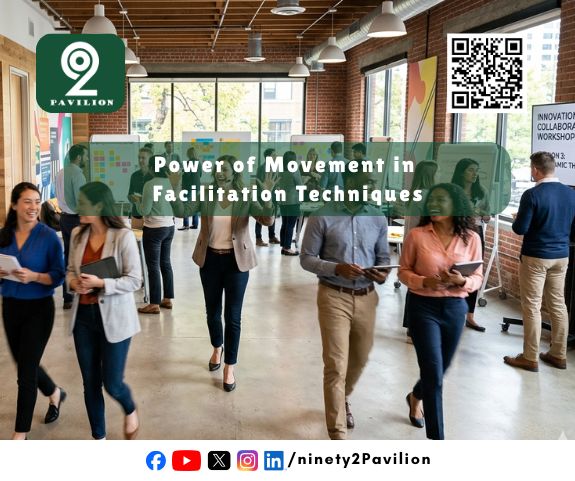
Power of Movement in Facilitation Techniques

Power of Movement in Facilitation Techniques

By: News Desk 92Pavilion

In the professional and educational landscapes of 2026, the traditional image of facilitation—a group of people seated in a semi-circle around a flipchart—is being rapidly replaced by a more dynamic, kinetic model. Facilitation techniques have evolved to recognize that the human brain does not function in isolation from the body. By integrating physical activity and fitness into the structural design of workshops, meetings, and training sessions, modern facilitators are unlocking higher levels of cognitive engagement, creative problem-solving, and group cohesion. This shift toward “Active Facilitation” treats movement not as a distraction from the work, but as a primary catalyst for performance and mental clarity.

The scientific foundation for this approach is robust. Physical activity stimulates the production of neurochemicals like dopamine and serotonin, which regulate mood and attention, while also increasing blood flow to the prefrontal cortex—the area of the brain responsible for executive function. In 2026, savvy facilitators use this to their advantage through “State Management.” If a group’s energy flags after a long session, instead of a standard coffee break, they might employ a five-minute “Facilitation Gym” segment—high-energy, low-impact movements designed to reset the participants’ neural pathways. These bursts of activity act as a cognitive “reboot,” ensuring that the group remains in an optimal state for absorbing complex information and making critical decisions.

Furthermore, physical activity serves as a powerful tool for breaking down social barriers and hierarchies. Traditional seated arrangements often reinforce power dynamics, but movement-based facilitation techniques, such as “Walk-and-Talk” sessions or “Standing Sprints,” level the playing field. When participants move together, they experience a phenomenon known as “social synchony,” which fosters a sense of unity and collective identity. In 2026, many corporate facilitators use “Proprioceptive Icebreakers”—activities that require physical coordination and partner work—to build immediate rapport and trust. These techniques move the group from a state of individual observation to one of active, embodied participation, making the collaborative process feel more intuitive and less forced.

The implementation of these techniques also addresses the global health imperative to reduce sedentary behavior. With “sitting disease” recognized as a significant organizational risk, active facilitation techniques demonstrate a commitment to participant well-being. Using “Standing Agendas” or rotating workstations that require physical movement between topics ensures that the body remains engaged alongside the mind. This holistic approach not only produces better immediate outcomes for the workshop but also models healthy professional habits that participants can take back to their daily routines. Ultimately, the integration of physical activity into facilitation in 2026 is about maximizing human potential. By getting participants out of their chairs and into their bodies, facilitators are transforming the workshop into a space where movement fuels ideas and fitness drives the future of work.


Share

Introduction

Pakistan’s political environment in 2026 remains dynamic and highly influential in shaping the country’s future. From parliamentary debates and economic policy decisions to opposition movements and electoral reforms, recent developments are playing a crucial role in determining national direction.

In this report by Eye of Pakistan, we analyze the latest political developments, government strategies, and opposition responses.

Government’s Policy Priorities in 2026

The federal government has emphasized:

  • Economic stabilization

  • Institutional reforms

  • Energy sector restructuring

  • Strengthening foreign diplomatic ties

Recent cabinet meetings focused on controlling inflation, stabilizing the Pakistani Rupee, and implementing fiscal discipline under ongoing economic reform programs.

Officials claim these measures aim to restore investor confidence and ensure sustainable growth.

Opposition’s Response and Political Strategy

Major opposition parties have intensified criticism of government policies, particularly regarding:

  • Rising inflation

  • Unemployment

  • Tax reforms

  • Utility price increases

Opposition leaders argue that economic pressure on the public has increased and demand greater transparency in parliamentary proceedings.

Political rallies and public gatherings have increased across major cities including Karachi, Lahore, and Islamabad.

Parliamentary Developments

Recent National Assembly sessions have seen heated debates over:

  • Budget allocations

  • Electoral reforms

  • Accountability laws

  • Provincial autonomy issues

Lawmakers from both treasury and opposition benches continue to exchange strong viewpoints, reflecting a vibrant yet tense political atmosphere.

Election Reforms and Democratic Process

Discussions around electoral transparency and digital voting mechanisms remain central to political discourse.

The Election Commission is reportedly reviewing:

  • Voter verification systems

  • Polling station security

  • Overseas voting procedures

Analysts believe these reforms could significantly impact future general elections.

Public Reaction and Political Climate

Public opinion appears divided. While some citizens support structural reforms and long-term stabilization plans, others express concerns over economic hardships and governance challenges.

Political analysts suggest that the coming months will be critical in determining whether current policies translate into tangible relief for the public.

Conclusion

Pakistan’s political landscape in 2026 is marked by active debate, institutional reforms, and strategic maneuvering from both government and opposition parties. As policy decisions continue to unfold, their impact on economic stability and democratic processes will remain under close observation.

Stay connected with Eye of Pakistan for reliable and timely political updates.

Education in Pakistan 2026

By: News Desk 92Pavilion Education in Pakistan stands as a complex paradox of modest statistical gains and deep-rooted systemic crises. As of 2026, the national

Share
Read More »