
By: News Desk 92Pavilion
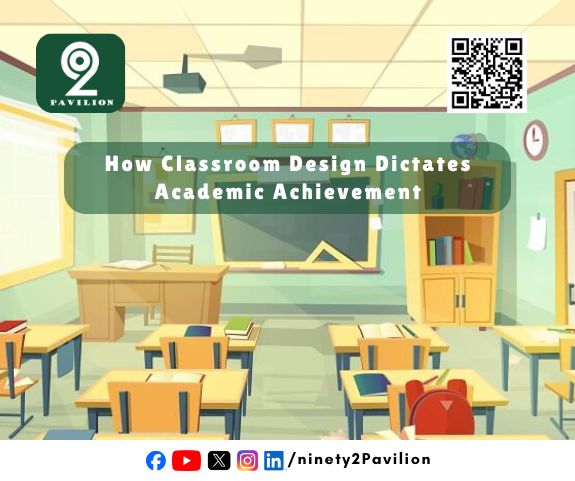
The physical environment of a classroom is often referred to as the “third teacher,” a silent but powerful force that can either stifle or stimulate intellectual growth. As of 2026, the shift away from the traditional industrial-age model—rows of bolted-down desks facing a central chalkboard—has accelerated, driven by a deeper understanding of environmental psychology and neuroeducation. Modern classroom design is no longer just about aesthetics; it is a strategic tool used to optimize cognitive load, foster collaboration, and support the diverse sensory needs of the student body. Research from the 2024–25 “Clever Classrooms” update indicates that environmental factors can influence a student’s progress in reading, writing, and mathematics by as much as 16% over a single academic year.
Among the most critical elements of effective design are natural light, air quality, and temperature control. Studies consistently show that students in classrooms with large windows and ample daylight perform significantly better on standardized tests than those in windowless or poorly lit environments. Natural light helps regulate the circadian rhythms of children, improving focus during the day and sleep quality at night. Similarly, air quality is a non-negotiable factor for cognitive performance; high carbon dioxide levels in poorly ventilated rooms have been directly linked to increased lethargy and diminished decision-making capabilities. In 2026, smart-sensor technology in modern schools now automatically adjusts ventilation and lighting to maintain an optimal “learning state” for the brain.
Beyond physical comfort, the flexibility of a space dictates the pedagogical possibilities. The “Active Learning” classroom model utilizes modular furniture—desks on wheels, stools of varying heights, and soft seating areas—that can be reconfigured in seconds to transition from a formal lecture to small-group collaboration or independent study. This fluidity encourages student agency, allowing learners to choose the environment that best suits their current task. Furthermore, the strategic use of color and “visual complexity” is vital. While a vibrant environment can be stimulating, an over-decorated classroom with posters covering every inch of wall space can lead to sensory overload, particularly for neurodivergent students. The 2026 design standard favors a “balanced” palette: neutral walls with intentional “learning zones” that display student work or critical instructional scaffolds without overwhelming the visual field.
Acoustic design also plays a transformative role in student learning. In rooms with high reverberation or external noise pollution, students must expend significant cognitive energy just to decipher the teacher’s voice, leaving less mental bandwidth for processing the actual content. Strategic use of sound-absorbing materials and “quiet zones” ensures that the classroom remains a space of focused inquiry rather than auditory chaos. Ultimately, the impact of classroom design on student learning is a testament to the fact that humans are deeply connected to their surroundings. When a space is designed with intentionality, it validates the student, reduces stress, and creates an atmosphere where the pursuit of knowledge feels natural and inevitable