By: News Desk 92 Pavilion
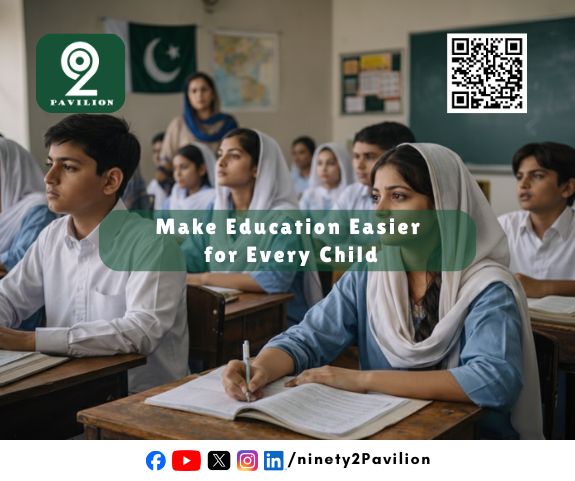
Education authorities in Pakistan are increasingly adopting smart classrooms equipped with digital tools, interactive boards, and multimedia resources. These innovations make lessons more engaging and help children grasp concepts quickly.
Continuous training programs are enhancing teachers’ skills in modern pedagogy.Workshops on creativity, critical thinking, and student-centered learning are ensuring that classrooms become more interactive and supportive.Motivated teachers are the backbone of a strong education system, and Pakistan is investing in their growth.Online portals and mobile apps are providing students with access to lessons, quizzes, and e-books.Remote learning opportunities are bridging gaps for children in rural areas.Digital libraries are expanding knowledge horizons, making learning easier and more accessible.
New schools and colleges are being built across urban and rural regions.Modern facilities such as science labs, libraries, and sports complexes are creating a holistic learning environment. Public-private partnerships are helping accelerate infrastructure development.
Scholarships and merit-based opportunities are enabling talented students to pursue higher education.Counseling services are being introduced to guide students in academics and career choices.Special initiatives for inclusive education ensure that children of all backgrounds can thrive.
Pakistan’s education authorities are fostering partnerships with international institutions, bringing in new ideas and best practices. Exchange programs and collaborative projects are giving students exposure to global standards of learning.
By modernizing classrooms, empowering teachers, expanding infrastructure, and embracing digital innovation, Pakistan’s education authorities are paving the way for a brighter future. These efforts are making learning easier, more engaging, and more accessible for every child, ensuring that the nation’s youth are well-prepared to lead tomorrow
Introduction
Pakistan’s political environment in 2026 remains dynamic and highly influential in shaping the country’s future. From parliamentary debates and economic policy decisions to opposition movements and electoral reforms, recent developments are playing a crucial role in determining national direction.
In this report by Eye of Pakistan, we analyze the latest political developments, government strategies, and opposition responses.
Government’s Policy Priorities in 2026
The federal government has emphasized:
Recent cabinet meetings focused on controlling inflation, stabilizing the Pakistani Rupee, and implementing fiscal discipline under ongoing economic reform programs.
Officials claim these measures aim to restore investor confidence and ensure sustainable growth.
Opposition’s Response and Political Strategy
Major opposition parties have intensified criticism of government policies, particularly regarding:
Rising inflation
Unemployment
Tax reforms
Utility price increases
Opposition leaders argue that economic pressure on the public has increased and demand greater transparency in parliamentary proceedings.
Political rallies and public gatherings have increased across major cities including Karachi, Lahore, and Islamabad.
Parliamentary Developments
Recent National Assembly sessions have seen heated debates over:
Lawmakers from both treasury and opposition benches continue to exchange strong viewpoints, reflecting a vibrant yet tense political atmosphere.
Election Reforms and Democratic Process
Discussions around electoral transparency and digital voting mechanisms remain central to political discourse.
The Election Commission is reportedly reviewing:
Analysts believe these reforms could significantly impact future general elections.
Public Reaction and Political Climate
Public opinion appears divided. While some citizens support structural reforms and long-term stabilization plans, others express concerns over economic hardships and governance challenges.
Political analysts suggest that the coming months will be critical in determining whether current policies translate into tangible relief for the public.
Conclusion
Pakistan’s political landscape in 2026 is marked by active debate, institutional reforms, and strategic maneuvering from both government and opposition parties. As policy decisions continue to unfold, their impact on economic stability and democratic processes will remain under close observation.
Stay connected with Eye of Pakistan for reliable and timely political updates.