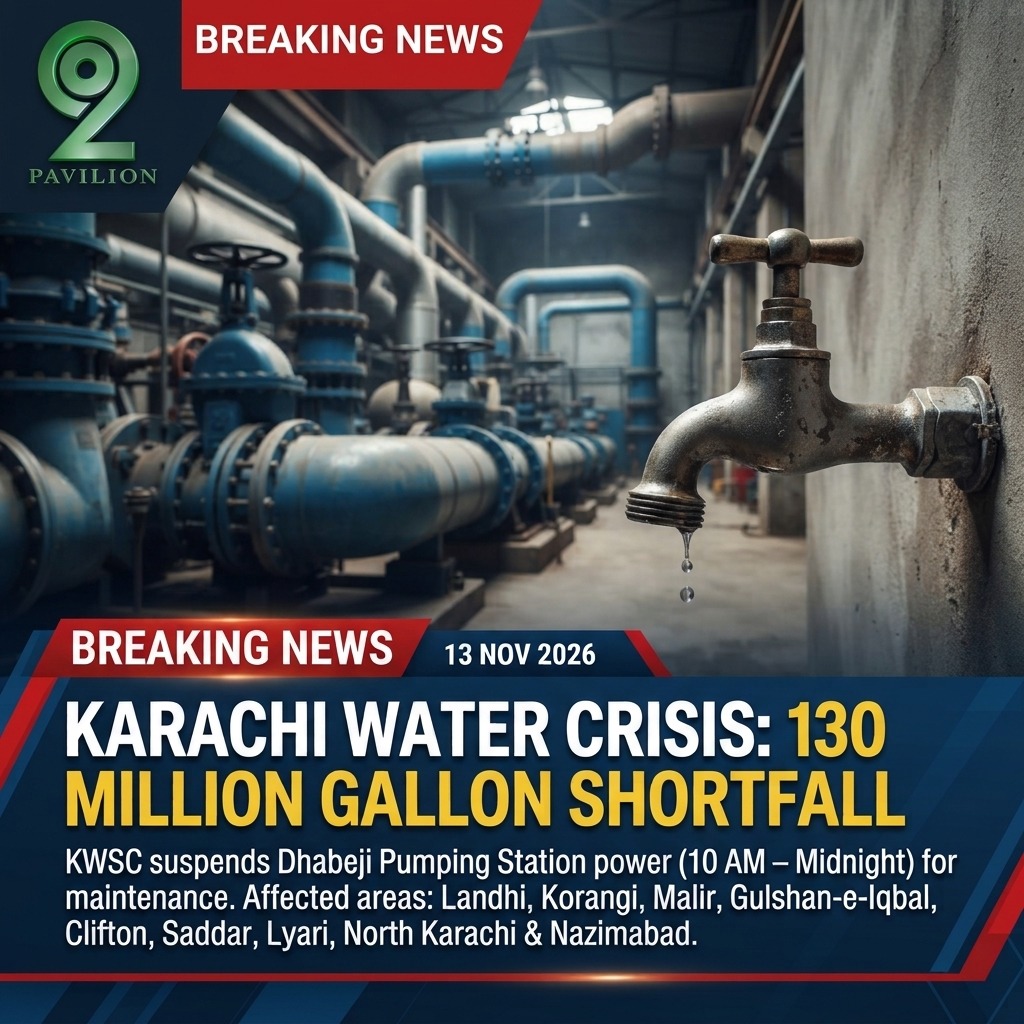
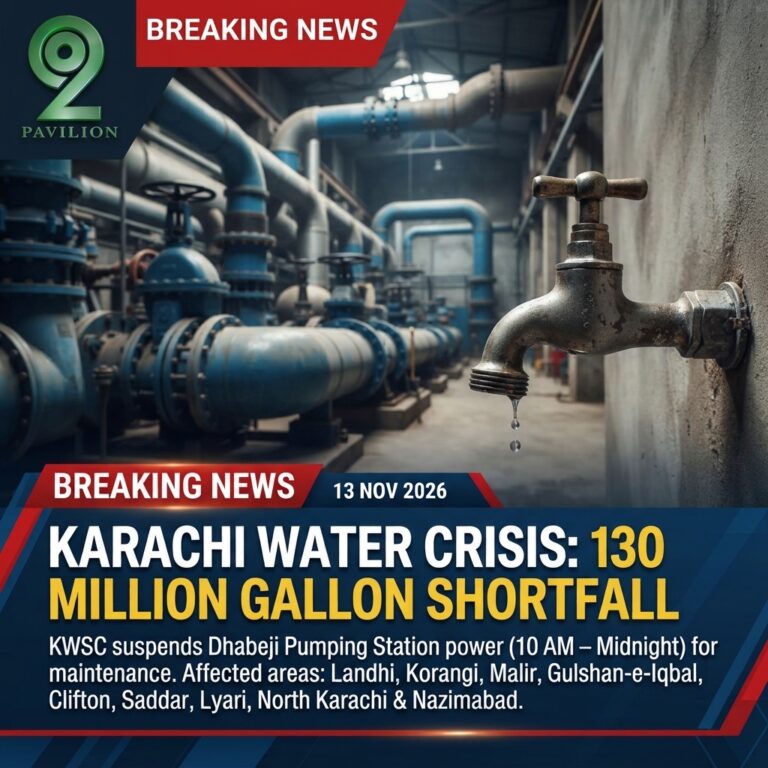
KARACHI, November 13, 2026 — Residents across several major parts of Karachi experienced a severe water supply disruption today after the Karachi Water and Sewerage Corporation (KWSC) suspended electricity to the Dhabeji Pumping Station for scheduled annual maintenance.
14-Hour Maintenance Shutdown
According to an official statement issued by the KWSC, the power shutdown began at 10:00 AM and is scheduled to remain in effect until midnight (12:00 AM). During this 14-hour maintenance window, 9 out of the station’s 21 pumping units were temporarily shut down to allow technical teams to carry out essential repair and upkeep work.
Scale of the Deficit and Affected Areas
The suspension of these nine pumps resulted in an estimated 130-million-gallon water deficit for the metropolis today. As a result, water pressure dropped significantly, and supply was suspended in numerous residential and commercial neighborhoods across the city.
The worst-affected areas include:
- District East & Korangi: Landhi, Korangi, Malir, Shah Faisal Colony, and Gulshan-e-Iqbal.
- District South: Clifton, Saddar, and Lyari.
- District Central: North Karachi, along with several blocks of Nazimabad and Gulberg.
KWSC Advisory for Citizens
KWSC officials stated that the annual maintenance is critical to ensuring uninterrupted water pumping capacity throughout the year and preventing sudden mechanical breakdowns. The corporation urged citizens to conserve water and use their stored reserves carefully until normal pumping operations resume after midnight.
Technical teams remain on-site to complete the maintenance work within the stipulated timeframe, after which water supply to the affected zones will be restored gradually.
Introduction
Pakistan’s political environment in 2026 remains dynamic and highly influential in shaping the country’s future. From parliamentary debates and economic policy decisions to opposition movements and electoral reforms, recent developments are playing a crucial role in determining national direction.
In this report by Eye of Pakistan, we analyze the latest political developments, government strategies, and opposition responses.
Government’s Policy Priorities in 2026
The federal government has emphasized:
Recent cabinet meetings focused on controlling inflation, stabilizing the Pakistani Rupee, and implementing fiscal discipline under ongoing economic reform programs.
Officials claim these measures aim to restore investor confidence and ensure sustainable growth.
Opposition’s Response and Political Strategy
Major opposition parties have intensified criticism of government policies, particularly regarding:
Rising inflation
Unemployment
Tax reforms
Utility price increases
Opposition leaders argue that economic pressure on the public has increased and demand greater transparency in parliamentary proceedings.
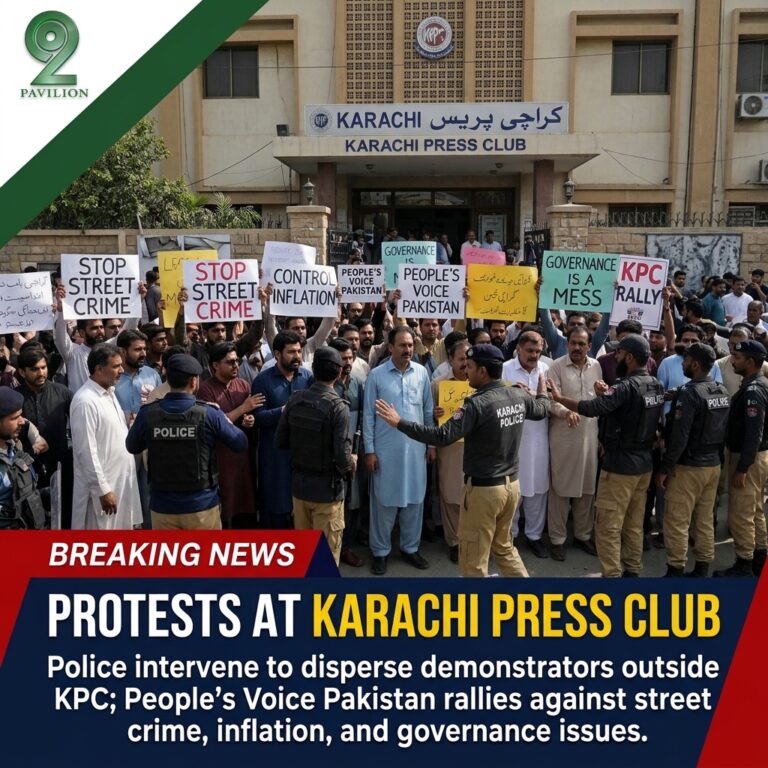
Political rallies and public gatherings have increased across major cities including Karachi, Lahore, and Islamabad.
Parliamentary Developments
Recent National Assembly sessions have seen heated debates over:
Lawmakers from both treasury and opposition benches continue to exchange strong viewpoints, reflecting a vibrant yet tense political atmosphere.
Election Reforms and Democratic Process
Discussions around electoral transparency and digital voting mechanisms remain central to political discourse.
The Election Commission is reportedly reviewing:
Analysts believe these reforms could significantly impact future general elections.
Public Reaction and Political Climate
Public opinion appears divided. While some citizens support structural reforms and long-term stabilization plans, others express concerns over economic hardships and governance challenges.
Political analysts suggest that the coming months will be critical in determining whether current policies translate into tangible relief for the public.
Conclusion
Pakistan’s political landscape in 2026 is marked by active debate, institutional reforms, and strategic maneuvering from both government and opposition parties. As policy decisions continue to unfold, their impact on economic stability and democratic processes will remain under close observation.
Stay connected with Eye of Pakistan for reliable and timely political updates.