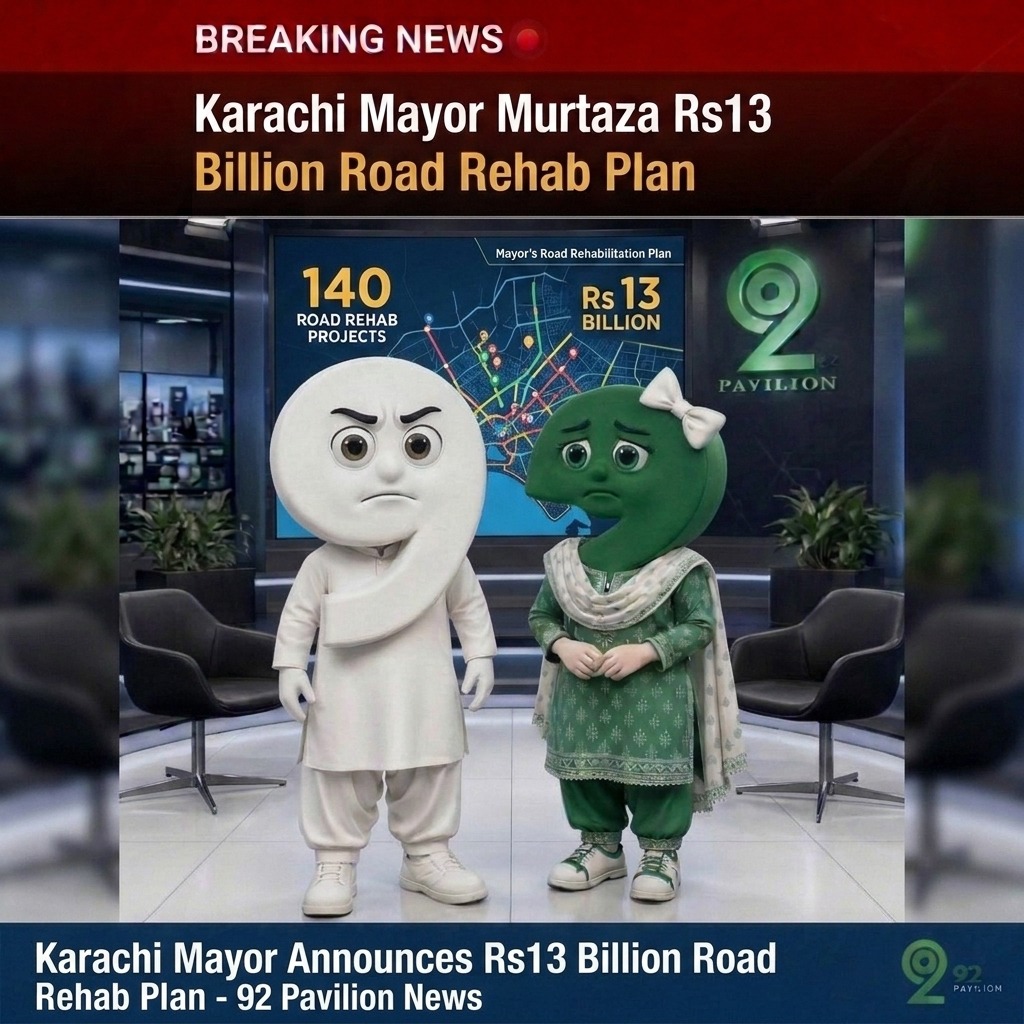
Karachi: Shehar-e-Quaid ke bunyadi dhanchay (infrastructure) ko behtar bananay ke liye Karachi ke Mayor Murtaza Wahab ne aik tareekhi mega project ka elan kiya hai. Is mansoobay ke tehat poore shehar ke tamam 7 azlaa (districts) mein 13 arab rupay ki laagat se 140 se zayed tabah-haal sarkon ki naye siray se tameer o bahali ki jaye gi. Tendering ka amala mukammal ho chuka hai aur aglay do se teen dinon mein kaam ke باقاعدہ orders (work orders) jari kar diye jayen ge, jis ke baad rawan haftay hi shehar bhar mein sargarmiyan shuru ho jayen gi.
Is mega development plan mein traffic ki rawani ko behtar bananay ke liye 1 arab rupay ki laagat se Garden Nishtar Road Flyover aur mazeed 1 arab rupay ki laagat se Chakor Nala Expressway ki tameer bhi shamil hai. Is ke sath sath shehar ki 41 bari shahraon par nayee modern street lights laganay ke liye bhi 1 arab rupay ke makhsoos funds rakhe gaye hain taake raat ke waqt shehar ko roshan kiya ja sakay aur jaraim par qaboo panay mein madad mil sakay.
Kya aap is mega project ke mutaliq apne ilaqay ki sarkon ki mazeed tafseelat janna chahte hain ya kaam shuru honay ki tareekh ke baray mein maloomat lena chahte hain?
Introduction
Pakistan’s political environment in 2026 remains dynamic and highly influential in shaping the country’s future. From parliamentary debates and economic policy decisions to opposition movements and electoral reforms, recent developments are playing a crucial role in determining national direction.
In this report by Eye of Pakistan, we analyze the latest political developments, government strategies, and opposition responses.
Government’s Policy Priorities in 2026
The federal government has emphasized:
Recent cabinet meetings focused on controlling inflation, stabilizing the Pakistani Rupee, and implementing fiscal discipline under ongoing economic reform programs.
Officials claim these measures aim to restore investor confidence and ensure sustainable growth.
Opposition’s Response and Political Strategy
Major opposition parties have intensified criticism of government policies, particularly regarding:
Rising inflation
Unemployment
Tax reforms
Utility price increases
Opposition leaders argue that economic pressure on the public has increased and demand greater transparency in parliamentary proceedings.
Political rallies and public gatherings have increased across major cities including Karachi, Lahore, and Islamabad.
Parliamentary Developments
Recent National Assembly sessions have seen heated debates over:
Lawmakers from both treasury and opposition benches continue to exchange strong viewpoints, reflecting a vibrant yet tense political atmosphere.
Election Reforms and Democratic Process
Discussions around electoral transparency and digital voting mechanisms remain central to political discourse.
The Election Commission is reportedly reviewing:
Analysts believe these reforms could significantly impact future general elections.
Public Reaction and Political Climate
Public opinion appears divided. While some citizens support structural reforms and long-term stabilization plans, others express concerns over economic hardships and governance challenges.
Political analysts suggest that the coming months will be critical in determining whether current policies translate into tangible relief for the public.
Conclusion
Pakistan’s political landscape in 2026 is marked by active debate, institutional reforms, and strategic maneuvering from both government and opposition parties. As policy decisions continue to unfold, their impact on economic stability and democratic processes will remain under close observation.
Stay connected with Eye of Pakistan for reliable and timely political updates.