
By: News Desk 92Pavilion | Updated: August 27, 2026
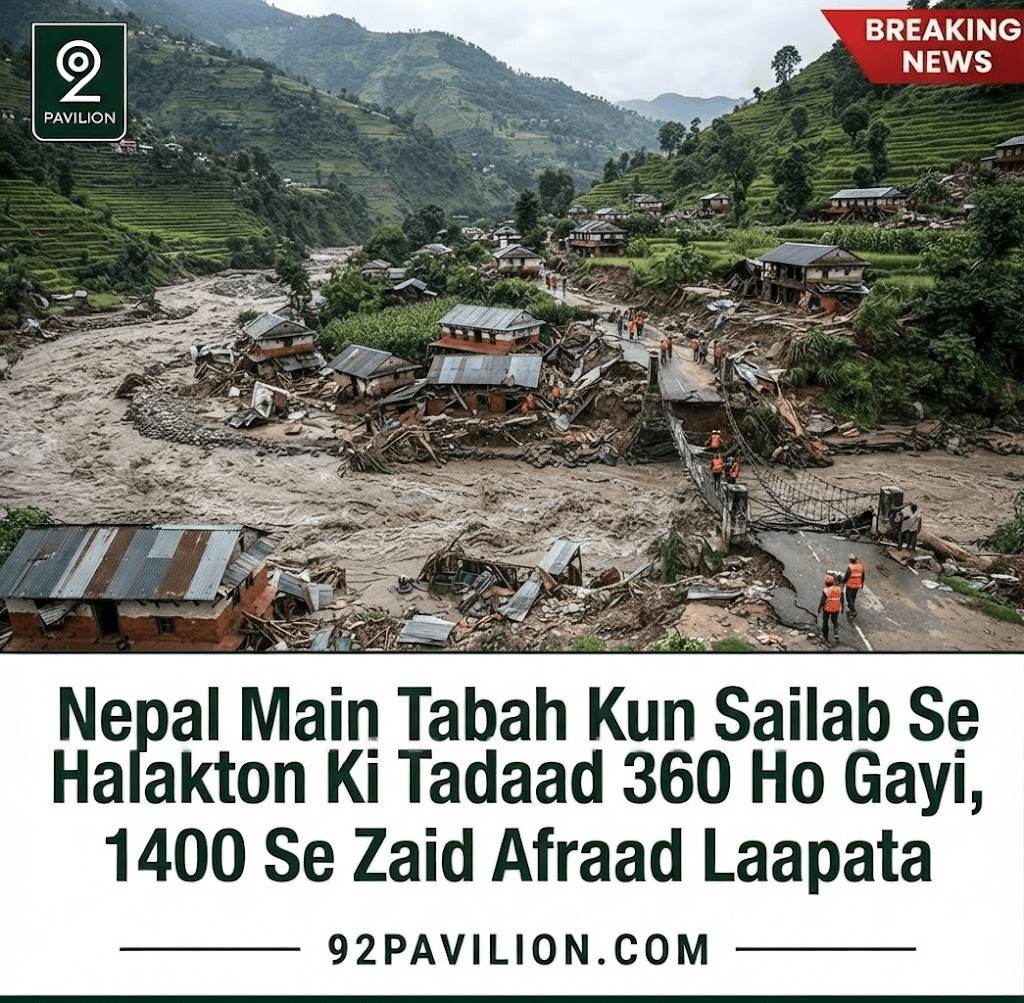
Quick Answer: Catastrophic flash floods and landslides along the Nepal-Tibet border have killed more than 360 people, with over 1,400 still missing, officials confirmed on August 27. The disaster, triggered by a glacial collapse near the Nepal-China border, has devastated Nepal’s Rasuwa and Nuwakot districts and affected the Gyirong border crossing in Tibet.
How the Disaster Unfolded
On the morning of August 26, a massive glacier collapse near the Nepal-China border sent a wall of ice, rock, and mud crashing into the Lhende River, which feeds into the Bhote Koshi and then the Trishuli River. Nepal’s disaster management authority said satellite imagery from Planet Labs confirmed the glacial flood originated roughly 20 kilometres northeast of the Rasuwagadhi border crossing.
Water levels in the Trishuli River reportedly rose by as much as nine metres in just 30 minutes, sweeping away homes, roads, bridges, and vehicles across a 72-kilometre stretch of settlements. The flood also struck the Gyirong Port crossing on the China-Nepal border, a key trade and pilgrimage route.
What Was First Reported as an Earthquake
Nepali authorities initially believed an earthquake had triggered a landslide that blocked a river, sending water surging downstream. The US Geological Survey first recorded the event as a magnitude 4.4 earthquake but later revised its findings, concluding the seismic signal was actually caused by a glacial collapse and debris flow rather than a traditional quake.
The Human Toll
Nepal’s Ministry of Foreign Affairs and police put the confirmed death toll at more than 360, while over 1,400 people remain missing, including scores of foreign nationals and pilgrims. Nepal’s Tourism Board said 517 of those missing in the country were foreigners, with 178 from India, many believed to be travelling toward Mount Kailash in Tibet on a pilgrimage. More than 60 of the missing were reported to be American citizens.
Rescue teams and military helicopters have been searching the affected districts, with bodies found as far downstream as Chitwan district. Dozens of injured survivors have been transported to Kathmandu for advanced medical treatment, and several foreign nationals trapped near the Trishuli hydropower project were evacuated by army teams.
Rescue and Relief Efforts
The International Federation of the Red Cross said rescue operations remain dangerous because of the continued threat of further landslides and flooding in the disaster zone. Officials said there has been unusually high demand for body bags as search teams continue combing the debris-covered valleys.
Authorities have issued flood warnings for communities along rivers in Rasuwa, Nuwakot, Dhading, Gorkha, and Chitwan districts, urging residents in low-lying and riverside areas to remain alert.
International Response
The disaster has drawn condolences and offers of assistance from governments around the world. Pakistan’s president and prime minister expressed grief over the flash floods and landslides, according to a statement from the Ministry of Information and Broadcasting. The United States also expressed solidarity with Nepal and said it stood ready to provide humanitarian assistance.
Why This Disaster Is So Severe
Experts note that Nepal’s steep Himalayan valleys, while economically vital as travel and trade corridors, are especially vulnerable to flooding and landslides. Glacial collapses of this scale have become more frequent in recent years, a trend scientists link to warming temperatures affecting high-altitude ice formations across the region.
Frequently Asked Questions
How many people have died in the Nepal floods?
More than 360 people have been confirmed dead as of August 27, according to Nepali police and government officials.
How many people are still missing?
Over 1,400 people remain missing, including hundreds of foreign nationals and pilgrims.
What caused the flooding?
A glacial collapse near the Nepal-China border triggered a massive debris flow that blocked and then overwhelmed the Lhende and Trishuli rivers.
Which areas were most affected?
Nepal’s Rasuwa and Nuwakot districts were hit hardest, with flooding also reaching Dhading and Chitwan districts and the Gyirong border crossing in Tibet.
This report is based on data from Nepal’s Ministry of Foreign Affairs, the National Disaster Risk Reduction and Management Authority, the US Geological Survey, and reporting from the Associated Press, Al Jazeera, CNN, and the Wall Street Journal.
92Pavilion brings you timely, verified updates from around the world. Stay with us for continued coverage.