
By: News Desk 92Pavilion | Updated: August 15, 2026
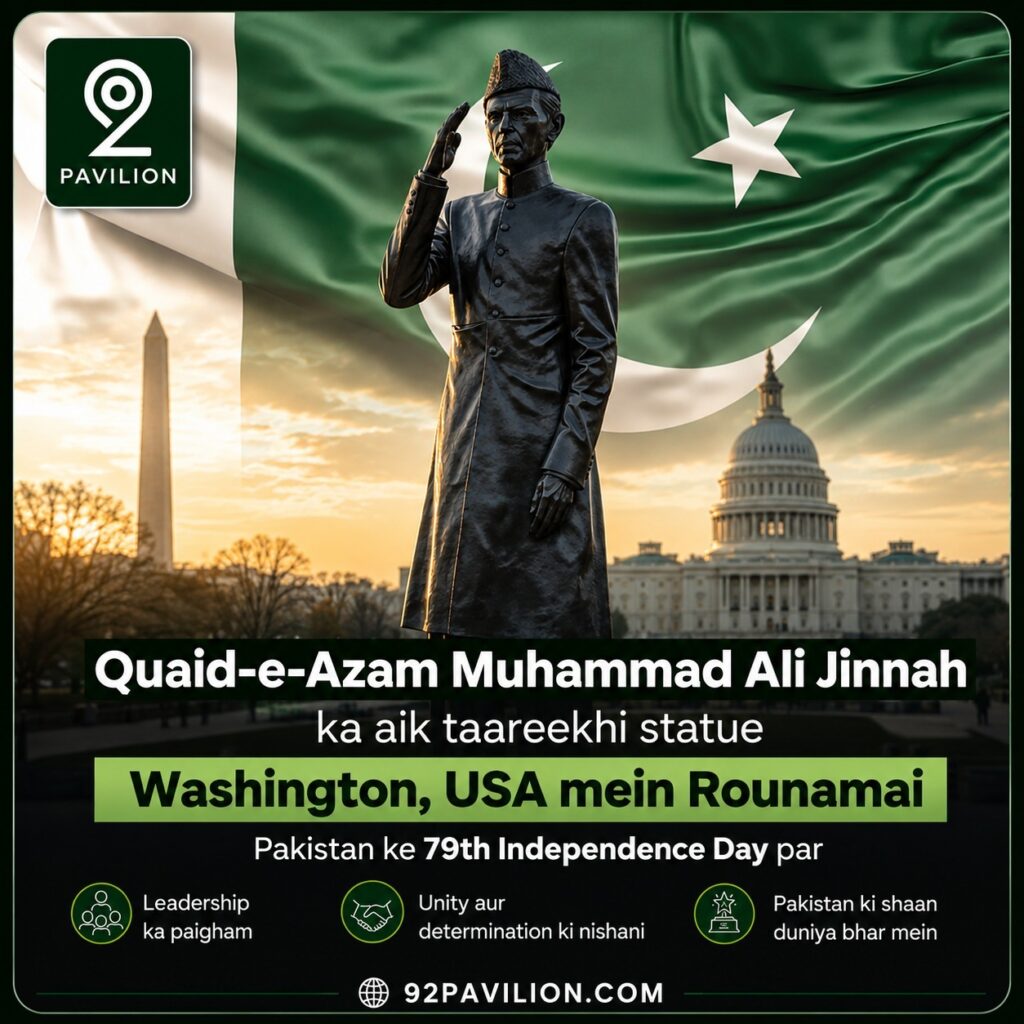
Quick Answer: Pakistan’s Embassy in Washington, D.C. unveiled a statue of Quaid-e-Azam Muhammad Ali Jinnah on August 14, marking the country’s 79th Independence Day. Ambassador Rizwan Saeed Sheikh unveiled the statue, which was donated by the Houston-based Quaid-i-Azam Foundation. The installation coincides with preparations for Jinnah’s upcoming 150th birth anniversary and will remain permanently on display at the embassy.
A Historic Addition to Independence Day Celebrations
The Embassy of Pakistan in Washington marked the 79th anniversary of Independence Day with a flag-hoisting ceremony on Friday, August 14. During the event, Ambassador Rizwan Saeed Sheikh unveiled a statue of the country’s founder, Quaid-e-Azam Muhammad Ali Jinnah. Pakistani-American community members, diplomats, and media representatives attended the ceremony, giving the occasion a distinctly historical dimension.
Where the Statue Came From
The Quaid-i-Azam Foundation, based in Houston, donated the statue to the embassy. Going forward, it will remain permanently on display at the mission in Washington. The timing carries extra significance, since the unveiling comes as Pakistan prepares to mark Jinnah’s 150th birth anniversary later this year.
What the Ambassador Said
Speaking at the ceremony, Ambassador Sheikh paid tribute to Jinnah’s constitutional struggle and his tireless efforts in creating Pakistan. He said the nation remains grateful to its founder, whose leadership united the Muslims of the subcontinent under one flag. In addition, he urged Pakistanis living abroad to uphold Jinnah’s principles of unity, faith, and discipline.
How the Ceremony Unfolded
The Independence Day event began with the hoisting of the national flag, accompanied by the national anthem. Afterward, attendees recited verses from the Holy Quran. Officials then read out messages from Pakistan’s president, prime minister, and deputy prime minister, each emphasising national unity and a shared commitment to progress.
Highlighting Pakistan-US Relations
In his address, Ambassador Sheikh also spoke about the broader relationship between Pakistan and the United States. He noted that Pakistan remains important to Washington at both the regional and global levels, and that the two countries continue cooperating across multiple fields. Notably, US Secretary of State Marco Rubio also referenced this bilateral cooperation in his own Independence Day message to Pakistan.
Why the Statue Matters
For many attendees, the unveiling represented more than a ceremonial gesture. It offered a moment of pride and connection for Pakistanis living far from home. As Pakistan approaches Jinnah’s 150th birth anniversary, the statue is expected to serve as a lasting symbol of the country’s founding ideals at one of its most prominent diplomatic missions abroad.
Frequently Asked Questions
When was the Quaid-e-Azam statue unveiled in Washington?
It was unveiled on August 14, 2026, during Pakistan’s 79th Independence Day celebrations at the embassy.
Who donated the statue?
The Quaid-i-Azam Foundation, based in Houston, Texas, donated the statue to the Pakistan Embassy.
Who unveiled the statue?
Pakistan’s Ambassador to the United States, Rizwan Saeed Sheikh, unveiled it during the flag-hoisting ceremony.
Will the statue remain permanently at the embassy?
Yes. The statue will remain on permanent display at the Pakistan Embassy in Washington, D.C.
This report is based on reporting from Dawn, Dunya News, ProPakistani, and The Nation.
92Pavilion brings you Pakistan’s diplomatic and international news as it happens. Stay with us for updates on this developing story.