
By: News Desk 92Pavilion | Updated: August 14, 2026
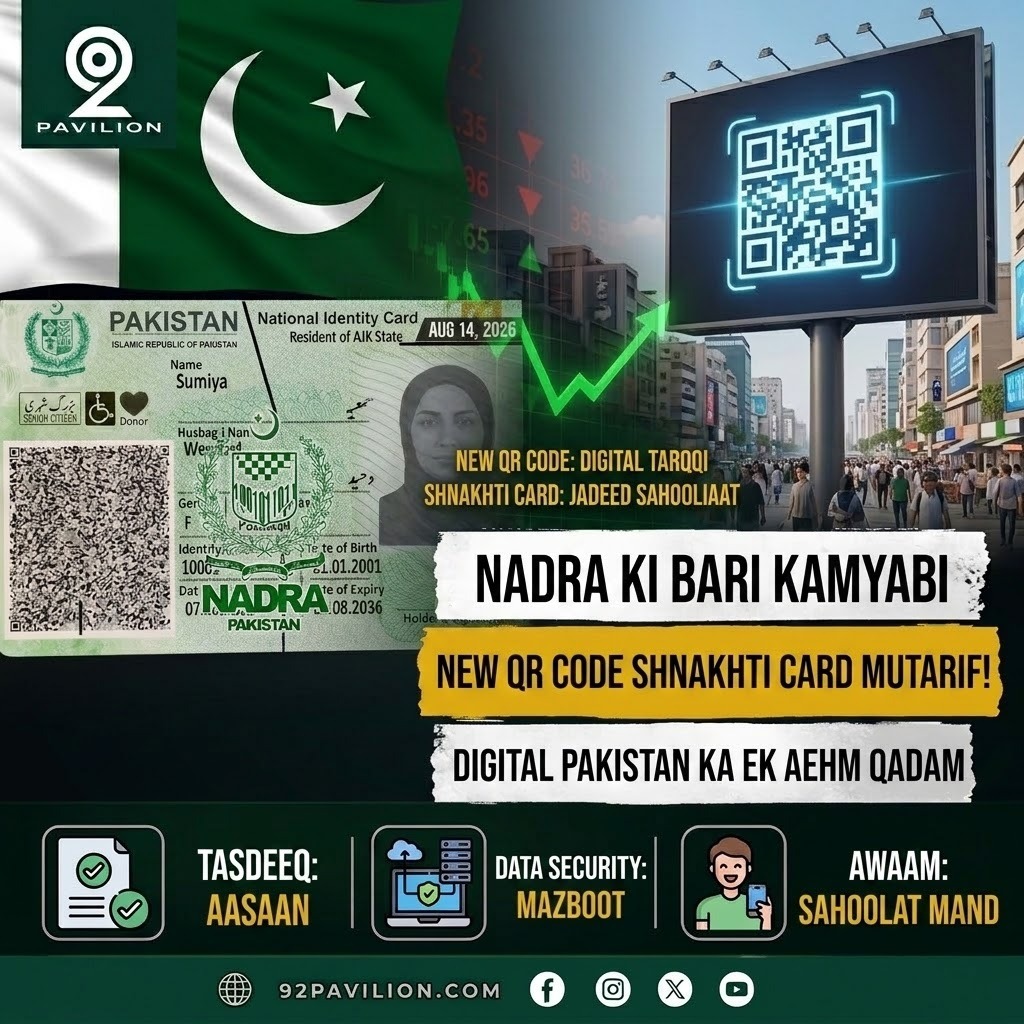
Quick Answer: NADRA has rolled out a new national identity card that replaces the imported microchip with a secure QR code. The rollout began on August 14, 2026, and will initially replace the chipless Teslin-material CNIC. Citizens can verify the card through the PakID mobile app on any smartphone. NADRA says the move boosts local manufacturing and makes identity checks faster for banks, hospitals, and other institutions.
What NADRA Has Introduced
NADRA has introduced a new chipless national identity card built around a secure QR code. The National Security Printing Company (NSPC) in Karachi manufactures the card locally. As a result, the design ends Pakistan’s reliance on imported microchips. Instead, the QR code carries the cardholder’s identification details and photograph, and it works with an ordinary smartphone camera.
Why the Rollout Matters
The federal government approved the new card on February 23, 2026. Since then, NADRA has prepared for a phased nationwide launch. From August 14, the QR-enabled polycarbonate card starts replacing the existing chipless CNIC issued on Teslin material. Consequently, citizens applying for a new or renewed card will now receive the updated version.
How Verification Works
Citizens can verify the card using the PakID mobile application. Simply scanning the QR code confirms the cardholder’s identity instantly. In addition, NADRA will provide specialised verification software to authorised institutions. These include telecom operators, banks, hospitals, Pakistan Railways, and law enforcement agencies. Therefore, organisations can enter names, addresses, and other details into their systems more accurately, with fewer data-entry errors.
What the Card Looks Like
The new card displays the cardholder’s name and address in both Urdu and English. It also carries symbols for senior citizens, persons with disabilities, organ donors, and residents of Azad Jammu and Kashmir. Meanwhile, NADRA has updated the card’s visible and covert security features to match current international standards.
A Phased, Multi-Stage Rollout
NADRA plans to extend the new format gradually. Starting January 2027, the QR-code system will expand to cover all remaining identity card categories. This includes the National Identity Card for Overseas Pakistanis (NICOP) and the Juvenile Card. Eventually, in the final phase, the Pakistan Origin Card (POC) will also shift to the chipless, QR-code-based format.
The Bigger Picture
The chip-based Smart National Identity Card first launched roughly 14 years ago. Since then, Pakistan has depended on imported chip technology for identity verification. Now, officials describe the new QR-based card as a step toward self-reliance in digital identity infrastructure. Overall, the move aligns with the government’s broader Digital Pakistan push to modernise citizen services.
Frequently Asked Questions
When did the new NADRA ID card launch?
The phased rollout began on August 14, 2026, starting with the standard chipless CNIC.
How is the new card different from the old one?
It replaces the imported microchip with a secure, locally produced QR code that a smartphone can scan and verify.
Which app do I need to verify the card?
The PakID mobile application, developed by NADRA, verifies the card by scanning its QR code.
When will NICOP and Juvenile Cards get the new format?
NADRA plans to extend the QR-code system to NICOP and Juvenile Cards starting January 2027.
This report is based on reporting from The Express Tribune, Dawn, ARY News, Dunya News, and Pakistan Observer.
92Pavilion brings you Pakistan’s technology and digital governance news as it happens. Stay with us for updates on this developing story.