By: News Desk 92Pavilion | Updated: August 12, 2026
Quick Answer: Interior Minister Mohsin Naqvi held high-level meetings in Tehran on August 11 with Iranian President Masoud Pezeshkian, Foreign Minister Abbas Araghchi, and Petroleum Minister Mohsen Paknejad. The visit is part of Pakistan’s push to help revive stalled US-Iran peace talks and comes as Naqvi also briefed Iranian leaders on Islamabad’s new Makkah defense pact with Saudi Arabia and Türkiye. Both sides stressed deepening bilateral cooperation in trade, energy, culture, and security.
Why Naqvi Travelled to Tehran
Mohsin Naqvi arrived in Tehran on Tuesday, August 11, amid renewed tension between the United States and Iran, following the breakdown last month of an interim agreement that Pakistan had signed as a guarantor. Islamabad has been trying to revive its mediation role between Washington and Tehran, and Naqvi’s visit builds on his earlier involvement in that effort.
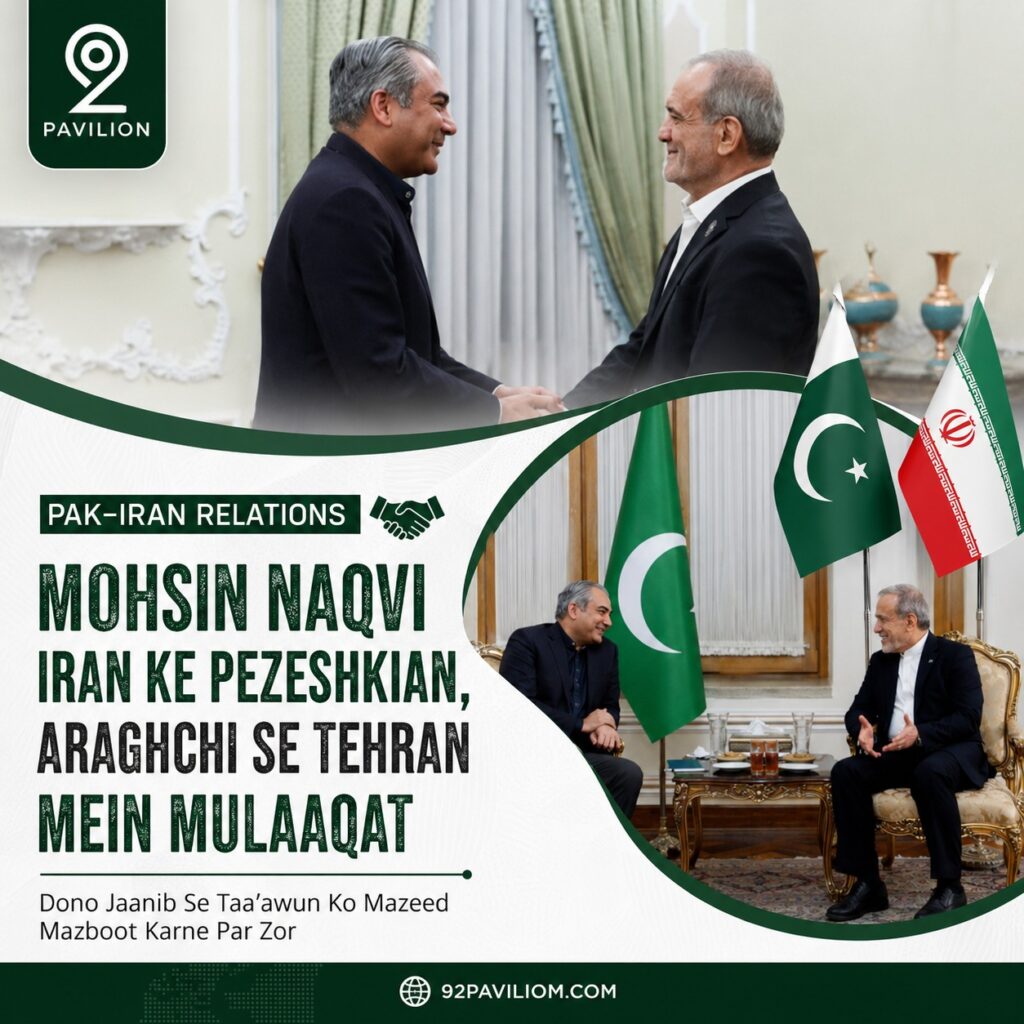
He was received at the airport by Iran’s Interior Minister Eskandar Momeni before holding separate meetings with President Pezeshkian and Foreign Minister Araghchi. Pakistan’s Foreign Office said the discussions covered bilateral relations, regional security and stability, and “constructive engagement amongst the parties in the region.”
What Was Discussed With President Pezeshkian
During his meeting with Pezeshkian, Naqvi described Pakistan-Iran relations as strong, long-standing, and unbreakable, and conveyed Islamabad’s determination to deepen ties with Tehran. He also delivered a message to the Iranian leadership from Prime Minister Shehbaz Sharif and Field Marshal Asim Munir, according to Iranian state media.
Pezeshkian, in turn, called for expanding cooperation across political, economic, trade, cultural, and security fields. Iran’s state news agency IRNA quoted him as saying Iran is ready to further deepen relations with Pakistan and pave the way for joint cooperation between the two neighbours.
Briefing on the Makkah Defense Pact
Iranian state media reported that Naqvi also briefed Tehran’s leadership on the Makkah Joint Defense Agreement, signed last week by Pakistan, Saudi Arabia, and Türkiye, under which an attack on one member would be treated as an attack on all three. The disclosure adds new detail to what was discussed during Naqvi’s meetings with Pezeshkian and Araghchi.
Meeting With Foreign Minister Araghchi
Naqvi also held detailed talks with Foreign Minister Abbas Araghchi. The visit takes place at a sensitive moment, with the Strait of Hormuz remaining central to the wider regional crisis and diplomatic efforts underway to restore normal commercial movement through the waterway.
Naqvi is known to be close to Pakistan’s army chief, Field Marshal Asim Munir, and has previously been involved in mediation efforts between Iran and the United States, making his role in this visit particularly significant for Islamabad’s diplomatic push.
Wider Context: Pakistan’s Regional Diplomacy
Pakistan and Iran share a long border along with deep historical, cultural, and economic ties, and their governments regularly engage on border management, security, and trade. This visit comes as Tehran and Washington continue exchanging messages through intermediaries rather than direct talks, with Islamabad positioning itself as a channel between the two sides.
Naqvi was expected to hold further meetings with Pezeshkian before wrapping up his trip, as Pakistan continues efforts to help de-escalate the standoff and support a return to negotiations.
Frequently Asked Questions
Who did Mohsin Naqvi meet in Tehran?
He met Iranian President Masoud Pezeshkian, Foreign Minister Abbas Araghchi, Petroleum Minister Mohsen Paknejad, and Interior Minister Eskandar Momeni.
Why is Pakistan involved in Iran-US diplomacy?
Pakistan had signed as a guarantor of an earlier interim US-Iran agreement that broke down last month, and Islamabad is now trying to help revive stalled negotiations between the two countries.
What is the Makkah Joint Defense Agreement?
It is a defense pact signed by Pakistan, Saudi Arabia, and Türkiye, under which an attack on one member country would be treated as an attack on all three.
What did Iran’s president say about ties with Pakistan?
President Pezeshkian said Iran is ready to further deepen relations with Pakistan across political, economic, trade, cultural, and security fields.
This report is based on reporting from Arab News, Asharq Al-Awsat, Daily Sabah, Business Standard, and Pakistan Today.
92Pavilion brings you Pakistan’s foreign policy and diplomatic news as it happens. Stay with us for updates on this developing story.