By: News Desk 92Pavilion | Updated: August 6, 2026
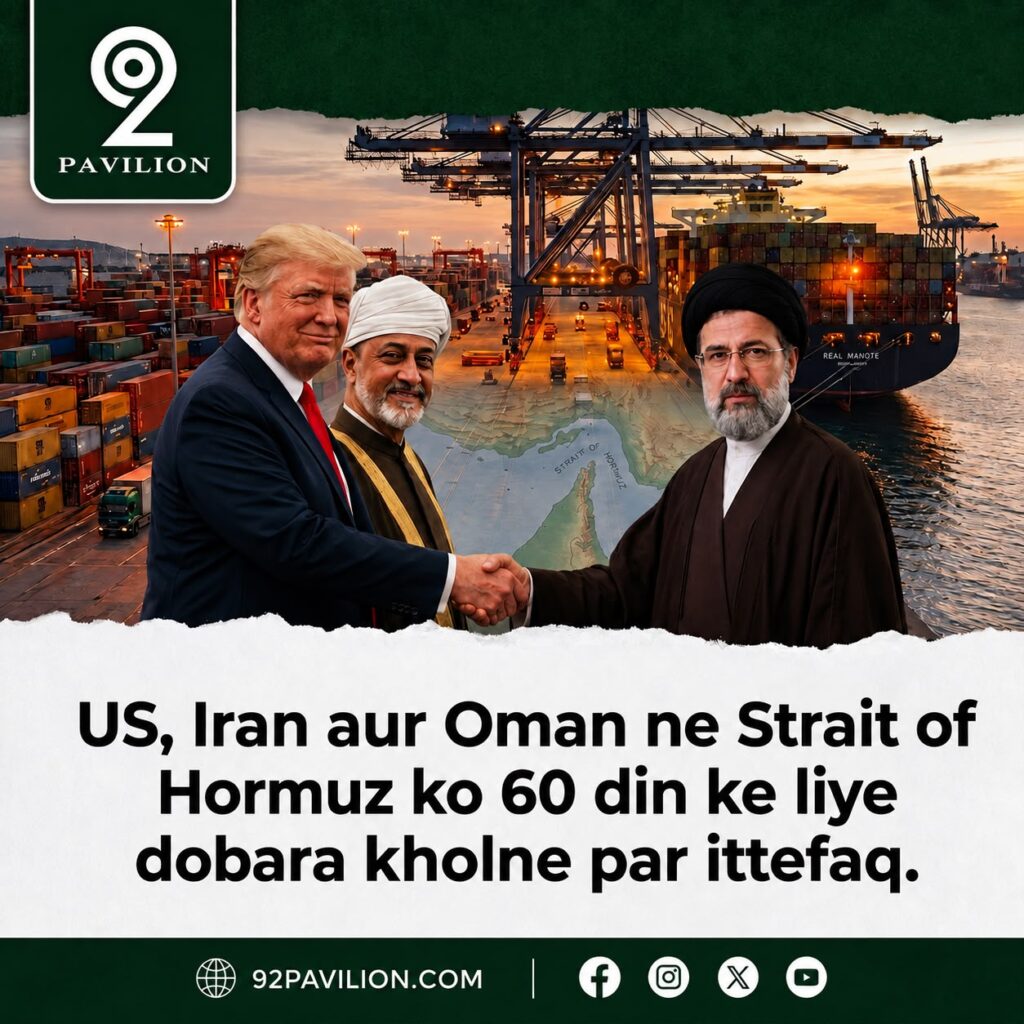
Quick Answer: A Strait of Hormuz reopening deal is close to being finalized between the United States, Iran, and Oman. Under the emerging arrangement, ships would use separate shipping lanes through Iranian and Omani waters for at least 60 days, without paying transit fees. Iran’s Foreign Ministry says the deal is close but insists the US must still meet certain commitments before the waterway fully reopens.
What the Deal Would Actually Do
According to regional sources and officials familiar with the talks, the plan would create two shipping lanes through the strait. Vessels entering the Persian Gulf would travel through a northern route in Iranian territorial waters, while ships heading out toward the Arabian Sea would use a southern route through Omani waters, coordinated with Tehran.
No tolls or transit fees would be charged during this initial period. Alongside the new routes, the parties involved would work to clear naval mines from the strait’s main shipping lane within 30 days, after which that lane could handle two-way traffic under a permanent arrangement to be worked out later between Iran and Oman.
Why This Matters So Much
The Strait of Hormuz is one of the world’s most important shipping corridors, and reopening it fully is central to restoring a fragile ceasefire between the US and Iran while restarting broader nuclear negotiations. The stakes go well beyond shipping logistics.
Speaking to Fox News, President Trump called it “a very good day,” noting that Iranian negotiators had continued talking throughout the day despite public denials. He added that if a deal is reached and the strait reopens, Iran would “never have a nuclear weapon.”
A Deal That Nearly Collapsed Once Already
This isn’t the first time a resolution seemed within reach. Three weeks earlier, the White House, Oman, and regional mediators believed they had a deal in place, only to see Iran resume attacks on shipping vessels. That breakdown triggered two weeks of intense fighting that came close to full-scale war.
Trump said he decided over the weekend not to follow through on threats to launch a major bombing campaign, choosing instead to give diplomacy more time. Asked what would happen if talks collapsed again, he simply said, “I have time.”
Behind the Scenes of the Negotiations
Talks have involved more than just the three main parties. Qatari, Pakistani, and Saudi officials have also played a role in the mediation efforts, according to regional sources. Trump’s envoy, Steve Witkoff, held multiple calls with Iranian Foreign Minister Abbas Araghchi and Omani Foreign Minister Badr al-Busaidi in the lead-up to this latest push.
On the Iranian side, Araghchi reportedly agreed to the framework but still needed approval from Iran’s Supreme Leader and its Supreme National Security Council before the deal could move forward.
Iran Says It’s Close, But Not Done Yet
Iranian officials have been careful to note that reaching an understanding with Oman doesn’t automatically mean the strait reopens. Iran’s Foreign Ministry spokesperson, Esmaeil Baghaei, said the US still needs to meet additional commitments first.
Iran has also signaled a shift from the original ceasefire terms. Where Iran had earlier agreed not to charge fees for 60 days under the original memorandum of understanding, officials now say Iran intends to collect fees for maritime services offered alongside Oman once the strait reopens, a change that could complicate the deal’s final terms.
What Comes Next
Turkish Foreign Minister Hakan Fidan expressed optimism that negotiations could conclude soon, though he noted the exact mechanisms and duration of the arrangement were still being finalized. With so many moving pieces, from mine clearance to fee disputes to formal government approvals, the coming days are likely to determine whether this latest push succeeds where the previous attempt fell apart.
Frequently Asked Questions
What is the Strait of Hormuz reopening deal?
It’s an emerging 60-day arrangement between the US, Iran, and Oman that would create separate shipping lanes for ships entering and exiting the Persian Gulf.
Why did an earlier deal fall through?
A previous understanding collapsed three weeks ago when Iran resumed attacks on ships, triggering two weeks of intense fighting.
Will ships have to pay fees to use the strait?
Under the current 60-day framework, no tolls would be charged, though Iran has signaled it may collect fees for maritime services after this period.
Who is helping mediate the talks?
Qatar, Pakistan, and Saudi Arabia have all played mediating roles alongside direct talks between the US, Iran, and Oman.
This report is based on reporting from Axios, CNN, Al Jazeera, and NPR.
92Pavilion is tracking this fast-moving story closely. Stay with us for the latest updates.