By: News Desk 92Pavilion | Updated: July 2026
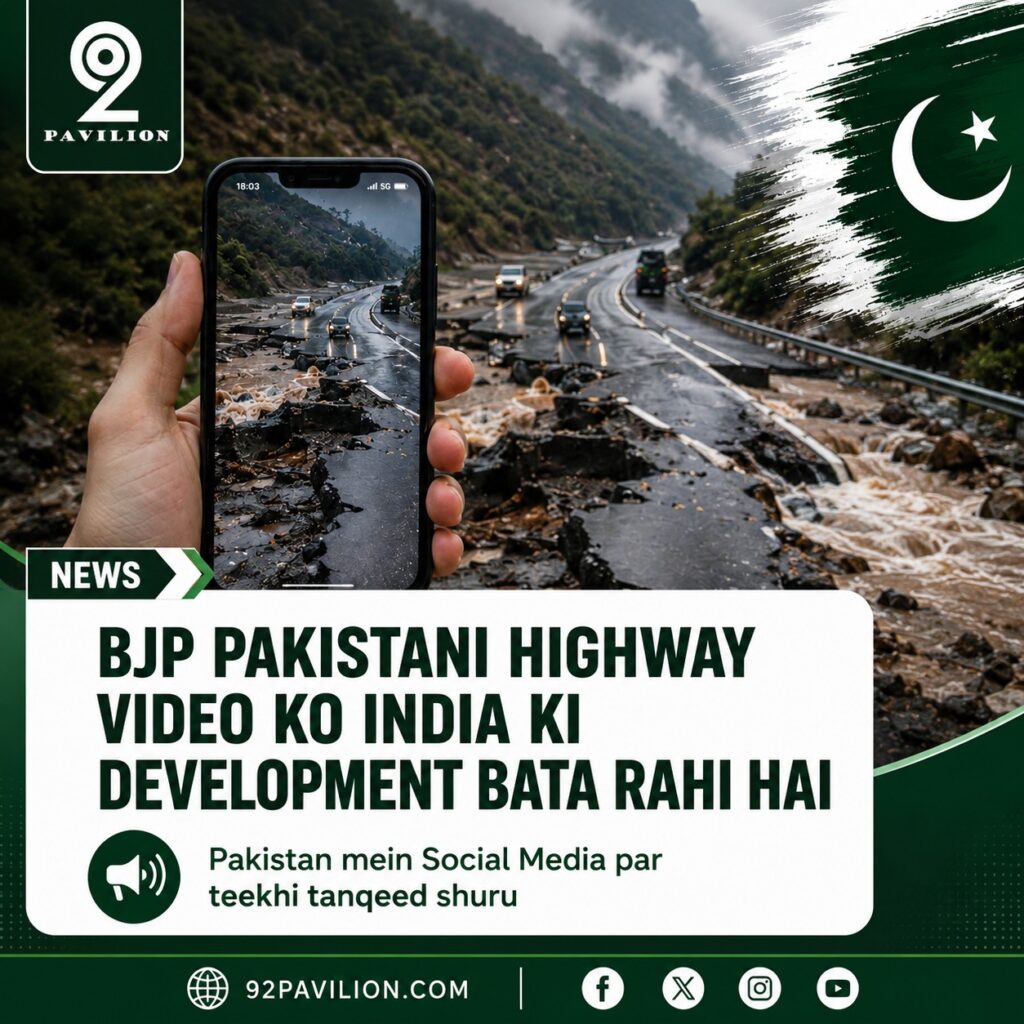
India’s Bharatiya Janata Party (BJP) shared a BJP Pakistani highway video, claiming footage of a road in Gilgit-Baltistan showed development work in India. The video was traced back to Pakistani content creator Northern Vibes. After facing criticism online, the BJP deleted the post.
What the BJP Shared
The video in question showed a scenic highway winding through mountainous terrain, footage that BJP’s social media handles presented as an example of infrastructure development within India. The clip quickly gained traction online, racking up views before questions about its origin began to surface.
How the Video Was Traced
Social media users soon identified the footage as originally belonging to Northern Vibes, a Pakistani content creator known for showcasing scenery from Gilgit-Baltistan, a mountainous region in northern Pakistan. The road shown in the video was part of the Gilgit-Baltistan highway network, not anywhere in India.
Northern Vibes publicly questioned how footage of a highway in Pakistani territory had been repackaged as evidence of Indian development. The creator also accused the BJP of using the video without permission or credit.
Why This Story Struck a Nerve
Gilgit-Baltistan is a politically sensitive region. India claims it as part of the larger Jammu and Kashmir territory, while Pakistan administers the area directly. Because of this long-standing dispute, any confusion, real or perceived, between footage from Gilgit-Baltistan and Indian territory tends to draw immediate, sharp reactions from audiences on both sides.
For many social media users, using a Pakistani-administered region’s infrastructure to claim Indian development wasn’t just a factual error. It touched directly on one of the most contentious territorial disputes in South Asia.
The Backlash and Deletion
As criticism mounted online, questioning both the accuracy of the claim and the ethics of using someone else’s content without credit, the BJP removed the original post. The party has not issued a detailed public explanation for the mix-up.
This kind of rapid deletion is a familiar pattern in social media controversies: a post goes up, gains attention, draws scrutiny once inconsistencies are spotted, and is quietly taken down before the story fully develops into a larger controversy.
A Recurring Issue With Political Social Media
This isn’t an isolated case of a political party’s social media team using visuals that don’t hold up to scrutiny. Similar incidents, including AI-enhanced or misattributed footage shared to showcase development or achievements, have surfaced repeatedly across party lines in South Asian politics in recent years, often unraveling once independent users or fact-checkers dig into the original source.
What This Means
For content creators like Northern Vibes, incidents like this highlight a recurring frustration: original work being repurposed by large political accounts without credit, often to serve a narrative the creator never intended. For BJP’s social media team, it’s another reminder of how quickly unverified visual content can backfire once it reaches a large, engaged audience.
Frequently Asked Questions
Q: What did the BJP Pakistani highway video controversy involve?
A: The BJP shared a highway video from Pakistan’s Gilgit-Baltistan region, claiming it showed development work in India.
Q: Who created the original video?
A: The footage was traced back to Pakistani content creator Northern Vibes.
Q: Did the BJP respond to the criticism?
A: The party deleted the post following widespread criticism but has not issued a detailed public statement.
Q: Why did this story generate so much attention?
A: Gilgit-Baltistan is part of a long-running territorial dispute between India and Pakistan, making any conflation of the region with Indian territory a sensitive issue.
This report is based on social media documentation of the incident, including posts from Northern Vibes and other users who traced the video’s origin. As this developed largely through social media, further official statements from the BJP may add additional context.
92Pavilion tracks regional stories and social media developments as they unfold. Stay with us for more.