By: News Desk 92Pavilion | Updated: July 2026
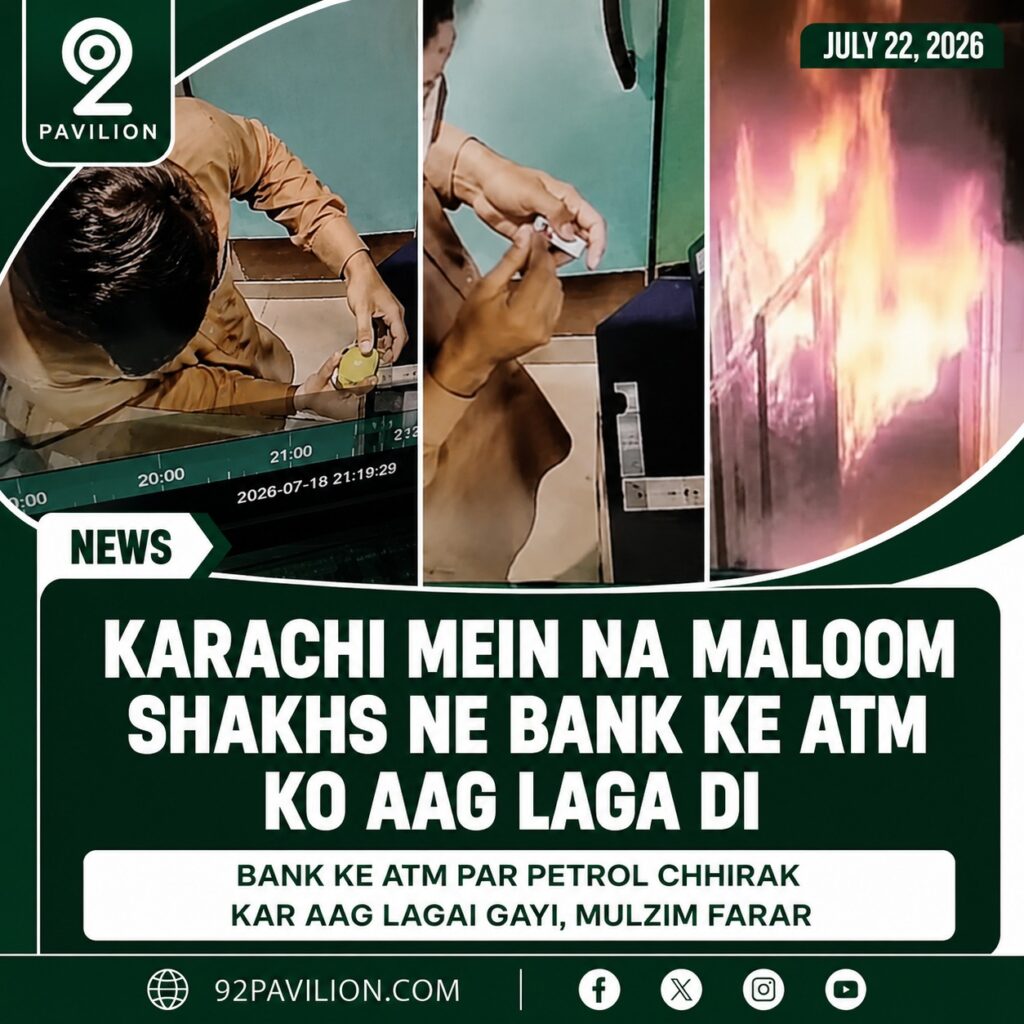
A Karachi ATM fire broke out on Chand Bibi Road in the city’s Old City area between July 21 and 22, 2026. CCTV footage shows an unidentified man pouring petrol on the machine before setting it alight. The incident was first reported as a possible short circuit, but police are now investigating it as a case of arson. The suspect remains at large.
What the CCTV Footage Shows
The footage, which surfaced on social media, captures a man leaning over the ATM machine late at night. In the clip, he can be seen holding a small container and pouring its contents over the machine before stepping back. Moments later, flames engulf the structure.
The timestamp on the footage places the incident on the night of July 18, with the fire fully breaking out in the hours that followed. Local citizen journalism outlets, including Dialogue Pakistan, shared the footage and flagged it as a suspected arson attack rather than an accident.
Where It Happened
The ATM was located on Chand Bibi Road, in Karachi’s Old City area near Bohra Pir, a densely populated commercial and residential neighbourhood known for its historic buildings and busy markets. The area sits close to Civil Hospital Karachi and the City Courts.
From Short Circuit to Suspected Arson
Initial reports around the incident suggested the fire may have started due to an electrical short circuit, a common cause of fires at ATM kiosks in Pakistan given ageing wiring and poor maintenance in many older parts of the city.
However, once the CCTV footage began circulating, the narrative shifted. The visible act of someone deliberately pouring liquid on the machine before it caught fire pointed toward a deliberate act rather than a technical fault. The incident is now being treated as a case of arson.
A Familiar Pattern in Karachi
This isn’t the first time an ATM or bank-adjacent property in Karachi has been targeted this way. Similar CCTV-captured incidents, arsonists pouring petrol on shops, stalls, and financial infrastructure before fleeing, have occurred in different parts of the city in recent years, often linked to personal disputes, extortion attempts, or unresolved grievances with the bank or business.
What Happens Next
As of this report, the suspect in the Chand Bibi Road ATM fire has not been identified or arrested. Local police are expected to review the CCTV footage further and cross-check it with camera feeds from nearby streets to trace the suspect’s movements before and after the incident.
Given the machine’s location in a busy, camera-dense commercial area, investigators may have several additional angles of footage to work with as the case develops.
Frequently Asked Questions
Q: When did the Karachi ATM fire happen?
A: The incident occurred on the night of July 21 into July 22, 2026, on Chand Bibi Road in Karachi’s Old City area.
Q: Was the fire an accident or deliberate?
A: CCTV footage shows a man pouring petrol on the ATM before it caught fire, leading police to investigate it as arson rather than an electrical fault.
Q: Has anyone been arrested?
A: Not as of this report. The suspect remains unidentified and at large.
Q: Where exactly is Chand Bibi Road?
A: It’s located in Karachi’s Old City area, near Bohra Pir, close to Civil Hospital Karachi.
This report is based on CCTV footage and coverage shared by citizen journalism outlets Dialogue Pakistan and Pakology. As this remains a developing story without official police confirmation at the time of publishing, details may be updated as more information becomes available.
92Pavilion brings you Karachi’s local stories as they develop. Stay with us for updates on this case.