
By: News Desk 92Pavilion | Updated: July 2026
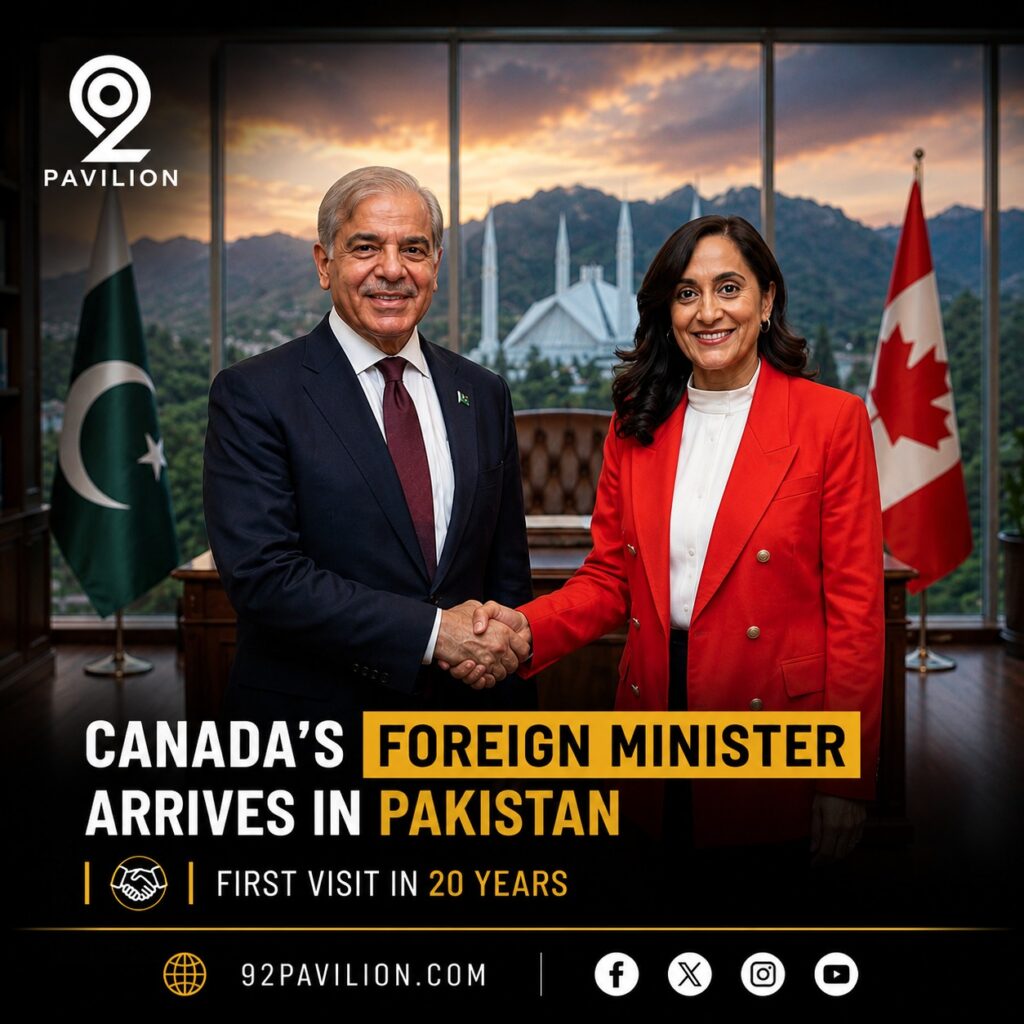
Quick Answer: Canada’s foreign minister visits Pakistan on July 20, 2026, marking the first such trip in nearly two decades. Anita Anand met Pakistan’s Deputy Prime Minister Ishaq Dar and Prime Minister Shehbaz Sharif in Islamabad. Talks focused on trade, investment, and education. Both countries agreed to hold annual meetings going forward.
A Visit Two Decades in the Making
Anita Anand landed in Islamabad on July 20. It was her first trip to Pakistan since taking office. According to Global Affairs Canada, no Canadian foreign minister had visited the country in almost 20 years.
The visit came at the invitation of Ishaq Dar, Pakistan’s Deputy Prime Minister and Foreign Minister. Officials on both sides described it as a major milestone for the relationship.
What the Two Sides Discussed
Anand and Dar held detailed talks covering the full range of Pakistan-Canada relations. Discussions focused heavily on trade, investment, and education. Both ministers also spoke about ongoing regional and global issues of shared interest.
Anand later met Prime Minister Shehbaz Sharif and Interior Minister Mohsin Naqvi during her trip. The two countries agreed to hold annual meetings from now on. These meetings will track progress on a joint statement signed by both governments.
The Numbers Behind the Relationship
Trade between the two countries has grown steadily. In 2025, total merchandise trade reached about $1.2 billion. Canadian exports to Pakistan rose to $499.7 million, a jump of 65 percent from the year before. Pakistani exports to Canada, mostly textiles and leather goods, totaled $696 million.
Agriculture has also become a growing part of the relationship. Canadian canola exports resumed in late 2025 and have already reached $426 million. In June 2026, the two countries held a second round of talks toward a Foreign Investment Promotion and Protection Agreement.
A People-to-People Connection
Beyond trade, the two countries share a deep human connection. More than 300,000 Canadians trace their roots to Pakistan. Around 20,000 Canadians currently live in Pakistan. Officials on both sides pointed to this connection as a foundation for stronger ties going forward.
Canada has also supported Pakistan’s security efforts. Over the past decade, it has provided about $12.2 million to help address threats linked to organized crime and terrorism.
Part of a Wider Regional Trip
Pakistan wasn’t Anand’s only stop this week. She also travelled to the Philippines to attend the ASEAN Post Ministerial Conference. Canadian officials said the wider trip reflects Ottawa’s push to deepen ties across the Indo-Pacific region.
What Comes Next
Before wrapping up her visit, Anand thanked Pakistan for its hospitality. She said she looked forward to building on the relationship in the years ahead. With annual meetings now agreed, both sides say they expect steady, structured progress rather than one-off engagements.
Frequently Asked Questions
When did Canada’s foreign minister visit Pakistan?
Anita Anand visited Islamabad on July 20, 2026.
Why was this visit significant?
It was the first visit by a Canadian foreign minister to Pakistan in nearly 20 years.
What did the two countries agree to?
They agreed to expand cooperation in trade and investment and to hold annual meetings to review progress.
How much trade happens between Canada and Pakistan?
Bilateral merchandise trade reached around $1.2 billion in 2025.
This report is based on statements from Global Affairs Canada, Pakistan’s Foreign Office, and reporting from Dawn and Geo News.
92Pavilion brings you the latest on Pakistan’s diplomatic ties around the world. Stay connected with us for more updates.