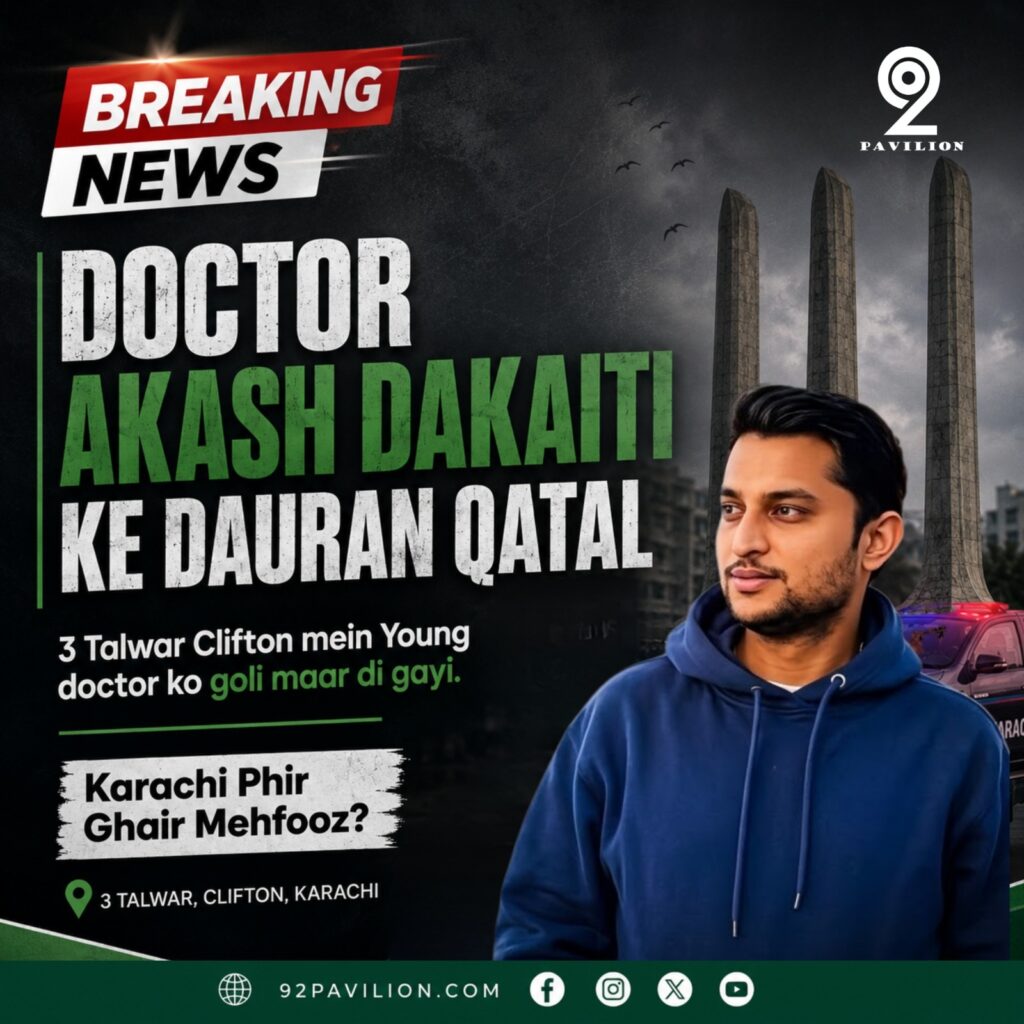
Karachi: A young doctor lost his life during an armed robbery near Teen Talwar in Karachi’s Clifton area on Monday. The killing sparked protests from his family. It also drew sharp criticism from the medical community over rising street crime. Police, however, arrested three suspects within just 36 hours.
What Happened
Dr Akash Kumar, 28, worked as a doctor at Jinnah Postgraduate Medical Centre (JPMC). He visited a bank near Teen Talwar with his father and cousin to deposit Rs5 million. According to SSP South Mahzoor Ali, the group was heading to a second bank in Boat Basin to complete the deposit. Suddenly, four armed men on two motorcycles intercepted their vehicle.
CCTV footage captured the attack clearly. One suspect fired at the bank’s security guard and then snatched a cash bag. Meanwhile, another suspect shot Dr Kumar through the car window. As a result, the robbers escaped with roughly Rs2.5 million, though a second bag of equal value survived the attack. Sadly, doctors at a nearby private hospital could not save Dr Kumar’s life.
A forensic report later confirmed an important detail: the fatal bullet came from the security guard’s pistol, fired during the crossfire. The guard maintains he acted in self-defence.
Police Investigation and Arrests
Police registered a case at Frere police station under murder and robbery charges. Investigators then reviewed footage from over 100 CCTV cameras, including feeds from the Safe City network. They also used geo-fencing data to trace the suspects’ movements.
Consequently, police arrested three men — Suresh, Anil, and Ram Chand — from Karachi’s Defence area. Officers recovered cash, weapons, motorcycles, and a vehicle with a fake number plate during the raid. According to DIG South Asad Raza, the suspects confessed to surveilling the victim beforehand. One accomplice had reportedly stationed himself inside the bank to relay information about the cash withdrawal.
Official Statements
Sindh Chief Minister Murad Ali Shah quickly took notice of the killing. He ordered the immediate arrest of those responsible and directed police to intensify efforts against street crime. Similarly, Sindh IG Javed Alam Odho called for a fully transparent investigation.
Public Reaction
Grieving relatives placed Dr Kumar’s body at Teen Talwar and staged a protest. They blocked traffic and demanded justice for hours. Eventually, officials met with the family, and the protest ended late that night. Meanwhile, the Young Doctors Association (YDA) Sindh and the Pakistan Medical Association condemned the killing. Both groups called it a clear sign of collapsing law and order in the city.
What Comes Next
Now that three suspects sit in custody, the case moves toward evidence verification and formal charges. Police say the investigation continues, particularly into the alleged inside informant’s role.
FAQs
Who was Dr Akash Kumar?
He was a 28-year-old doctor at JPMC, recently selected as a government medical officer.
What happened to him?
Robbers shot him dead near Teen Talwar, Clifton, on July 13 while he accompanied his father to the bank.
Has anyone been arrested?
Yes. Police arrested three suspects Suresh, Anil, and Ram Chand within 36 hours using CCTV and geo-fencing evidence.
Who fired the fatal shot?
A forensic report confirmed the bank security guard’s pistol fired the fatal bullet during the crossfire.
What is the latest update?
Police recovered cash, weapons, and vehicles. The suspects reportedly confessed to surveilling the victim beforehand, and the case remains under investigation.