By: News Desk 92Pavilion
The fitness landscape for women in Pakistan has undergone a transformative shift, moving away from restrictive norms toward a holistic model of empowerment. As urban centers like Karachi, Lahore, and Islamabad see a surge in women-only gyms and “hijab-friendly” boutique studios, the modern Pakistani woman is embracing a workout structure that balances traditional values with global fitness science. This evolution is driven by a growing awareness that physical strength is a catalyst for mental resilience and long-term health. The 2026 workout structure is no longer just about weight management; it is a personalized blueprint designed for functional strength, hormonal balance, and sustainable vitality.
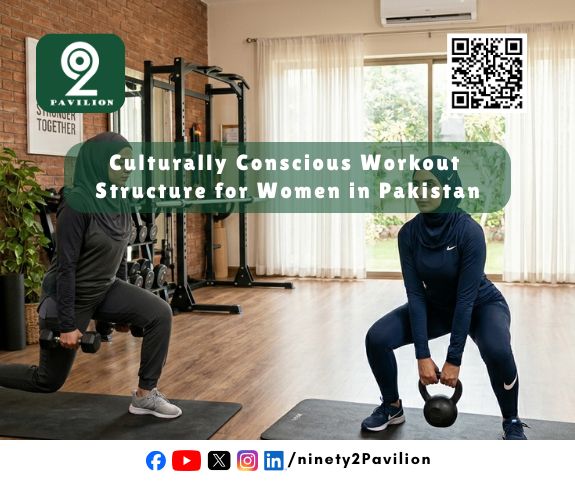
A typical 2026 fitness routine for women in Pakistan is built on a foundation of Resistance Training, which has officially overtaken traditional cardio as the number one trend. Experts recommend a three-day-per-week full-body strength circuit to maximize metabolic health and preserve bone density. This includes compound movements such as Goblet Squats, Dumbbell Deadlifts, and Push-up variations. For those training at home or in more conservative settings, resistance bands and bodyweight drills offer a discreet yet highly effective way to build muscle. These sessions are often structured in “super-sets” to keep the heart rate elevated, ensuring a cardiovascular benefit without the need for high-impact running, which can sometimes be difficult to perform in traditional attire.
Cultural considerations play a pivotal role in the “Hybrid Fitness” model of 2026. Recognizing the busy schedules of Pakistani women—often balancing professional careers with multi-generational household responsibilities—the workout structure emphasizes Time-Efficiency. High-Intensity Interval Training (HIIT) sessions lasting just 20 to 30 minutes have become a staple. Furthermore, the rise of AI-powered coaching apps allows women to follow professional routines from the privacy of their homes, eliminating the barriers of travel and “intermingling” that once hindered participation. These digital tools often include “modesty-first” variations of popular exercises, ensuring that every woman can move with confidence and comfort.
The integration of Mind-Body Training is the final, essential piece of the puzzle. In 2026, many Pakistani fitness programs now conclude with 10 to 15 minutes of Yoga, Pilates, or controlled breathwork. This is specifically designed to manage cortisol levels—a crucial factor in women’s hormonal health—and provide a mental reset from the stressors of daily life. Popular community-based activities like “Ladies-Only Walking Clubs” in local parks further provide a social support system that reinforces consistency. Ultimately, the health and fitness structure for women in Pakistan in 2026 is a celebration of the self. It is a path that honors religious and cultural identity while providing the physical tools necessary to lead a vibrant, independent, and healthy life