Latest Posts
Building a Vibrant Cultural FutureA Journey Towards ProsperityArab nations face an inevitable declineBlogging Revenue in Pakistan’s 2026 EconomyWhy China is Investing in Pakistan’s Gwadar PortThe Rising Spirit of Pakistani SportsVoice-Over Economy in Pakistan 2026India’s Investment in Iran,Chabahar PortEvent Management Business in Pakistan 2026The Volatile Trajectory of Pakistan-Afghanistan Relations in 2026Why Pakistan Must Overhaul Its InfrastructureEvolution of Goods and Equipment in Modern SportsThe Current Situation of Sports in PakistanGovernment Initiatives for Sports in PakistanAssessing Sports Infrastructure and Facilities in PakistanSialkot and the Renaissance of Pakistan’s Sports Goods IndustryEmerging Sports Trends in 2026Legacy of Popular Traditional SportsJourney Through the Background of Sports in PakistanInfrastructure and Framework Deficits in Pakistani Sports InstitutionsLevelling the Field of SportsThe Roadmap for Pakistan’s Islamic Financial TransitionApartheid Structure in Occupied KashmirThe Strategic Role of the SCO in 2026Complexities of Illegal Immigrant RepatriationPakistan’s Strategic Role in Regional Power DynamicsPakistan’s Strategic Role in the South Asian Power PlayPakistan’s Strategic Tightrope in the US-China RivalryPakistan-China Relations in a Changing Geopolitical EnvironmentForeign Relation of Pakistan with Neighboring CountriesGlobal Response and the Reshaping World Order in 2026Impacts of International Structure on Pakistan’s Foreign PolicyEnduring Conflict Between India and PakistanAncient Roman and Modern EntertainmentCultivating Pakistan’s Future Tech WorkforceBuilding, Champions of the WorldDeciphering the Boundary Between Art and EntertainmentDevelopment of Pakistan’s Entertainment Industry

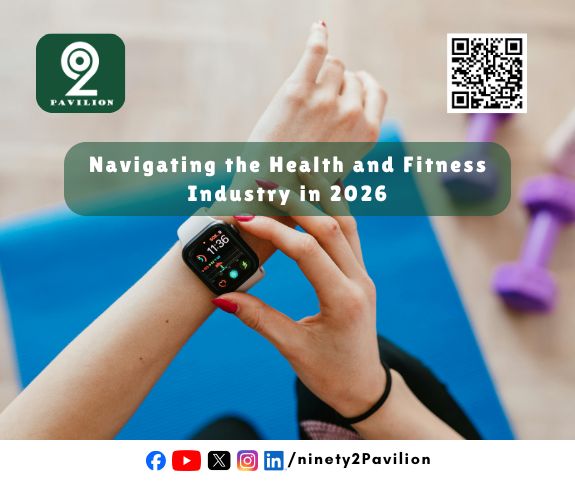
Navigating the Health and Fitness Industry in 2026

Navigating the Health and Fitness Industry in 2026

By: News Desk 92Pavilion

The global health and fitness industry in 2026 has transitioned from a fragmented collection of gyms and diet plans into a cohesive, technology-driven ecosystem valued at over $135 billion. This “New Age of Wellness” is defined by a shift from reactive care to proactive longevity, where exercise and nutrition are treated as precision instruments for biological optimization. As compound annual growth rates hold steady at approximately 9.5%, the industry is no longer just selling memberships; it is selling a comprehensive life-management infrastructure fueled by Artificial Intelligence, wearable biosensors, and a renewed focus on the aging global population.

At the vanguard of this evolution is Wearable Technology, which has maintained its position as the number one global fitness trend for nearly a decade. In 2026, these devices have moved beyond simple step counting to become “clinical-grade” health monitors capable of tracking blood glucose, heart rhythm, and even skin temperature in real-time. This data is fed into AI-powered coaching platforms that create “Adaptive Workouts”—routines that automatically adjust their intensity based on an individual’s recovery score or stress levels. This hyper-personalization has effectively democratized elite-level coaching, making high-performance health accessible to millions through mobile exercise apps and connected home equipment.

Parallel to this technological surge is the “Active Aging” movement. With 73 million Baby Boomers crossing the age of 65 by 2030, the fitness industry in 2026 has pivoted sharply to cater to older adults. Specialized programs focusing on “Functional Capacity”—resistance training to prevent muscle loss, balance exercises to reduce fall risk, and low-impact cardiovascular activity—have become the fastest-growing segments in the market. This demographic is now the most consistent group of gym-goers, driving a demand for medically integrated fitness centers that bridge the gap between traditional healthcare and the local health club.

Furthermore, 2026 marks the year that Mental Health became a primary driver of physical activity. Over 78% of exercisers now cite emotional well-being as their top reason for working out, surpassing traditional goals like weight loss or aesthetics. This has birthed the “Neurowellness” trend, which blends physical training with cognitive-motor exercises designed to improve neuroplasticity and reduce the risk of cognitive impairment. Immersive fitness worlds, powered by Virtual Reality, are also gaining traction, turning monotonous cardio into engaging social experiences that reduce the “perceived effort” of exercise while fostering a sense of community.

Despite the digital boom, physical health clubs remain resilient by evolving into “Holistic Wellness Hubs.” Modern facilities now offer a “Hybrid Model” that includes traditional weightlifting alongside recovery suites featuring infrared saunas, cold plunges, and somatic release classes. The industry’s focus has expanded to address environmental crises, such as microplastic awareness and climate-resilient outdoor training. Ultimately, the health and fitness industry in 2026 is a reflection of a society that values “Healthspan” over lifespan—a world where the pursuit of fitness is no longer an optional hobby, but a fundamental pillar of human flourishing and social connection


Share

Introduction

Pakistan’s political environment in 2026 remains dynamic and highly influential in shaping the country’s future. From parliamentary debates and economic policy decisions to opposition movements and electoral reforms, recent developments are playing a crucial role in determining national direction.

In this report by Eye of Pakistan, we analyze the latest political developments, government strategies, and opposition responses.

Government’s Policy Priorities in 2026

The federal government has emphasized:

  • Economic stabilization

  • Institutional reforms

  • Energy sector restructuring

  • Strengthening foreign diplomatic ties

Recent cabinet meetings focused on controlling inflation, stabilizing the Pakistani Rupee, and implementing fiscal discipline under ongoing economic reform programs.

Officials claim these measures aim to restore investor confidence and ensure sustainable growth.

Opposition’s Response and Political Strategy

Major opposition parties have intensified criticism of government policies, particularly regarding:

  • Rising inflation

  • Unemployment

  • Tax reforms

  • Utility price increases

Opposition leaders argue that economic pressure on the public has increased and demand greater transparency in parliamentary proceedings.

Political rallies and public gatherings have increased across major cities including Karachi, Lahore, and Islamabad.

Parliamentary Developments

Recent National Assembly sessions have seen heated debates over:

  • Budget allocations

  • Electoral reforms

  • Accountability laws

  • Provincial autonomy issues

Lawmakers from both treasury and opposition benches continue to exchange strong viewpoints, reflecting a vibrant yet tense political atmosphere.

Election Reforms and Democratic Process

Discussions around electoral transparency and digital voting mechanisms remain central to political discourse.

The Election Commission is reportedly reviewing:

  • Voter verification systems

  • Polling station security

  • Overseas voting procedures

Analysts believe these reforms could significantly impact future general elections.

Public Reaction and Political Climate

Public opinion appears divided. While some citizens support structural reforms and long-term stabilization plans, others express concerns over economic hardships and governance challenges.

Political analysts suggest that the coming months will be critical in determining whether current policies translate into tangible relief for the public.

Conclusion

Pakistan’s political landscape in 2026 is marked by active debate, institutional reforms, and strategic maneuvering from both government and opposition parties. As policy decisions continue to unfold, their impact on economic stability and democratic processes will remain under close observation.

Stay connected with Eye of Pakistan for reliable and timely political updates.

Education in Pakistan 2026

By: News Desk 92Pavilion Education in Pakistan stands as a complex paradox of modest statistical gains and deep-rooted systemic crises. As of 2026, the national

Share
Read More »